Mobile Development
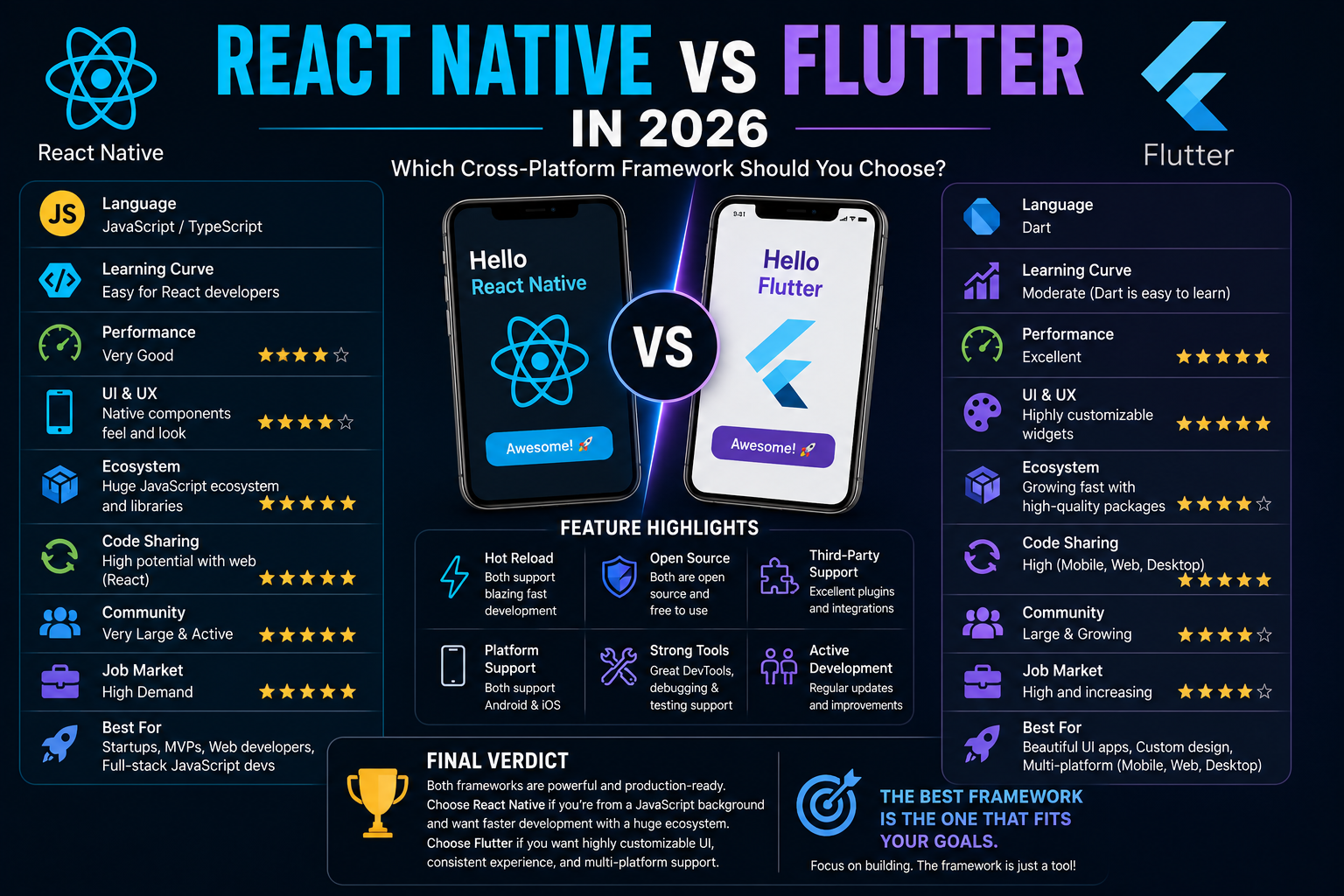
React Native vs Flutter in 2026
By Yahya Saeed · 5 min read · 64 views
React Native vs Flutter in 2026
Building mobile apps has never been more exciting.
Instead of maintaining separate Android and iOS codebases, developers can now build applications for both platforms using a single framework.
Among all cross-platform solutions, two names stand out above the rest:
React Native
Flutter
Both frameworks power millions of applications worldwide and continue to evolve every year.
But if you're starting a new mobile project in 2026, which one should you choose?
Let's compare them across the areas that matter most.
What is React Native?
React Native is an open-source framework developed by Meta.
It allows developers to build native mobile applications using JavaScript and React.
Instead of rendering HTML like React for the web, React Native uses native UI components, giving applications a look and feel that's close to fully native apps.
If you already know React, learning React Native is surprisingly straightforward.
What is Flutter?
Flutter is Google's UI toolkit for building cross-platform applications.
Unlike React Native, Flutter uses the Dart programming language and renders its own widgets instead of relying on native UI components.
This approach gives Flutter complete control over the user interface, allowing developers to create highly customized and consistent designs across different platforms.
Learning Curve
React Native has a clear advantage for web developers.
If you already know:
JavaScript
React
HTML
CSS
You'll feel comfortable almost immediately.
Flutter requires learning Dart, which is relatively easy but still introduces another language into your workflow.
Winner
React Native
Programming Language
React Native uses JavaScript (or TypeScript), one of the most popular programming languages in the world.
Flutter uses Dart, a language created by Google specifically for application development.
Although Dart is pleasant to work with, JavaScript has a much larger ecosystem and community.
Winner
React Native
Performance
Flutter is known for its excellent performance.
Because it renders everything itself using the Skia graphics engine, animations are incredibly smooth and consistent.
React Native has also improved significantly over the past few years, especially with the New Architecture and Fabric renderer.
For most business applications, both frameworks perform exceptionally well.
Winner
Flutter (slight advantage)
User Interface
Flutter ships with an extensive collection of customizable widgets.
This allows developers to create beautiful interfaces that look identical across Android and iOS.
React Native relies more heavily on native platform components, giving applications a more natural platform-specific appearance.
Winner
Depends on your goals.
Flutter for highly customized designs.
React Native for native platform experiences.
Development Speed
Both frameworks support:
Hot Reload
Large package ecosystems
Fast iteration
Strong debugging tools
React Native becomes particularly productive if your team already builds React web applications.
Many concepts transfer directly.
Winner
React Native
Community and Ecosystem
React Native has been around since 2015 and has one of the largest JavaScript communities.
Thousands of libraries exist for:
Authentication
Payments
Navigation
Animations
APIs
Databases
Maps
Flutter's ecosystem has grown rapidly and now covers nearly every common requirement.
However, React Native still benefits from the massive JavaScript ecosystem.
Winner
React Native
Code Sharing
If you're already building a React web application, React Native offers significant advantages.
Developers can often reuse:
Business logic
Validation
Utility functions
API clients
State management
This reduces development time considerably.
Flutter cannot directly reuse React code.
Winner
React Native
UI Customization
Flutter gives developers complete control over every pixel.
Creating custom animations and unique interfaces is often easier because Flutter owns its rendering engine.
This flexibility makes Flutter popular for visually rich applications.
Winner
Flutter
Third-Party Integrations
Most modern applications require services such as:
Firebase
Stripe
Google Maps
Analytics
Push Notifications
Authentication
Both frameworks support these integrations very well.
React Native often receives SDK updates slightly faster because many providers prioritize JavaScript.
Winner
React Native
Desktop and Web Support
Flutter supports:
Android
iOS
Web
Windows
macOS
Linux
React Native primarily focuses on mobile, although community solutions exist for desktop and web.
Winner
Flutter
Job Market
React Native continues to dominate the job market.
Companies already using React often choose React Native because developers can move between web and mobile projects.
JavaScript remains one of the most requested programming languages worldwide.
Winner
React Native
Which Framework Is Better for Freelancers?
Freelancers benefit from technologies that:
Have high demand
Share skills with web development
Offer faster learning
Have large communities
React Native checks all of these boxes.
It also pairs naturally with technologies like:
Next.js
Node.js
Prisma
PostgreSQL
Supabase
This makes it an excellent choice for full-stack developers.
Winner
React Native
Which Framework Is Better for Startups?
Startups usually want to build quickly while keeping development costs low.
Both frameworks are capable, but React Native often fits startups better because:
Hiring JavaScript developers is easier.
Existing React teams can contribute immediately.
Code sharing reduces costs.
Development moves quickly.
Winner
React Native
Which Framework Should Beginners Learn?
If you're completely new to programming, either framework can work.
However, if you're interested in both web and mobile development, React Native provides a smoother learning path.
Learning JavaScript opens doors to:
React
Next.js
Node.js
Express
React Native
One language can power your entire development stack.
Winner
React Native
When Should You Choose Flutter?
Flutter is an excellent choice if you:
Want complete UI customization.
Need beautiful animations.
Are building visually intensive applications.
Need desktop support.
Prefer Google's ecosystem.
Don't mind learning Dart.
When Should You Choose React Native?
Choose React Native if you:
Already know React.
Know JavaScript or TypeScript.
Build full-stack JavaScript applications.
Want better job opportunities.
Plan to freelance.
Need faster onboarding.
Want to reuse web development skills.
Final Verdict
Both React Native and Flutter are excellent frameworks capable of building production-ready mobile applications.
Neither is objectively "better" for every project.
However, for most developers in 2026—especially those coming from web development—React Native offers the strongest combination of flexibility, job opportunities, ecosystem, and long-term value.
Its JavaScript foundation allows developers to build websites, backend services, and mobile applications using a unified technology stack.
Flutter remains an outstanding choice for highly customized user interfaces and cross-platform experiences, but React Native continues to be the preferred option for many startups, freelancers, and full-stack developers.
Ultimately, the best framework is the one that aligns with your goals, your existing skills, and the type of applications you want to build.
Whichever path you choose, focus on building real projects. Experience will always matter more than the framework itself.
Keep reading
Related Posts
Next.js
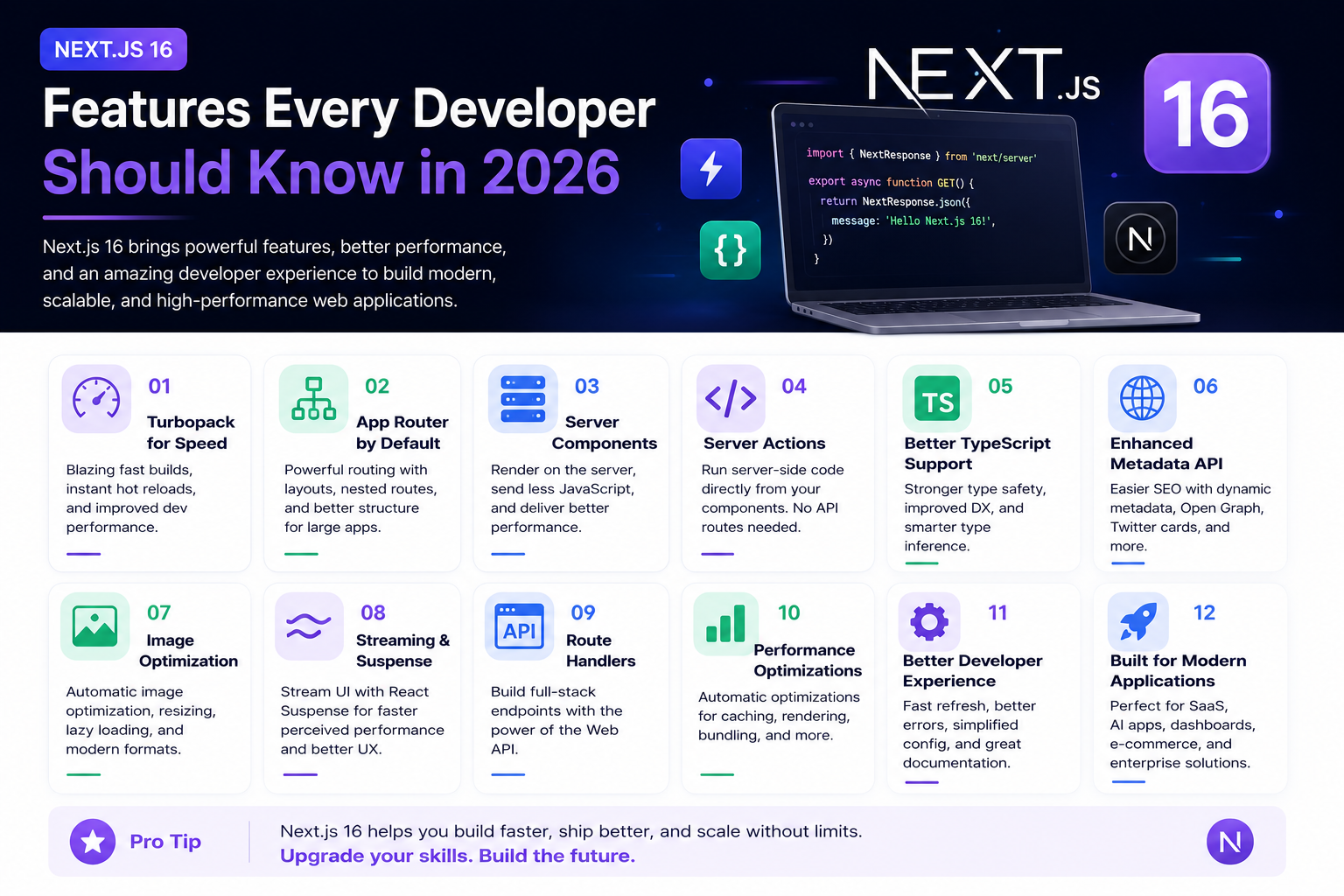
Next.js 16 Features Every Developer Should Know in 2026
Next.js 16 continues to push modern web development forward with improved performance, better developer experience, enhanced routing, and powerful server-side capabilities. Whether you're building a blog, SaaS platform, portfolio, or enterprise application, these are the most important Next.js 16 features every developer should understand.
4 min read · 192 views
Next.js
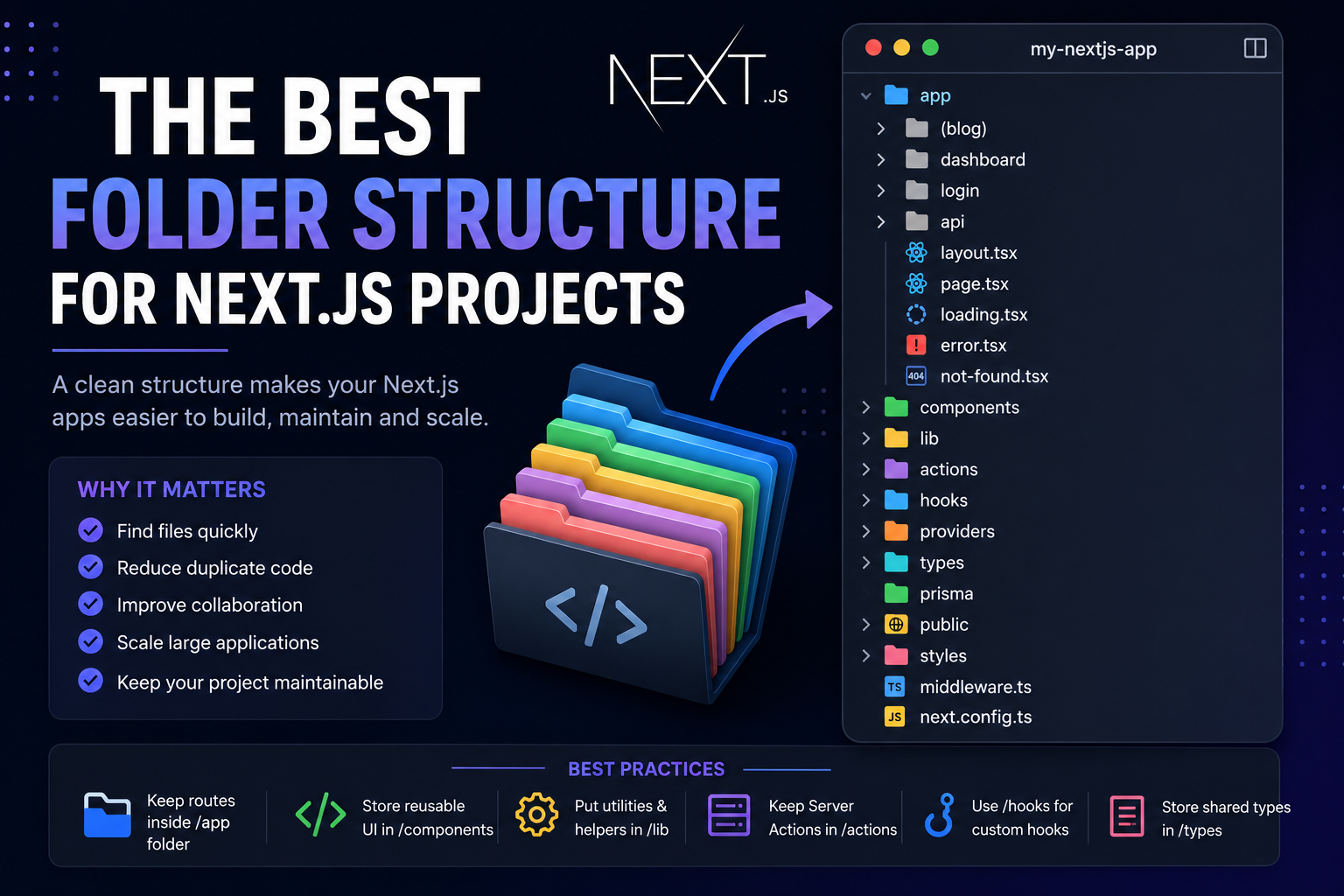
The Best Folder Structure for Next.js Projects in 2026
A clean folder structure makes every Next.js project easier to build, maintain, and scale. Discover the best folder organization for modern Next.js applications in 2026, whether you're building a blog, SaaS, dashboard, or enterprise application.
4 min read · 151 views

Next.js
How to Build a Blog with Next.js 16: Complete Beginner Guide
Learn how to create a modern blog with Next.js 16 using dynamic pages, categories, tags, excerpts, SEO metadata, and a scalable content structure.
3 min read · 140 views
Trending
Popular Posts
Productivity Tools That Save Developers Hours in 2026
681 views
The Most Valuable Skills to Learn in the AI Era (2026 and Beyond)
331 views
Vibe Coding vs Learning to Code: Which Path Will Take You Further?
277 views
Next.js 16 Features Every Developer Should Know in 2026
192 views
The Best Folder Structure for Next.js Projects in 2026
151 views
Comments
No approved comments yet.