Next.js
Next.js 16 Features Every Developer Should Know in 2026
By Yahya Saeed · 4 min read · 192 views
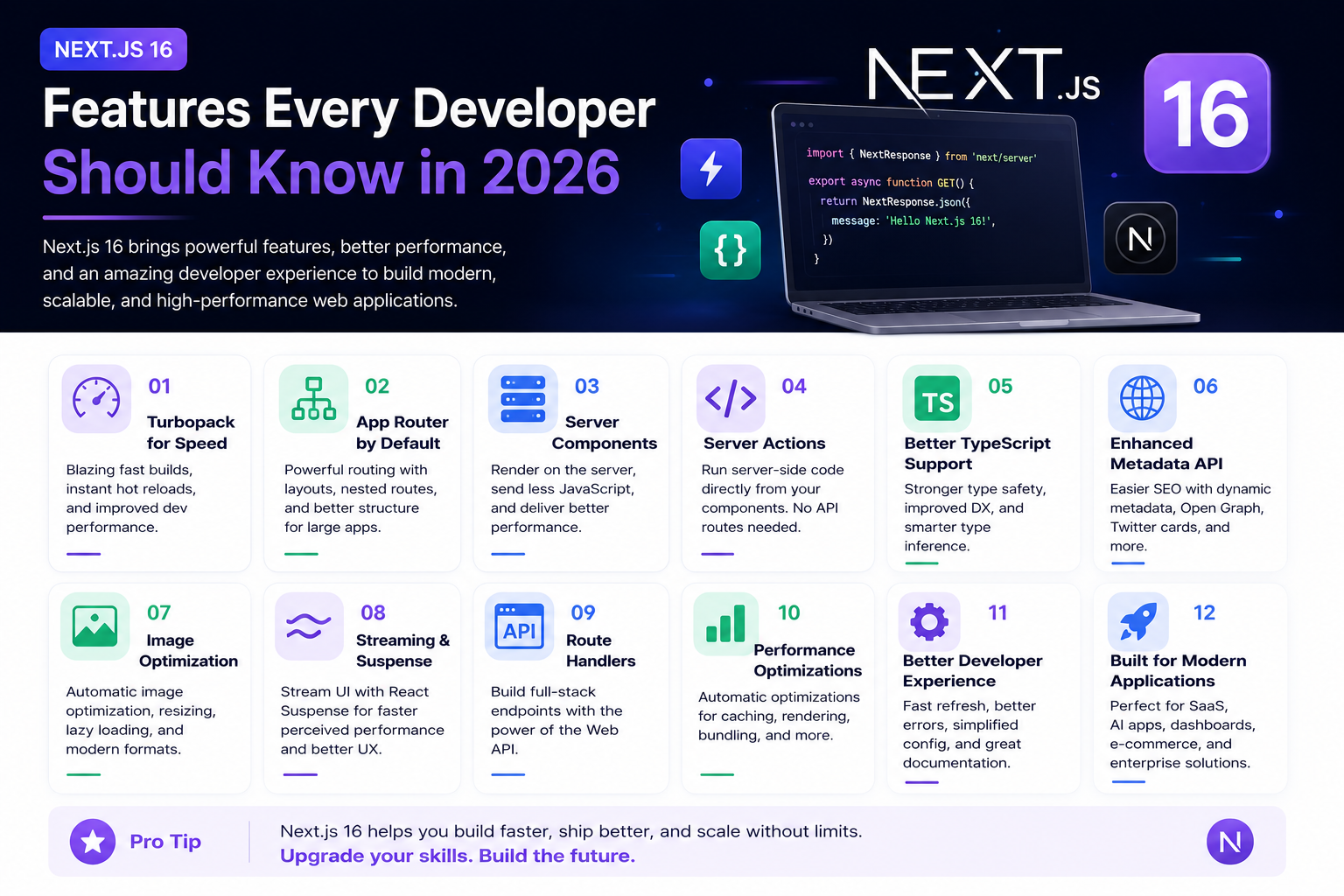
Next.js 16 Features Every Developer Should Know in 2026
Next.js has become one of the most influential frameworks in modern web development.
Built on top of React, it has transformed from a simple framework into a complete solution for building fast, scalable, and production-ready applications.
With Next.js 16, developers gain access to performance improvements, enhanced developer tools, better server-side capabilities, and a smoother development experience.
If you're using React in 2026, understanding Next.js 16 is almost essential.
Let's explore the most important features every developer should know.
Why Next.js Continues to Dominate
The web has become increasingly complex.
Modern applications require:
Fast performance
SEO optimization
Authentication
API integrations
Data fetching
Scalability
Next.js solves these challenges by providing a complete framework that handles many of these concerns out of the box.
This allows developers to focus more on building products and less on configuration.
1. Faster Development with Turbopack
One of the biggest improvements in recent versions of Next.js is Turbopack.
Turbopack is a modern bundler designed to make development significantly faster.
Benefits include:
Faster startup times
Faster hot reloads
Better development performance
Improved productivity
For larger applications, these improvements can save a substantial amount of development time.
Developers spend less time waiting and more time building.
2. App Router Is the Standard
The App Router continues to be the preferred routing solution in Next.js 16.
It introduces a more powerful way to organize applications.
Features include:
Nested layouts
Shared UI
Better route organization
Improved data fetching
Simplified application structure
Large projects become easier to manage and maintain.
The App Router is now the foundation of modern Next.js applications.
3. Server Components
Server Components remain one of the most important features of Next.js.
Instead of sending everything to the browser, parts of the application can be rendered directly on the server.
Benefits include:
Smaller JavaScript bundles
Faster page loads
Improved performance
Better user experience
This approach helps applications stay fast even as they grow in complexity.
4. Server Actions
Server Actions simplify backend development dramatically.
Developers can perform server-side operations directly from components without creating traditional API endpoints.
Examples include:
Creating posts
Updating databases
Processing forms
Managing user data
This reduces boilerplate code and improves developer productivity.
Many applications now use Server Actions as their primary way of handling mutations.
5. Improved TypeScript Support
TypeScript continues to play a major role in Next.js development.
Next.js 16 provides excellent TypeScript integration, making it easier to:
Catch errors early
Improve code quality
Refactor confidently
Build larger applications
For professional projects, TypeScript has become the standard.
6. Enhanced Metadata API
SEO remains important for blogs, businesses, and content-driven websites.
The Metadata API makes it easy to define:
Page titles
Descriptions
Open Graph tags
Social sharing information
Instead of manually managing metadata, developers can configure it in a structured and maintainable way.
This improves search engine visibility and social sharing.
7. Better Image Optimization
Images are often one of the largest performance bottlenecks on websites.
Next.js Image Optimization helps by:
Automatically resizing images
Reducing file sizes
Lazy loading images
Improving Core Web Vitals
The result is a faster and more efficient user experience.
8. Streaming and Suspense
Users don't like waiting for entire pages to load.
Streaming allows parts of a page to appear while other sections continue loading.
Combined with React Suspense, developers can create applications that feel significantly faster.
Benefits include:
Better perceived performance
Improved user experience
Faster loading interfaces
This is especially useful for dashboards and data-heavy applications.
9. Route Handlers
Route Handlers provide a flexible way to create backend endpoints.
Developers can:
Build APIs
Handle requests
Process data
Integrate third-party services
Without requiring a separate backend framework.
This makes full-stack development simpler and more efficient.
10. Improved Performance Optimization
Performance remains a core focus of Next.js.
The framework automatically optimizes:
Routing
Rendering
Assets
Bundles
Caching
Many performance improvements happen automatically without requiring manual configuration.
This allows developers to achieve excellent results with less effort.
11. Better Developer Experience
Developer experience is one of the biggest reasons people love Next.js.
Features include:
Fast refresh
Excellent error messages
Built-in TypeScript support
Simplified configuration
Strong documentation
A framework that is enjoyable to use often leads to better products.
Next.js continues to excel in this area.
12. Perfect for Modern SaaS Applications
Many startups and freelancers choose Next.js because it handles most SaaS requirements out of the box.
It works extremely well with:
PostgreSQL
Prisma
Better Auth
Clerk
Stripe
Tailwind CSS
This makes it ideal for:
Dashboards
CRM systems
E-commerce platforms
AI applications
Membership websites
Real-World Benefits
Using Next.js 16 allows developers to:
Build faster
Improve SEO
Reduce complexity
Enhance performance
Create better user experiences
Instead of assembling multiple tools and frameworks, developers get a cohesive solution that works together seamlessly.
Should You Learn Next.js in 2026?
Absolutely.
If you're learning React, Next.js is one of the most valuable frameworks you can add to your skill set.
It is widely used by:
Startups
Freelancers
Agencies
Enterprise companies
The demand for Next.js developers continues to grow.
Learning it can open doors to better projects, better jobs, and more opportunities.
Final Thoughts
Next.js 16 represents another step forward for modern web development.
Features like Server Components, Server Actions, App Router, Turbopack, Streaming, and advanced performance optimizations make it one of the most powerful frameworks available today.
Technology will continue to evolve, but Next.js has established itself as a foundation for modern web applications.
Whether you're building a portfolio, blog, SaaS platform, AI tool, or enterprise application, Next.js 16 provides the tools needed to build fast, scalable, and production-ready software.
For developers in 2026, it remains one of the best frameworks to learn and use.
Keep reading
Related Posts

Programming
Vibe Coding vs Learning to Code: Which Path Will Take You Further?
AI can build apps faster than ever, leading to the rise of "vibe coding." But does that mean learning to code is no longer necessary? Let's explore the strengths, weaknesses, and future of both approaches to discover which path offers the greatest long-term value.
4 min read · 277 views
Next.js
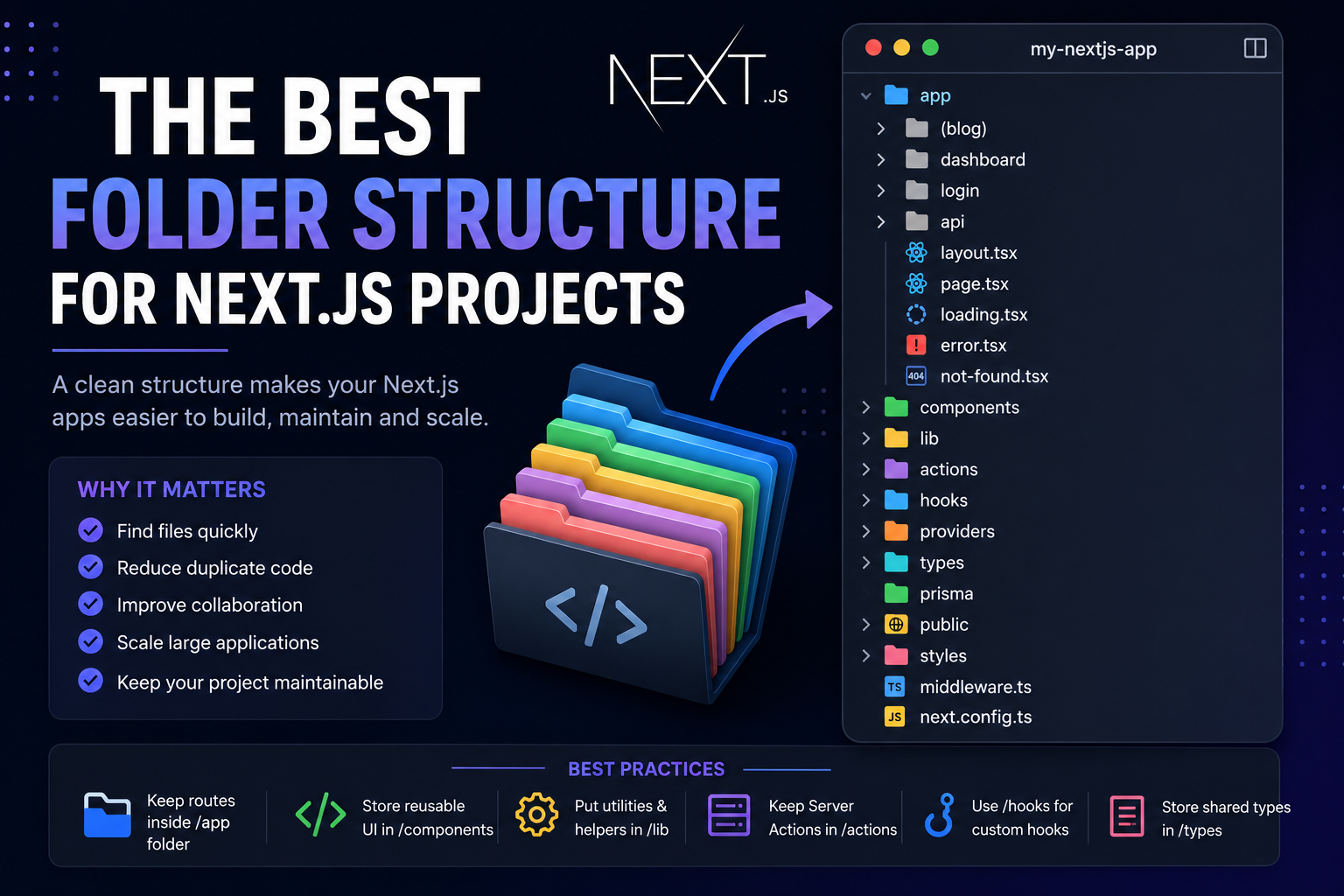
The Best Folder Structure for Next.js Projects in 2026
A clean folder structure makes every Next.js project easier to build, maintain, and scale. Discover the best folder organization for modern Next.js applications in 2026, whether you're building a blog, SaaS, dashboard, or enterprise application.
4 min read · 151 views

Next.js
How to Build a Blog with Next.js 16: Complete Beginner Guide
Learn how to create a modern blog with Next.js 16 using dynamic pages, categories, tags, excerpts, SEO metadata, and a scalable content structure.
3 min read · 140 views
Trending
Popular Posts
Productivity Tools That Save Developers Hours in 2026
680 views
The Most Valuable Skills to Learn in the AI Era (2026 and Beyond)
330 views
Vibe Coding vs Learning to Code: Which Path Will Take You Further?
277 views
The Best Folder Structure for Next.js Projects in 2026
151 views
How to Build a Blog with Next.js 16: Complete Beginner Guide
140 views
Comments
No approved comments yet.