Database
Prisma vs Drizzle ORM: Which One Should You Choose in 2026?
By Yahya Saeed · 4 min read · 132 views
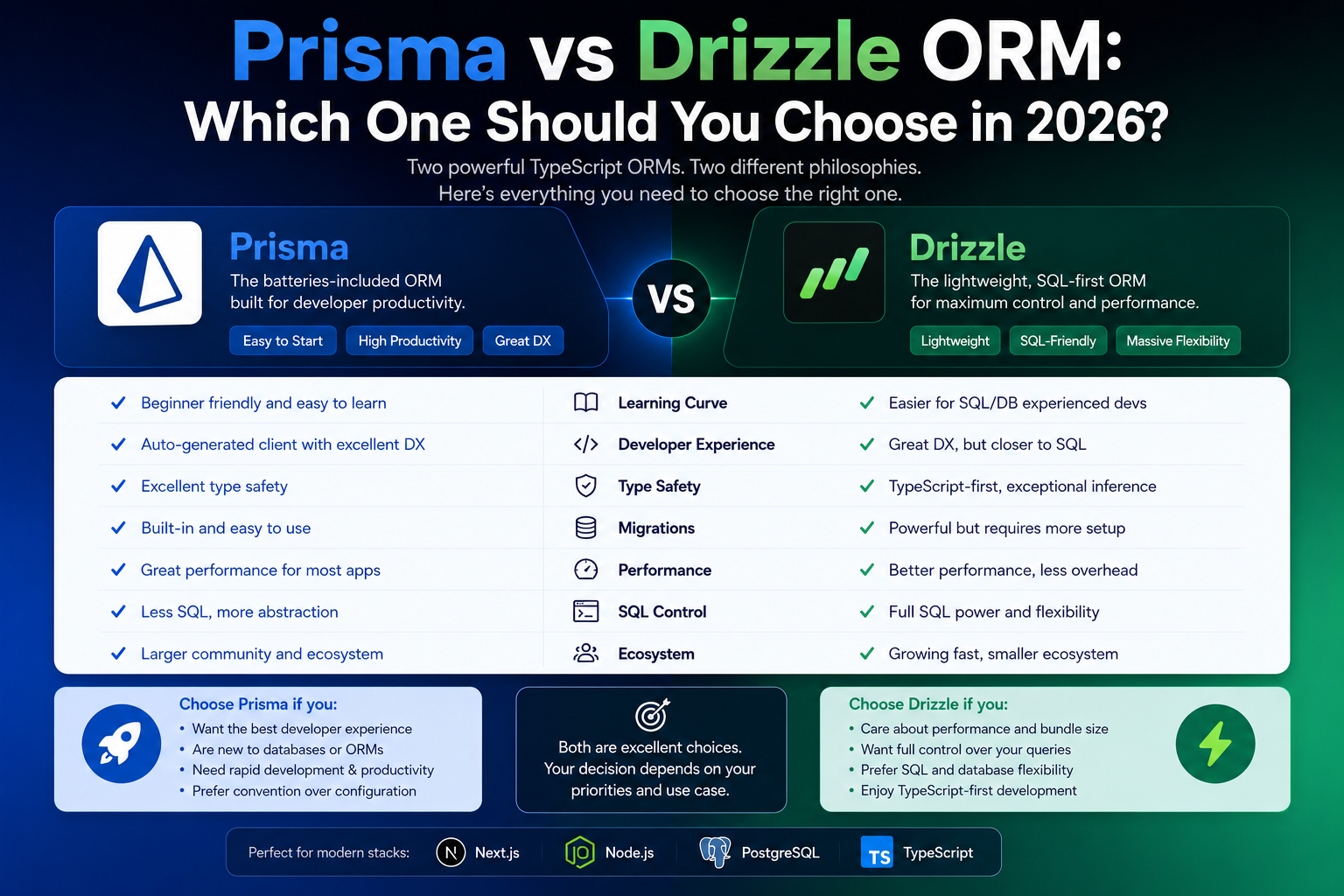
Prisma vs Drizzle ORM: Which One Should You Choose in 2026?
If you're building modern applications with Next.js, Node.js, PostgreSQL, or TypeScript, you've probably encountered two names repeatedly:
Prisma and Drizzle ORM.
Both are excellent tools.
Both are widely used.
And both promise a better developer experience compared to writing raw SQL everywhere.
But despite serving similar purposes, they take very different approaches.
Choosing the right ORM can affect your productivity, application performance, maintainability, and overall development experience.
Let's compare Prisma and Drizzle to determine which one might be best for your next project.
What Is Prisma?
Prisma is a next-generation ORM designed to simplify database development.
Instead of writing database models directly in TypeScript, Prisma uses a dedicated schema file.
Example:
model User {
  id    String @id @default(cuid())
  name  String
  email String @unique
}
Prisma then generates a fully typed database client automatically.
Query example:
const users = await prisma.user.findMany();
Its primary goal is simplicity and developer productivity.
What Is Drizzle ORM?
Drizzle takes a different approach.
Instead of defining schemas in a separate language, everything is written directly in TypeScript.
Example:
export const users = pgTable("users", {
  id: text("id").primaryKey(),
  name: text("name").notNull(),
  email: text("email").notNull(),
});
Query example:
const users = await db.select().from(users);
Drizzle focuses on being lightweight, SQL-friendly, and closely aligned with the underlying database.
Developer Experience
When it comes to developer experience, Prisma is difficult to beat.
Features include:
Auto-generated client
Excellent autocomplete
Easy relationships
Intuitive API
Clear documentation
Beginners often become productive very quickly.
Drizzle offers a great experience as well, but it feels closer to SQL.
Developers who already understand databases often appreciate this approach.
Winner: Prisma
For pure developer experience and ease of use, Prisma has an advantage.
Type Safety
Both Prisma and Drizzle provide outstanding TypeScript support.
However, Drizzle was designed with TypeScript-first principles from the beginning.
Everything exists directly in TypeScript.
There is no generated client layer.
This creates extremely strong type inference.
Winner: Drizzle
The difference is small, but Drizzle's TypeScript integration is exceptional.
Learning Curve
Prisma is generally easier for beginners.
You define models, generate the client, and start querying.
The syntax feels approachable.
Drizzle requires:
Understanding TypeScript types
Understanding SQL concepts
Understanding schema definitions
Developers with SQL experience usually adapt quickly.
Beginners may find Prisma easier initially.
Winner: Prisma
Performance
Performance is one of Drizzle's biggest selling points.
Because Drizzle is lightweight and generates minimal abstraction, queries are often extremely efficient.
Prisma adds an additional layer between your application and the database.
While Prisma performs well in most situations, Drizzle generally has less overhead.
For high-performance applications, this can matter.
Winner: Drizzle
SQL Friendliness
Some developers love writing SQL.
Others prefer abstraction.
Prisma hides much of the SQL complexity.
This improves productivity but sometimes limits flexibility.
Drizzle stays very close to SQL.
Complex queries often feel more natural.
Developers retain greater control over database behavior.
Winner: Drizzle
Migrations
Both tools support migrations.
Prisma migrations are straightforward and beginner-friendly.
Commands such as:
npx prisma migrate dev
make database changes simple.
Drizzle migrations are powerful and flexible but may require a deeper understanding of database concepts.
Winner: Prisma
Query Simplicity
Prisma's query syntax is incredibly readable.
Example:
const posts = await prisma.post.findMany({
  where: {
    published: true,
  },
});
Many developers find this easier to understand than equivalent SQL-based approaches.
Drizzle remains clean but generally feels closer to actual database queries.
Winner: Prisma
Bundle Size
Drizzle is significantly lighter.
It was built with performance and minimalism in mind.
Prisma requires:
Generated clients
Additional binaries
More dependencies
For serverless environments and edge deployments, bundle size can become important.
Winner: Drizzle
Working with Next.js
Both ORMs work extremely well with Next.js.
Prisma has become a common choice for:
SaaS platforms
Dashboards
Admin panels
Content management systems
Drizzle has gained popularity among developers building:
High-performance applications
Edge-first apps
Modern serverless projects
Both integrate smoothly with PostgreSQL.
Winner: Tie
Community and Ecosystem
Prisma has been around longer and has a larger ecosystem.
Benefits include:
Extensive documentation
Larger community
More tutorials
More examples
Greater adoption
Finding solutions is often easier.
Drizzle's community is growing rapidly but remains smaller.
Winner: Prisma
Which ORM Should Beginners Choose?
If you're learning full-stack development and building projects with:
Next.js
PostgreSQL
TypeScript
Prisma is usually the easier starting point.
It allows developers to focus on application logic rather than database complexity.
Many beginners become productive within hours.
Which ORM Should Experienced Developers Choose?
Developers who:
Love SQL
Want maximum control
Care about performance
Prefer lightweight tools
often prefer Drizzle.
Its design philosophy appeals strongly to experienced developers.
My Recommendation
For most developers in 2026:
Choose Prisma if:
You're learning databases
You want the best developer experience
You value productivity
You're building SaaS products
You want extensive documentation
Choose Drizzle if:
You enjoy SQL
You want more control
Performance is a priority
You prefer lightweight tooling
You like TypeScript-first solutions
Final Thoughts
Prisma and Drizzle are not enemies.
They simply solve the same problem differently.
Prisma prioritizes developer experience and simplicity.
Drizzle prioritizes performance, flexibility, and closeness to SQL.
Neither choice is wrong.
In fact, both are excellent options for modern TypeScript development.
If you're a beginner, Prisma will likely help you move faster.
If you're an experienced developer seeking maximum control and efficiency, Drizzle may be the better fit.
The good news is that whichever ORM you choose, you'll be working with one of the best database tools available in 2026.
Keep reading
Related Posts
Next.js
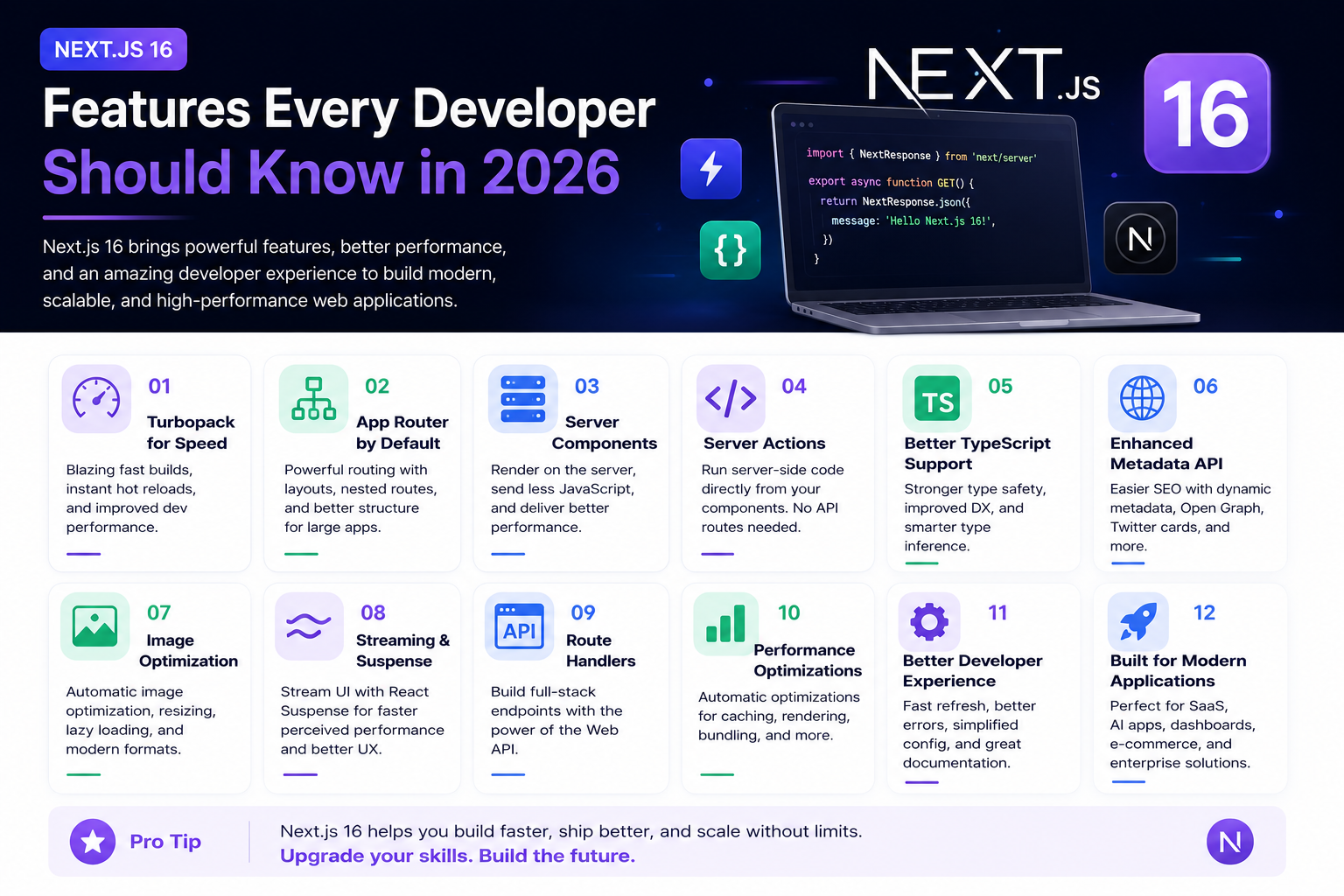
Next.js 16 Features Every Developer Should Know in 2026
Next.js 16 continues to push modern web development forward with improved performance, better developer experience, enhanced routing, and powerful server-side capabilities. Whether you're building a blog, SaaS platform, portfolio, or enterprise application, these are the most important Next.js 16 features every developer should understand.
4 min read · 192 views
Next.js
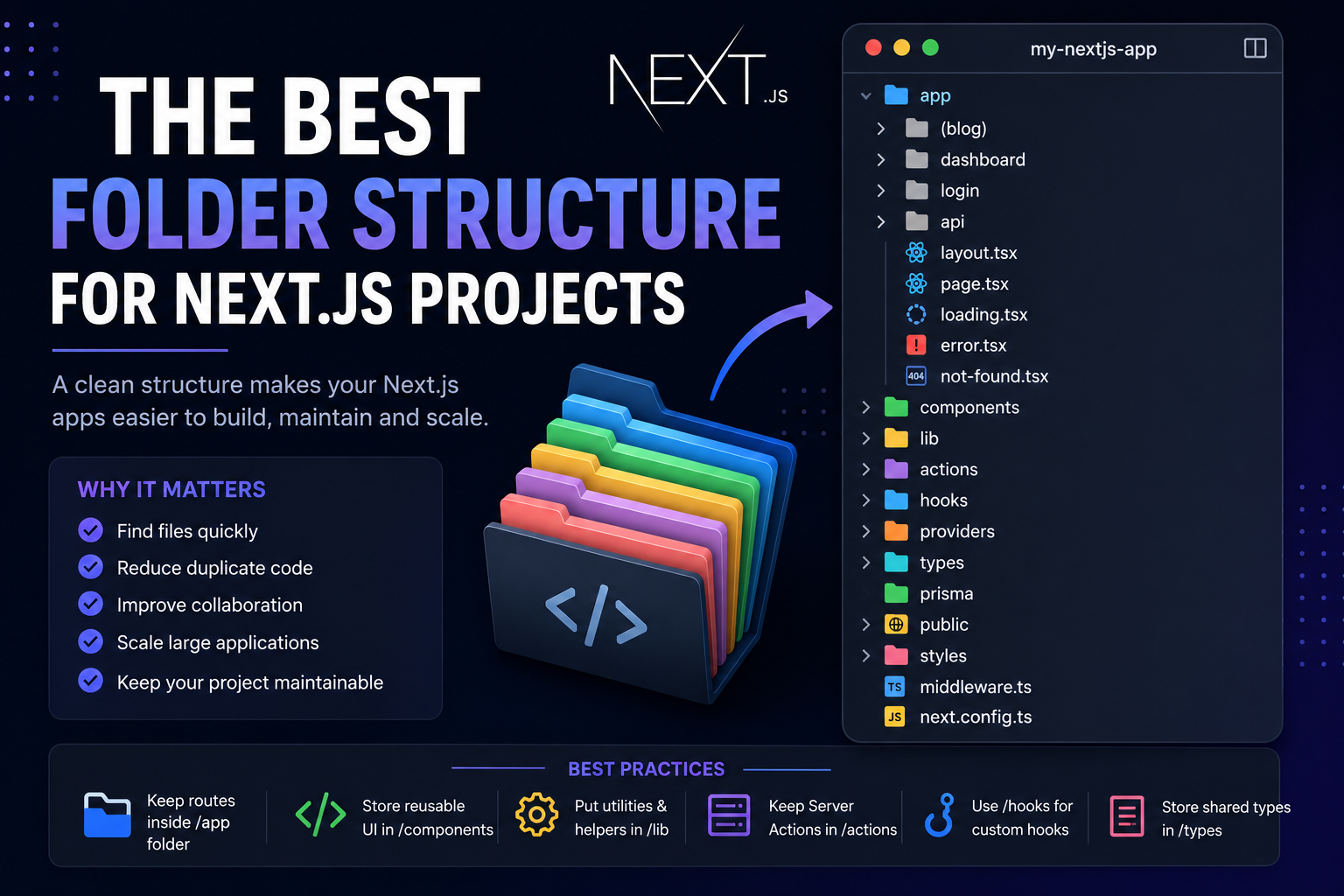
The Best Folder Structure for Next.js Projects in 2026
A clean folder structure makes every Next.js project easier to build, maintain, and scale. Discover the best folder organization for modern Next.js applications in 2026, whether you're building a blog, SaaS, dashboard, or enterprise application.
4 min read · 152 views
CSS
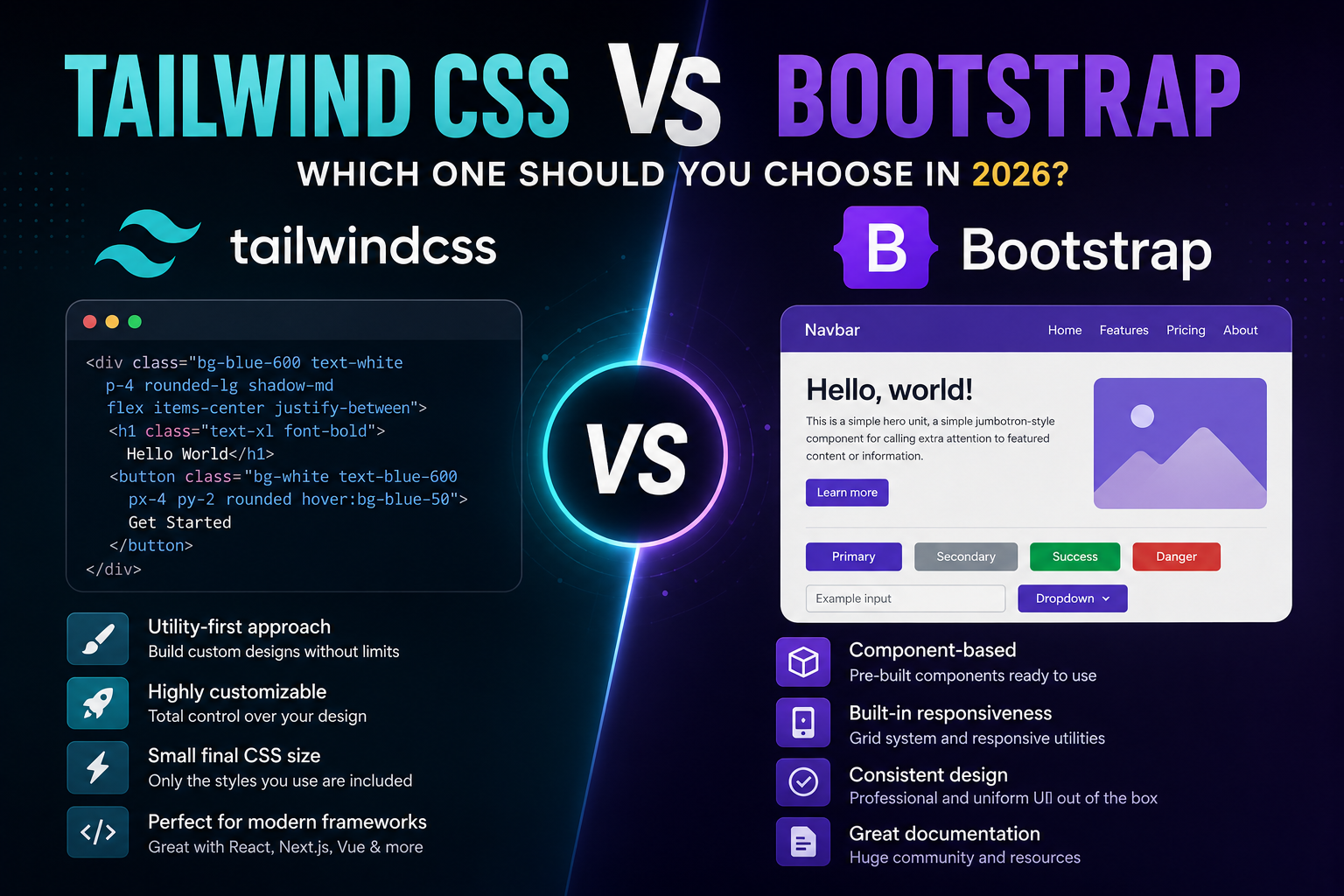
Tailwind CSS vs Bootstrap: Which One Should You Choose in 2026?
Tailwind CSS and Bootstrap are two of the most popular frontend frameworks ever created. Both help developers build websites faster, but they take completely different approaches. If you're starting a new project in 2026, which one should you choose? Let's compare them and find out.
4 min read · 118 views
Trending
Popular Posts
Productivity Tools That Save Developers Hours in 2026
681 views
The Most Valuable Skills to Learn in the AI Era (2026 and Beyond)
331 views
Vibe Coding vs Learning to Code: Which Path Will Take You Further?
277 views
Next.js 16 Features Every Developer Should Know in 2026
192 views
The Best Folder Structure for Next.js Projects in 2026
152 views
Comments
No approved comments yet.