SaaS & Startups
Mistakes That Kill SaaS Startups
By Yahya Saeed · 4 min read · 70 views
Mistakes That Kill SaaS Startups
Every year, thousands of SaaS startups launch with high hopes.
Many have talented developers.
Some have beautiful websites.
Others even have impressive technology.
Yet most of them fail.
Contrary to popular belief, the biggest reason isn't poor programming.
It's poor decision-making.
Building a successful SaaS product is about solving real problems, understanding customers, and making smart business decisions not just writing code.
Let's explore the most common mistakes that cause SaaS startups to fail and how you can avoid them.
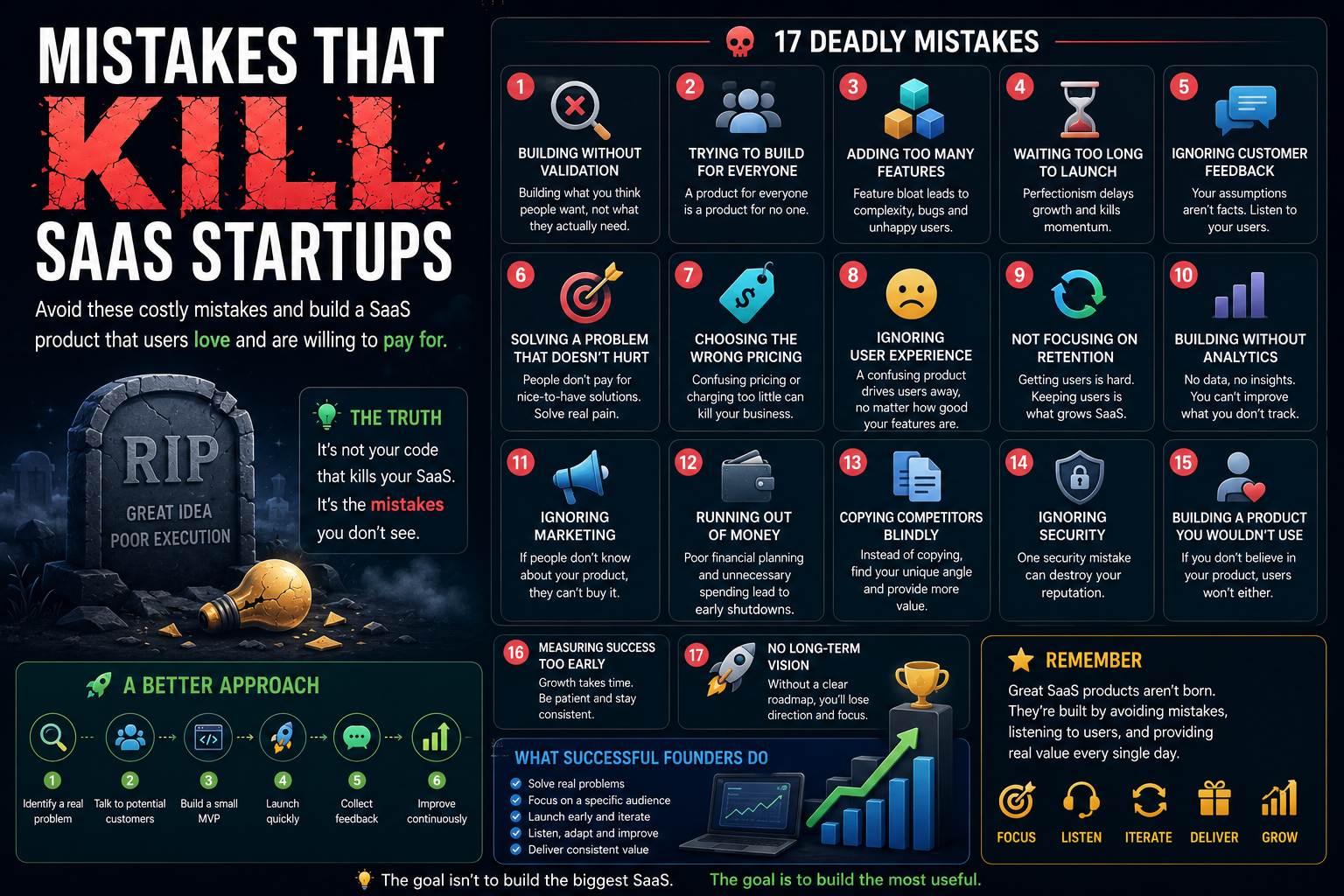
Building Without Validating the Idea
This is the biggest mistake founders make.
They spend six monthsor even a year building a product before talking to a single potential customer.
Then they launch and discover that nobody wants it.
Before writing code, ask questions like:
Does this solve a real problem?
Who experiences this problem?
Are people already paying to solve it?
Would someone pay for my solution?
Validation is always cheaper than rebuilding.
Trying to Build for Everyone
A product designed for everyone usually helps no one.
Instead of targeting every business, focus on a specific audience.
For example:
Dental clinics
Freelancers
Construction companies
Fitness coaches
Restaurants
Real estate agencies
The more specific your audience, the easier it becomes to build features they actually need.
Adding Too Many Features
Many founders believe more features equal more value.
In reality, too many features often create:
Confusing interfaces
Longer development time
More bugs
Higher maintenance costs
Slower performance
Start with one core problem.
Solve it exceptionally well before expanding.
Waiting Too Long to Launch
Many startups delay launching because they want everything to be perfect.
The perfect dashboard.
The perfect landing page.
The perfect logo.
The perfect onboarding.
The truth is that users provide the best feedback after launch not before it.
Launch early.
Improve continuously.
Ignoring Customer Feedback
Your assumptions are not facts.
Users will often use your product in ways you never expected.
Listen carefully to:
Feature requests
Complaints
Reviews
Support tickets
Usage patterns
Customers are your best product advisors.
Solving a Problem That Doesn't Hurt Enough
People rarely pay for software that solves a minor inconvenience.
They gladly pay for software that:
Saves time
Saves money
Increases revenue
Reduces mistakes
Automates repetitive work
Simplifies complex tasks
The bigger the pain, the easier the sale.
Choosing the Wrong Pricing Model
Pricing can make or break a SaaS business.
Common mistakes include:
Charging too little
Complicated pricing tiers
Hidden costs
Unlimited plans that aren't sustainable
Keep pricing simple and easy to understand.
Users should know exactly what they're paying for.
Ignoring User Experience
A powerful product with a confusing interface won't keep customers.
Good SaaS products are:
Simple
Fast
Consistent
Easy to navigate
Easy to learn
Every unnecessary click increases the chance that users leave.
Not Focusing on Retention
Getting users is important.
Keeping them is even more important.
Successful SaaS businesses measure:
Daily active users
Monthly active users
Customer retention
Churn rate
Feature usage
Happy customers stay longer and recommend your product to others.
Building Without Analytics
You can't improve what you don't measure.
Track metrics such as:
Sign-ups
Active users
Conversion rates
Feature usage
Customer lifetime value
Churn
Data helps you make better decisions.
Ignoring Marketing
Many developers believe:
"If I build something amazing, people will find it."
Unfortunately, that's rarely true.
Marketing should begin before launch.
Useful marketing channels include:
Blogging
SEO
YouTube
LinkedIn
Twitter/X
Reddit
Email newsletters
People need to know your product exists before they can become customers.
Running Out of Money
Cash flow matters.
Many startups spend heavily on:
Expensive software
Large teams
Office space
Advertising
Unnecessary tools
Start lean.
Invest only in what helps your product grow.
Copying Competitors Blindly
Learning from competitors is smart.
Copying them feature for feature is not.
Instead, ask:
What are users complaining about?
What features are missing?
What can I simplify?
Where can I provide a better experience?
Differentiate yourself through execution.
Ignoring Security
Users trust you with their data.
Protect it.
Every SaaS should prioritize:
Secure authentication
Encrypted connections
Regular backups
Input validation
Proper authorization
Security updates
A single security issue can permanently damage your reputation.
Building a Product You Wouldn't Use
The best founders genuinely understand the problems they're solving.
Whenever possible, build software that you or your team would happily use every day.
You'll notice problems faster and improve the product naturally.
Measuring Success Too Early
Many founders give up after:
One month
Ten users
A few failed launches
Slow growth
Successful SaaS businesses often take years not months to gain momentum.
Consistency usually beats speed.
A Better Approach
Instead of chasing perfection, follow a simple process:
Identify a real problem.
Talk to potential customers.
Build a small MVP.
Launch quickly.
Collect feedback.
Improve continuously.
Repeat.
This approach dramatically increases your chances of success.
Final Thoughts
Most SaaS startups don't fail because the technology wasn't good enough.
They fail because they solve the wrong problem, build for the wrong audience, or wait too long to learn from real users.
The founders who succeed aren't necessarily the smartest developers they're the ones who listen, adapt, and keep improving.
Don't aim to build the biggest SaaS product.
Aim to build the most useful one.
Solve one meaningful problem exceptionally well, earn your users' trust, and continue refining your product with every release.
That's how sustainable SaaS businesses are built.
Keep reading
Related Posts
Web Development
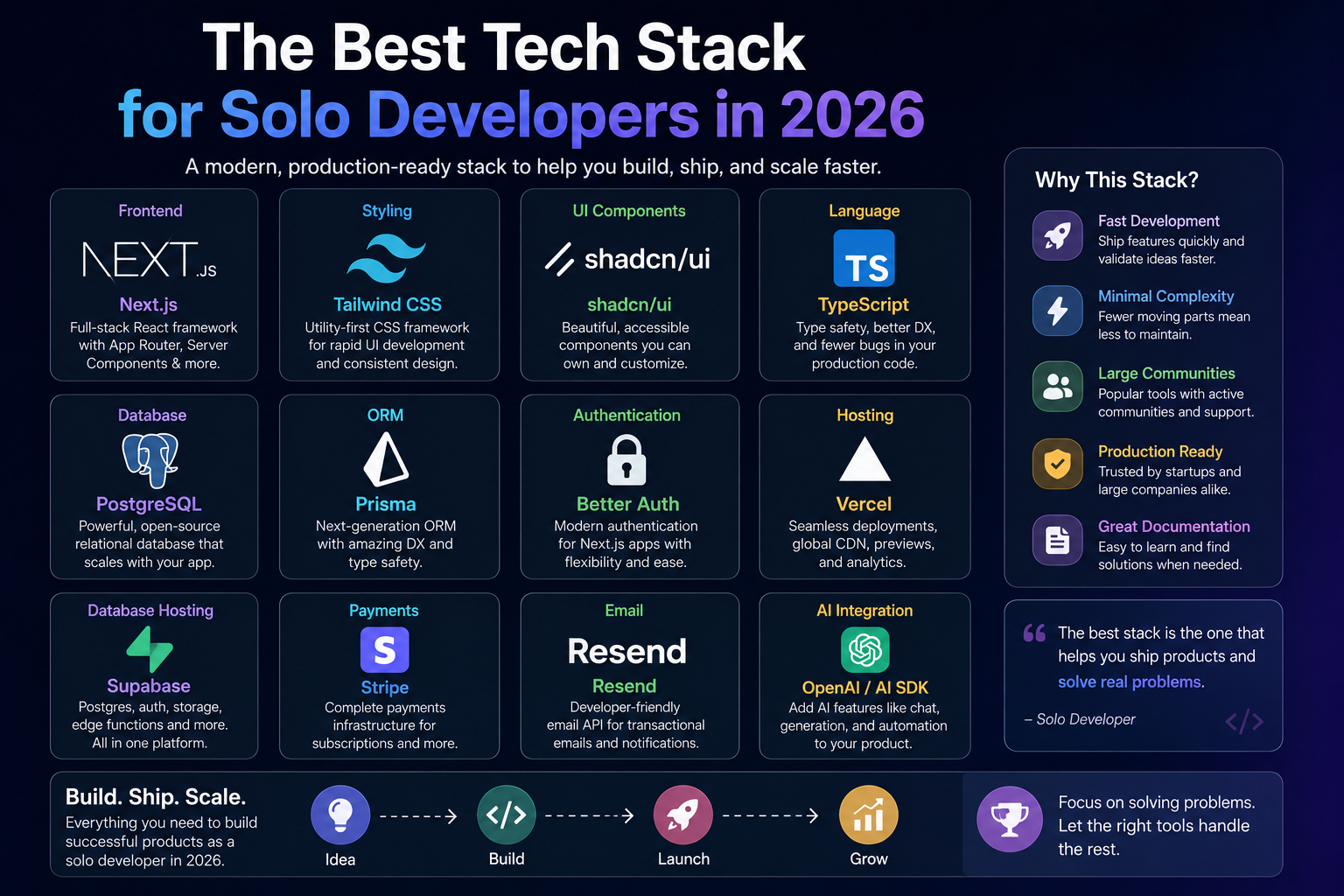
The Best Tech Stack for Solo Developers in 2026
Choosing the right tech stack can make or break a project—especially when you're building alone. As a solo developer, you need tools that help you move fast, stay productive, and scale without unnecessary complexity. Here's the tech stack I believe offers the best balance of speed, simplicity, and power in 2026.
4 min read · 113 views
AI & SaaS
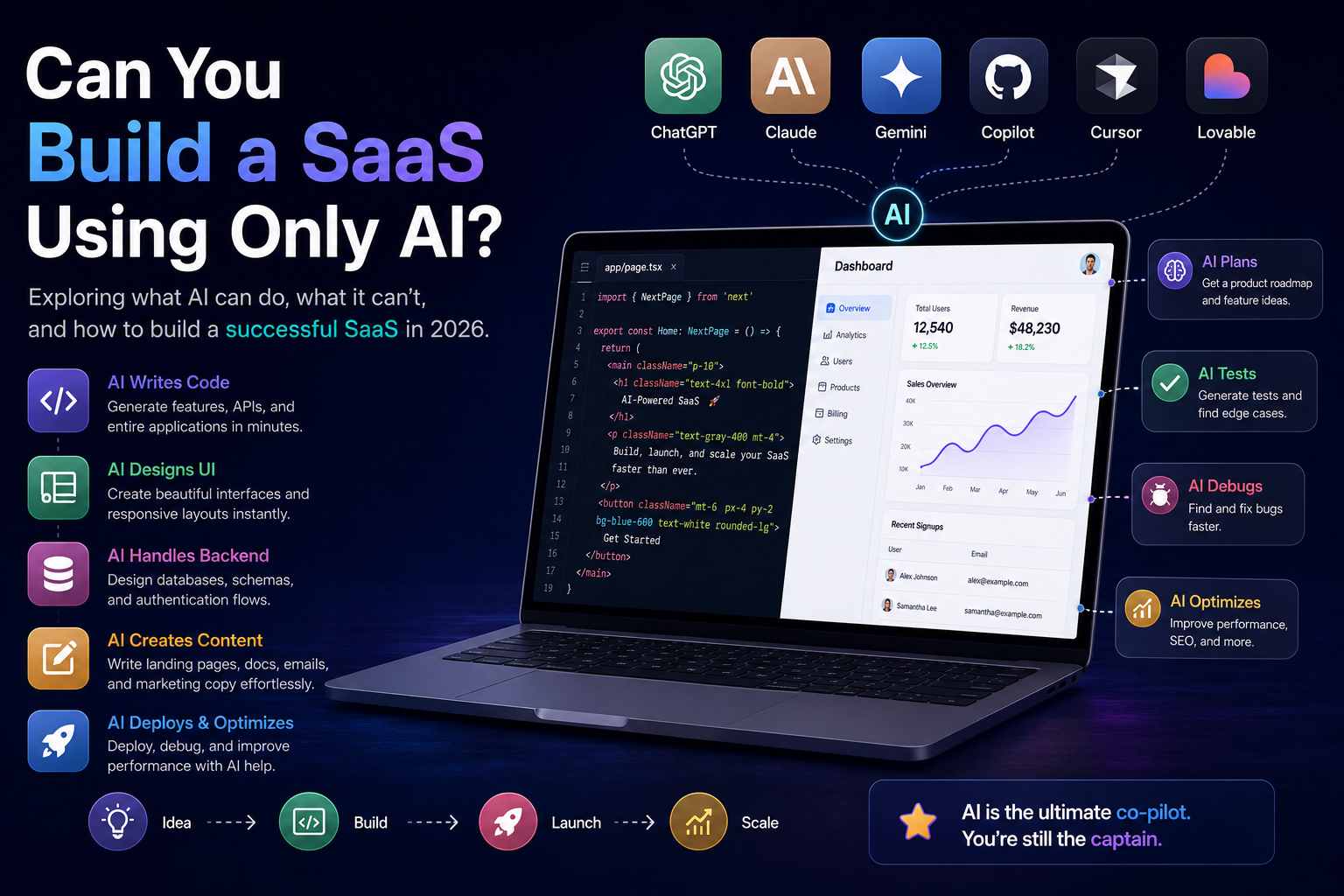
Can You Build a SaaS Using Only AI in 2026? The Honest Answer
AI can write code, design interfaces, generate content, and even help deploy applications. But can it build an entire SaaS business by itself? Let's separate hype from reality and explore what AI can—and cannot—do when building a modern SaaS product.
4 min read · 103 views
SaaS & Entrepreneurship
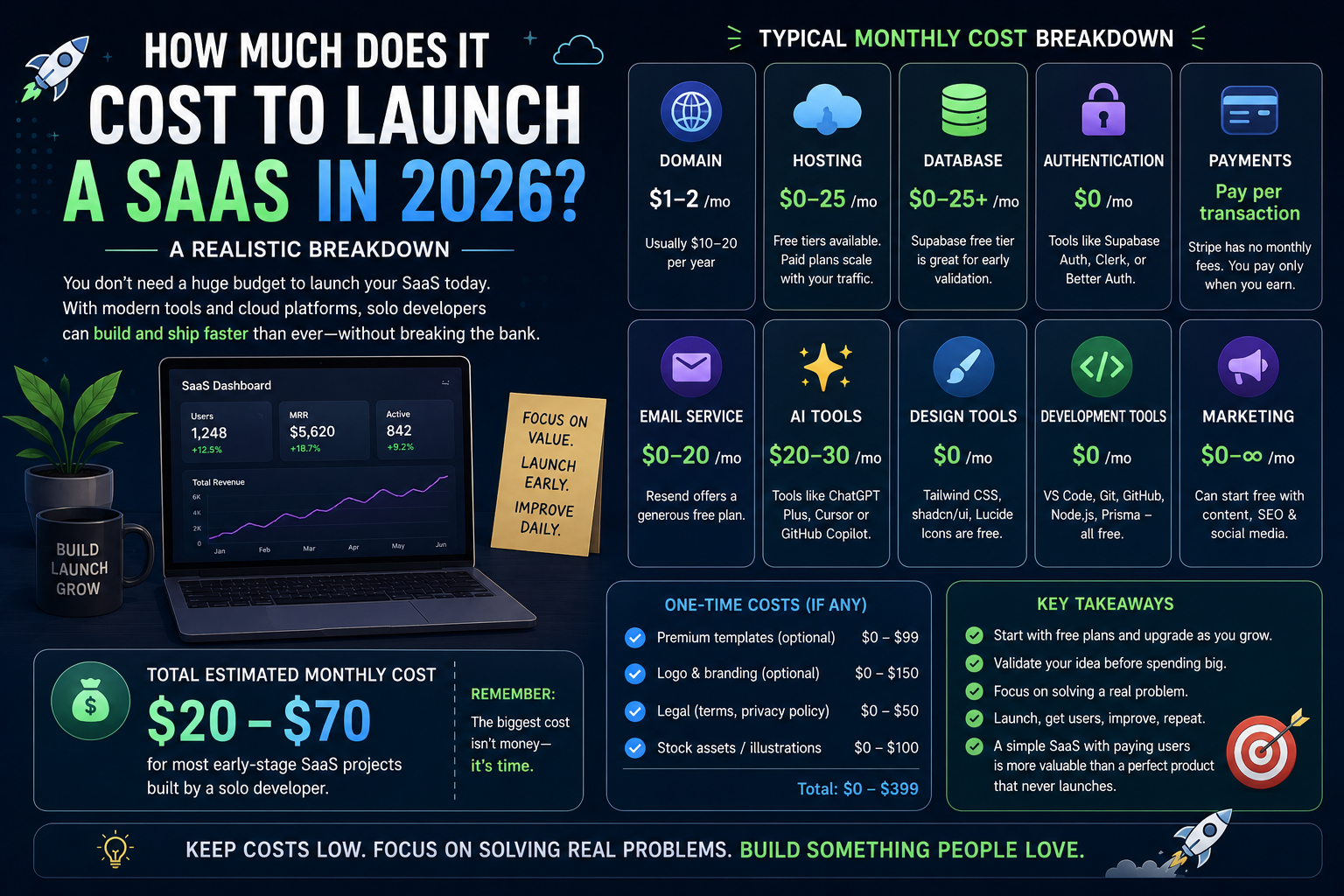
How Much Does It Cost to Launch a SaaS in 2026? A Realistic Breakdown
Launching a SaaS no longer requires hundreds of thousands of dollars. Thanks to modern frameworks, cloud platforms, and AI-powered tools, solo developers can build and launch professional software products on surprisingly small budgets. Here's a realistic look at what it actually costs to launch a SaaS in 2026.
4 min read · 101 views
Trending
Popular Posts
Productivity Tools That Save Developers Hours in 2026
681 views
The Most Valuable Skills to Learn in the AI Era (2026 and Beyond)
331 views
Vibe Coding vs Learning to Code: Which Path Will Take You Further?
277 views
Next.js 16 Features Every Developer Should Know in 2026
192 views
The Best Folder Structure for Next.js Projects in 2026
151 views
Comments
No approved comments yet.