Database
Everything You Need to Know About PostgreSQL
By Yahya Saeed · 6 min read · 70 views
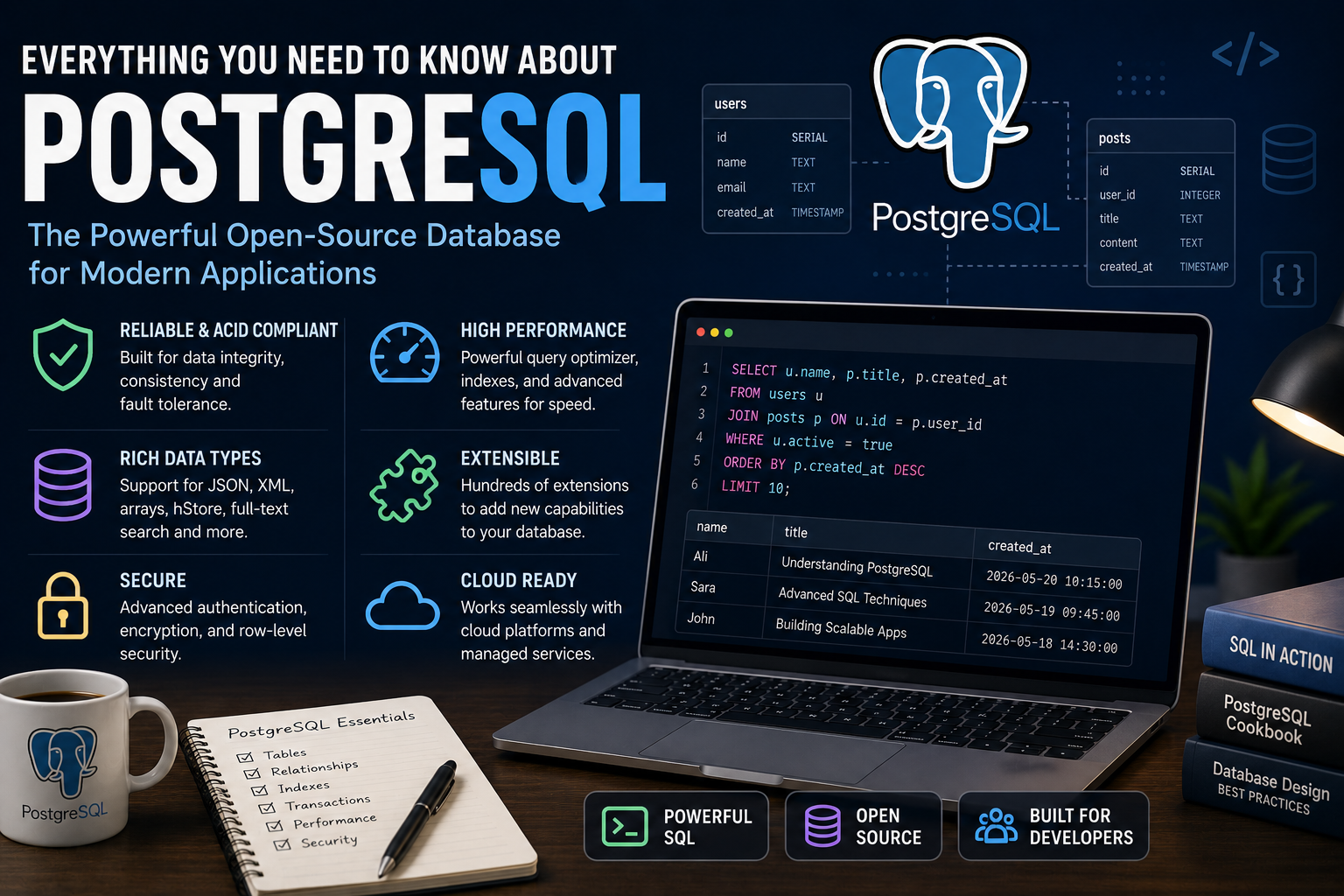
Everything You Need to Know About PostgreSQL
PostgreSQL (often called Postgres) is one of the most trusted and widely used databases in modern software development.
Whether you're building a simple blog, an e-commerce platform, a SaaS product, or an enterprise application, PostgreSQL provides the reliability, performance, and scalability needed to power your application.
If you're learning Next.js, Node.js, Prisma, or Supabase, PostgreSQL is one of the best databases you can invest your time in learning.
In this guide, we'll cover everything you need to know to confidently start using PostgreSQL in 2026.
What is PostgreSQL?
PostgreSQL is a free and open-source Relational Database Management System (RDBMS).
It stores information in tables made up of rows and columns while allowing developers to create relationships between different pieces of data.
Unlike many traditional databases, PostgreSQL also supports advanced features like JSON storage, full-text search, transactions, custom data types, and extensions.
That's why it's trusted by startups, governments, banks, and some of the world's largest technology companies.
Why Developers Love PostgreSQL
PostgreSQL has remained one of the most popular databases for decades because it offers an excellent balance of performance, reliability, and flexibility.
Some of its biggest advantages include:
Completely free and open source
Extremely reliable and stable
Excellent performance
ACID-compliant transactions
Powerful SQL support
Advanced indexing
JSON and JSONB support
Highly scalable
Strong security features
Large community and documentation
For most web applications, PostgreSQL is an excellent choice.
Understanding Tables
Data inside PostgreSQL is organized into tables.
Think of a table as a spreadsheet where each row represents one record and each column stores a specific type of information.
For example, a users table might contain:
ID
Name
Email
Password
Created Date
Every application you build will likely have multiple tables connected together.
Data Types
Choosing the correct data type helps improve performance and keeps your data consistent.
Some of the most common PostgreSQL data types are:
INTEGER
BIGINT
TEXT
VARCHAR
BOOLEAN
DATE
TIMESTAMP
UUID
DECIMAL
JSON
JSONB
Understanding these types early will make designing databases much easier.
Primary Keys
Every table should have a unique identifier called a Primary Key.
Example:
CREATE TABLE users (
    id SERIAL PRIMARY KEY,
    name TEXT NOT NULL
);
A primary key ensures every row can be uniquely identified.
Without it, updating or deleting specific records becomes much more difficult.
Foreign Keys
Real applications contain relationships between tables.
For example:
One user can write many blog posts.
One customer can have many orders.
One category can contain many products.
Foreign keys allow PostgreSQL to maintain these relationships while ensuring data integrity.
CREATE TABLE posts (
    id SERIAL PRIMARY KEY,
    title TEXT,
    user_id INTEGER REFERENCES users(id)
);
This guarantees every post belongs to a valid user.
CRUD Operations
Almost every application performs four basic database operations.
Create
INSERT INTO users (name, email)
VALUES ('Ali', 'ali@example.com');
Read
SELECT * FROM users;Update
UPDATE users
SET name = 'Ahmed'
WHERE id = 1;
Delete
DELETE FROM users
WHERE id = 1;
Mastering these four operations is the foundation of backend development.
Filtering Data
Most applications don't need every record.
You can retrieve only the data you need using the WHERE clause.
SELECT *
FROM users
WHERE active = true;
You can combine multiple conditions as well.
SELECT *
FROM users
WHERE age >= 18
AND country = 'Pakistan';
Efficient filtering improves both speed and user experience.
Sorting Results
PostgreSQL allows you to organize results using ORDER BY.
Newest first:
SELECT *
FROM posts
ORDER BY created_at DESC;
Oldest first:
SELECT *
FROM posts
ORDER BY created_at ASC;
Sorting is commonly used in blogs, dashboards, reports, and admin panels.
Joining Tables
As your application grows, you'll store information across multiple tables.
The JOIN keyword allows you to combine related data.
SELECT users.name, posts.title
FROM users
JOIN posts
ON users.id = posts.user_id;
Learning joins is one of the biggest milestones in becoming comfortable with SQL.
Indexes
When a database contains thousands—or even millions—of records, searching every row becomes slow.
Indexes dramatically improve query performance by allowing PostgreSQL to locate data much faster.
Indexes are commonly added to:
Email addresses
Usernames
Product slugs
Foreign keys
Frequently searched fields
Used correctly, indexes can reduce query times from seconds to milliseconds.
Transactions
Sometimes multiple database operations must either all succeed or all fail.
Imagine transferring money between two bank accounts.
If one update succeeds but the other fails, the database becomes inconsistent.
Transactions solve this problem.
BEGIN;

UPDATE accounts
SET balance = balance - 100
WHERE id = 1;

UPDATE accounts
SET balance = balance + 100
WHERE id = 2;

COMMIT;
Transactions are one of PostgreSQL's strongest features.
JSON Support
Modern applications often need flexible data structures.
PostgreSQL supports JSON and JSONB, allowing you to store structured data directly inside the database.
Example:
{
  "theme": "dark",
  "notifications": true,
  "language": "en"
}
This makes PostgreSQL suitable for both traditional relational data and semi-structured data.
PostgreSQL with Prisma
If you're using Next.js or Node.js, Prisma is one of the best ORMs available.
Prisma works exceptionally well with PostgreSQL by providing:
Type-safe database queries
Automatic migrations
Relationship management
Schema modeling
Excellent developer experience
Instead of writing SQL for every query, Prisma generates a clean and intuitive API.
PostgreSQL with Supabase
Supabase is built on top of PostgreSQL.
When you use Supabase, you're actually working with a managed PostgreSQL database.
Supabase also provides:
Authentication
File storage
Real-time updates
Dashboard management
Row-Level Security
Edge Functions
This makes it an excellent backend solution for modern web applications.
Performance Tips
As your application grows, following good database practices becomes increasingly important.
Some simple tips include:
Create indexes on frequently searched columns.
Avoid selecting unnecessary data.
Use pagination for large datasets.
Normalize your database structure.
Keep transactions short.
Monitor slow queries.
Regularly back up your database.
Small optimizations can have a significant impact on performance.
Common Beginner Mistakes
New developers often make mistakes that can hurt performance later.
Some of the most common ones include:
Storing everything as TEXT.
Forgetting primary keys.
Ignoring indexes.
Fetching unnecessary data.
Duplicating information.
Not using foreign keys.
Skipping backups.
Understanding these early will save countless hours in the future.
When Should You Choose PostgreSQL?
PostgreSQL is an excellent choice for almost any application, including:
SaaS products
Blogs
E-commerce stores
CRM systems
Clinic management systems
Inventory software
Finance applications
Analytics dashboards
Multi-user platforms
Unless you have very specific requirements, PostgreSQL is rarely the wrong choice.
A Learning Roadmap
If you're just getting started, follow this roadmap:
Learn SQL basics.
Create tables.
Understand primary and foreign keys.
Practice CRUD operations.
Learn filtering and sorting.
Master joins.
Understand indexes.
Learn transactions.
Connect PostgreSQL with Prisma.
Build real-world projects.
Building projects is the fastest way to become confident with PostgreSQL.
Final Thoughts
PostgreSQL has earned its reputation as one of the best databases available today.
It's powerful enough for enterprise systems yet approachable enough for beginners. Whether you're creating your first portfolio project or building a production-ready SaaS application, PostgreSQL gives you a solid foundation that can scale as your application grows.
Instead of trying to memorize every SQL command, focus on understanding how data is organized, connected, and queried. Once those concepts become second nature, you'll be able to design efficient databases, write better applications, and solve real-world problems with confidence.
If you're serious about becoming a modern full-stack developer in 2026, learning PostgreSQL is one of the smartest investments you can make.
Keep reading
Related Posts
Programming
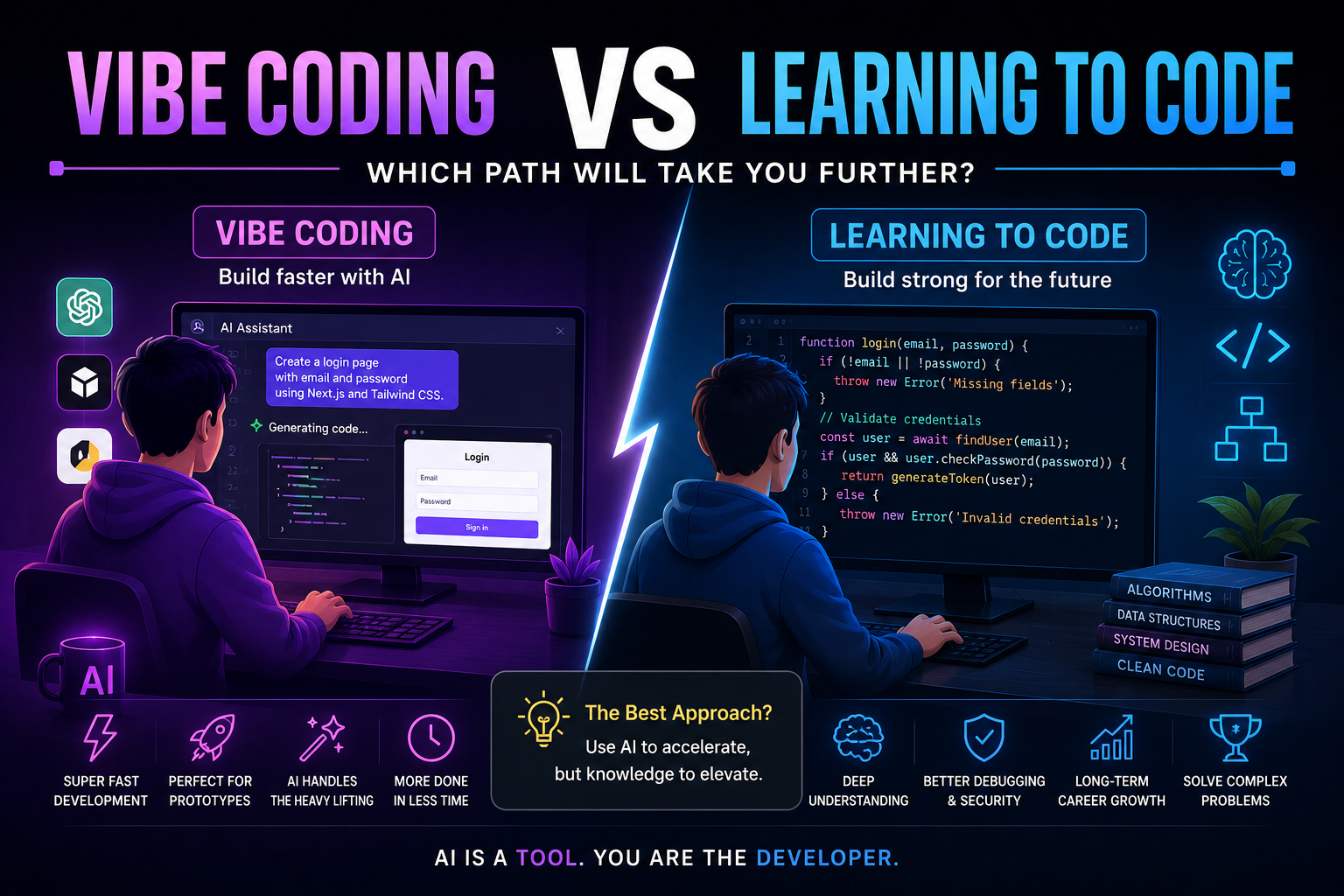
Vibe Coding vs Learning to Code: Which Path Will Take You Further?
AI can build apps faster than ever, leading to the rise of "vibe coding." But does that mean learning to code is no longer necessary? Let's explore the strengths, weaknesses, and future of both approaches to discover which path offers the greatest long-term value.
4 min read · 277 views
Next.js
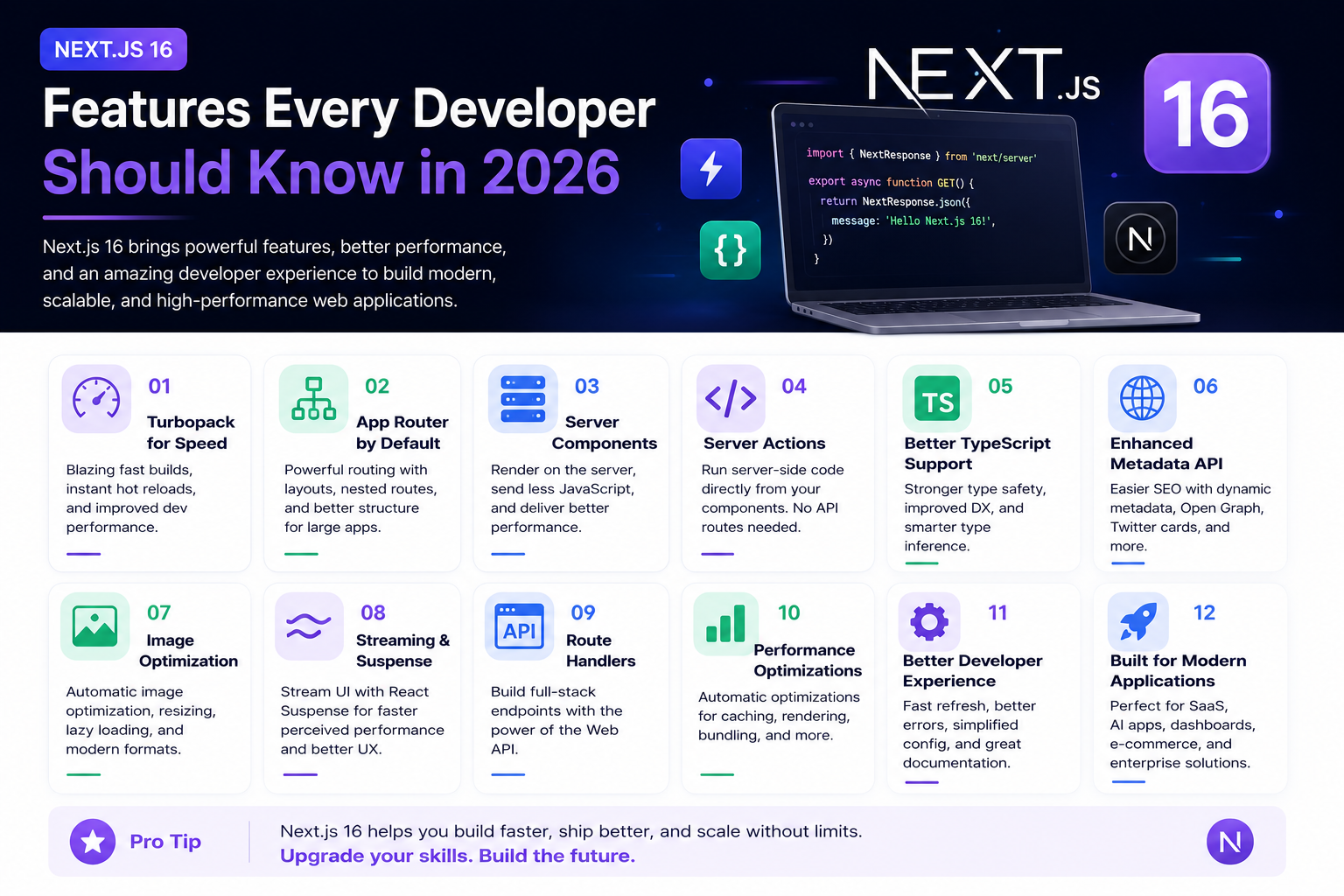
Next.js 16 Features Every Developer Should Know in 2026
Next.js 16 continues to push modern web development forward with improved performance, better developer experience, enhanced routing, and powerful server-side capabilities. Whether you're building a blog, SaaS platform, portfolio, or enterprise application, these are the most important Next.js 16 features every developer should understand.
4 min read · 192 views
Next.js
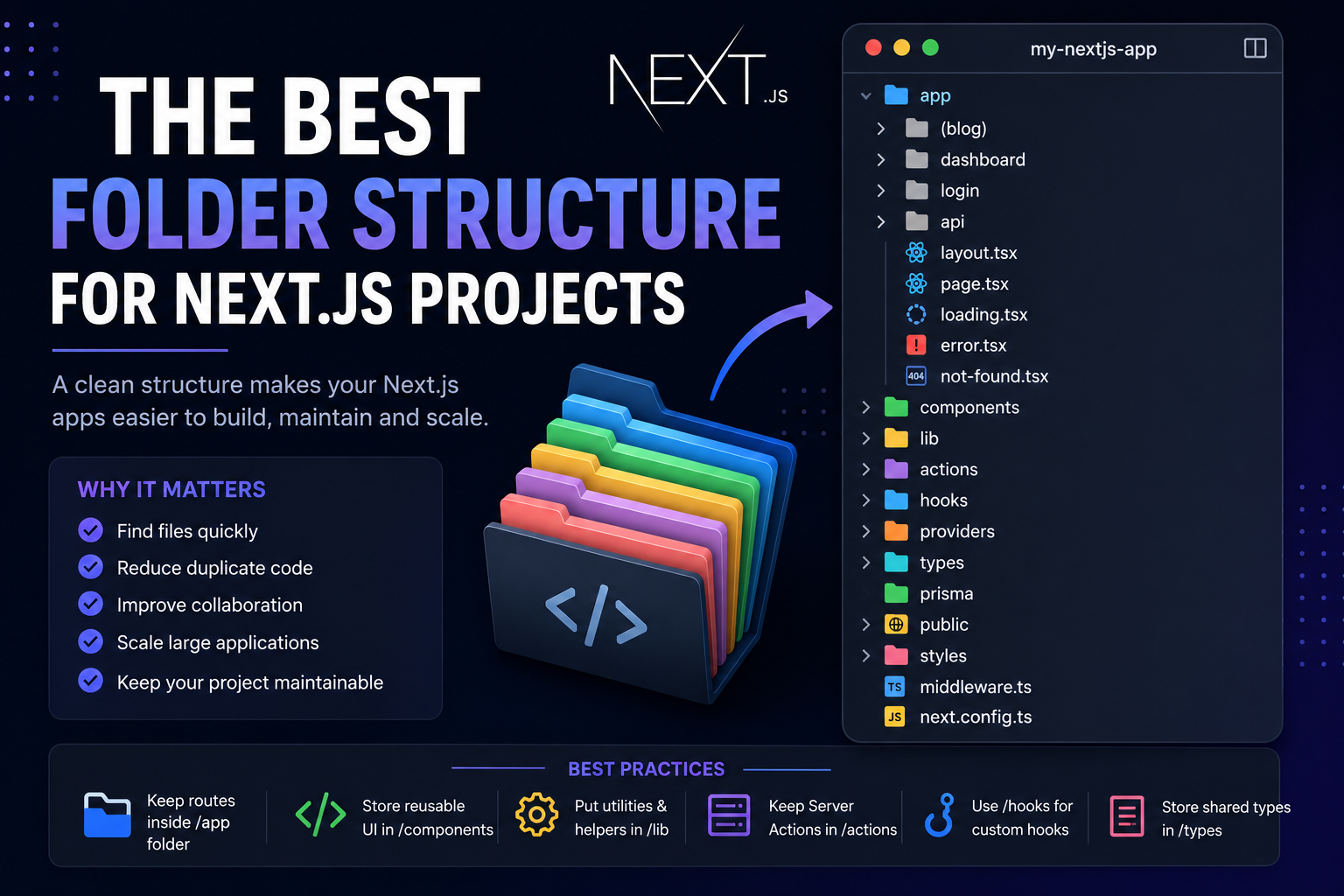
The Best Folder Structure for Next.js Projects in 2026
A clean folder structure makes every Next.js project easier to build, maintain, and scale. Discover the best folder organization for modern Next.js applications in 2026, whether you're building a blog, SaaS, dashboard, or enterprise application.
4 min read · 152 views
Trending
Popular Posts
Productivity Tools That Save Developers Hours in 2026
681 views
The Most Valuable Skills to Learn in the AI Era (2026 and Beyond)
331 views
Vibe Coding vs Learning to Code: Which Path Will Take You Further?
277 views
Next.js 16 Features Every Developer Should Know in 2026
192 views
The Best Folder Structure for Next.js Projects in 2026
152 views
Comments
No approved comments yet.