Artificial Intelligence
How AI Is Changing Software Development in 2026: The Biggest Shift Since the Internet
By Yahya Saeed · 4 min read · 113 views
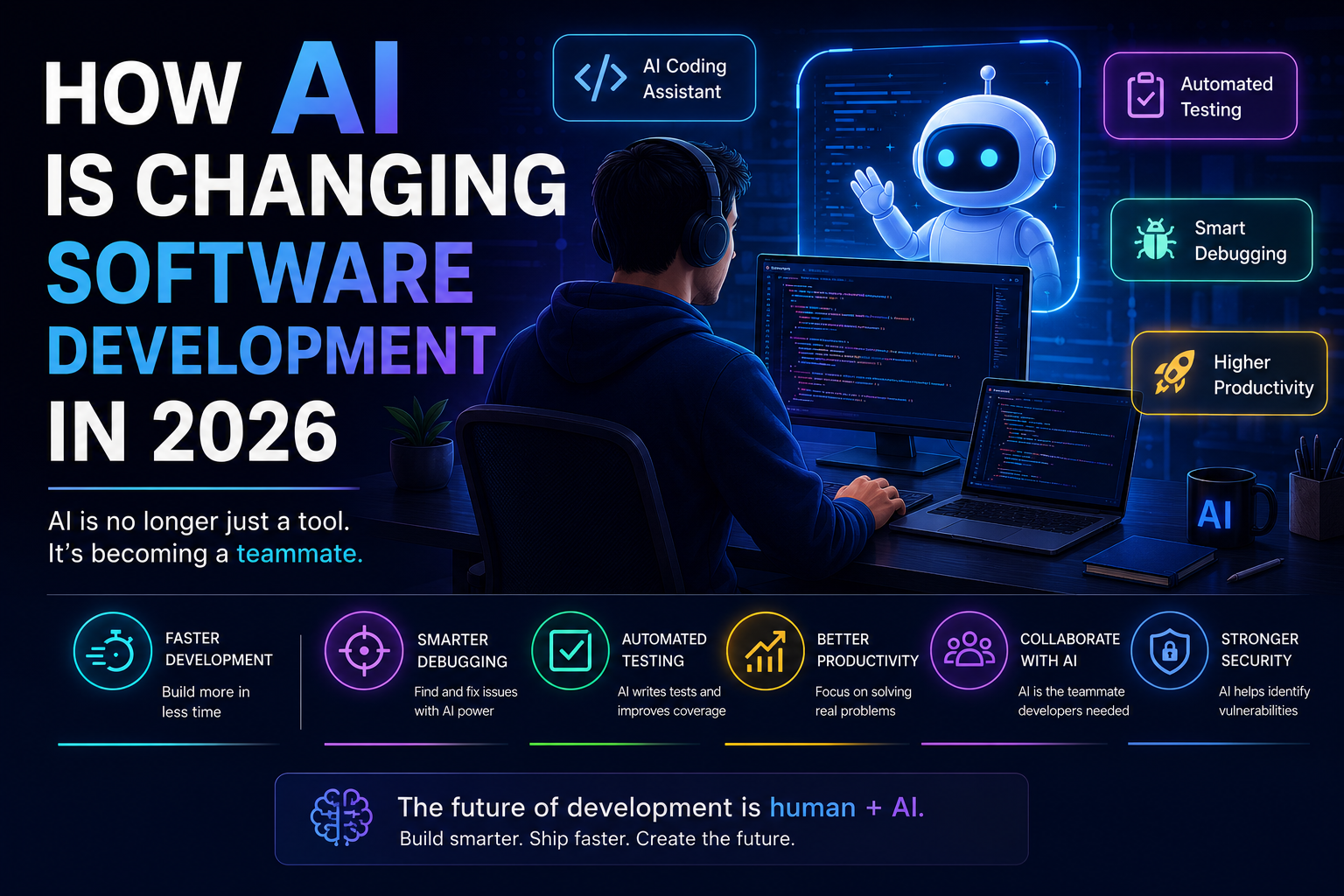
How AI Is Changing Software Development in 2026: The Biggest Shift Since the Internet
The software industry has experienced many revolutions over the years. The rise of personal computers changed how software was built. The internet connected the world. Smartphones transformed how people interact with technology.
Today, Artificial Intelligence is driving the next major transformation.
What started as simple code completion tools has evolved into powerful AI assistants capable of generating entire applications, fixing bugs, explaining complex code, creating documentation, and helping developers solve problems faster than ever before.
In 2026, AI is no longer a futuristic concept. It has become an essential part of the modern developer workflow.
The Rise of AI-Powered Development
Only a few years ago, developers spent hours searching documentation, reading Stack Overflow discussions, and debugging simple mistakes.
Today, AI tools can often provide solutions within seconds.
Modern AI assistants can:
Generate code from natural language
Explain unfamiliar codebases
Suggest bug fixes
Create database schemas
Build UI components
Write documentation
Generate tests
Optimize existing code
Tasks that once consumed hours can now be completed in minutes.
This has dramatically increased developer productivity.
From Code Writer to Problem Solver
One of the biggest changes AI has introduced is a shift in the developer's role.
Traditionally, much of software development involved manually writing code line by line.
Now AI can generate much of that code automatically.
As a result, developers are spending less time typing and more time thinking.
Modern developers increasingly focus on:
System architecture
Product design
User experience
Business requirements
Security
Performance optimization
AI handles much of the repetitive implementation work, allowing developers to concentrate on higher-level problems.
Vibe Coding Has Become Mainstream
A new term has emerged in the software community: Vibe Coding.
Vibe coding refers to building applications primarily through AI assistance. Instead of manually writing every component, developers describe what they want, and AI generates the implementation.
For example:
A developer can ask:
Create a Next.js dashboard with authentication, PostgreSQL integration, and a responsive design.
Within minutes, AI can generate a working foundation.
This approach has made software development more accessible than ever before.
People with limited technical backgrounds can now build impressive applications using AI-powered tools.
Development Speed Has Increased Dramatically
One of the most obvious benefits of AI is speed.
Developers can now:
Build prototypes faster
Launch MVPs quicker
Experiment with ideas rapidly
Reduce repetitive work
Deliver features sooner
A project that previously required several weeks may now take only a few days.
For startups and solo developers, this productivity boost can be a significant competitive advantage.
Learning Development Has Changed
AI has also transformed how people learn programming.
Instead of getting stuck on errors for hours, beginners can ask AI for explanations and guidance.
AI acts like a personal tutor that is available 24 hours a day.
It can:
Explain concepts
Provide examples
Review code
Suggest improvements
Answer questions instantly
This has lowered the barrier to entry for new developers.
Learning remains important, but the learning process has become much more efficient.
The Importance of Fundamentals
Despite all its capabilities, AI has limitations.
AI can generate code.
It cannot replace understanding.
Developers still need to understand:
Programming fundamentals
Data structures
Algorithms
Security practices
System design
Database concepts
Without these skills, it becomes difficult to verify whether AI-generated code is correct, secure, and scalable.
The most successful developers in 2026 are not those who rely entirely on AI.
They are the ones who combine strong fundamentals with AI-powered productivity.
New Opportunities for Solo Developers
Perhaps the most exciting change is the opportunity AI creates for individuals.
A single developer can now build products that previously required entire teams.
AI can assist with:
Frontend development
Backend development
Database design
Documentation
Testing
Content creation
This allows solo founders and freelancers to move faster and compete more effectively.
The era of the "one-person startup" is becoming increasingly realistic.
Will AI Replace Developers?
This remains one of the most common questions in technology.
The short answer is no.
AI is replacing certain tasks, not developers.
History shows that technology often automates repetitive work while creating new opportunities.
Developers who ignore AI may struggle to remain competitive.
Developers who learn how to use AI effectively will likely become significantly more productive than those who don't.
The future belongs to developers who know how to collaborate with AI rather than compete against it.
What the Future Looks Like
Software development will continue evolving.
AI models will become more capable.
Development tools will become smarter.
Workflows will become increasingly automated.
However, human creativity, critical thinking, communication, and decision-making will remain essential.
Software is ultimately built to solve human problems.
Understanding those problems will always be a uniquely human skill.
Final Thoughts
AI is changing software development at a pace few people expected. It is accelerating workflows, reducing repetitive work, improving learning, and making software creation more accessible than ever before.
But AI is not the end of programming.
It is the evolution of programming.
The developers who thrive in 2026 and beyond will be those who embrace AI while continuing to strengthen their technical foundations.
AI can write code.
Developers provide the vision.
And together, they are shaping the future of software development.
Keep reading
Related Posts
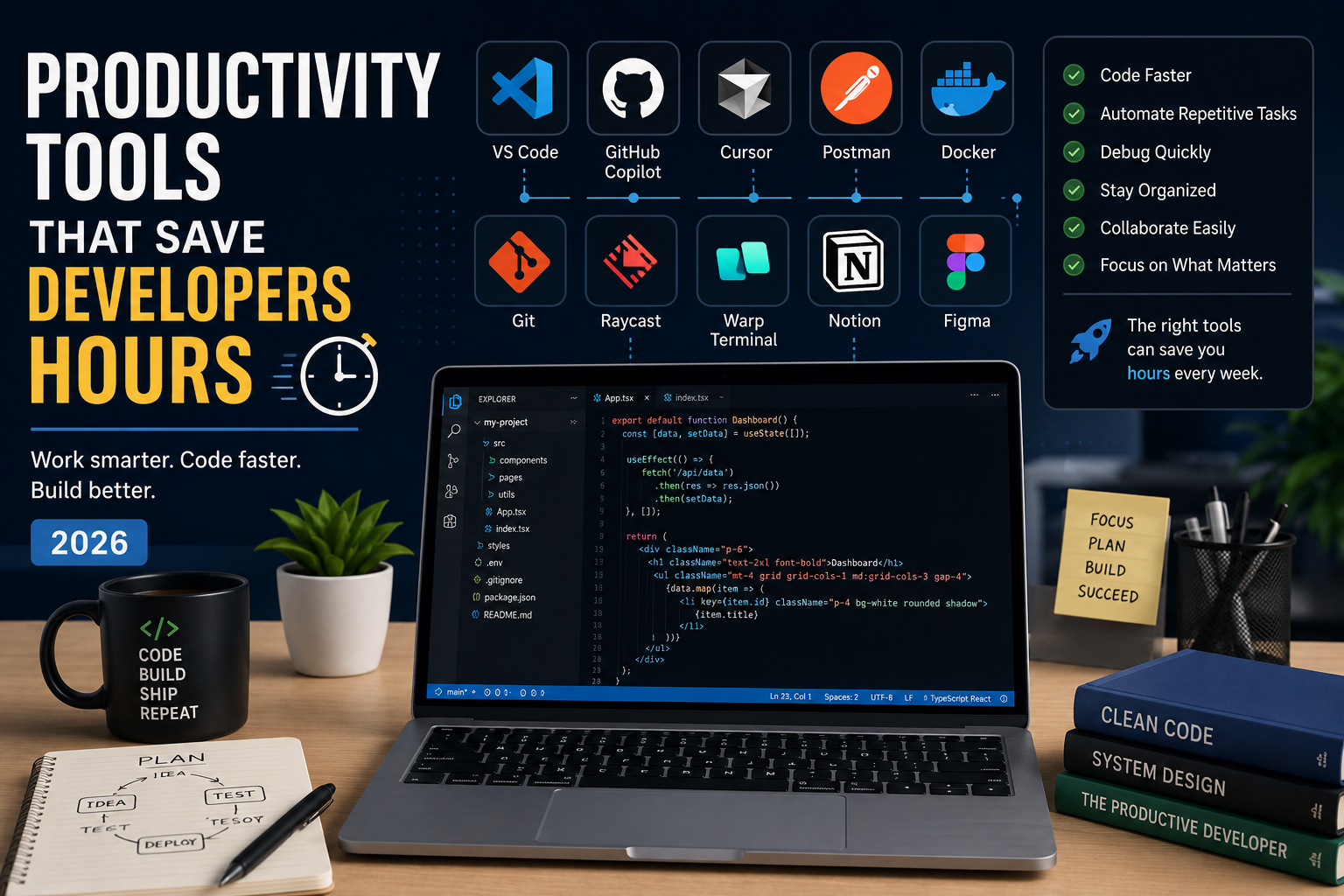
Developer Tools
Productivity Tools That Save Developers Hours in 2026
The best developers aren't just fast—they use the right tools. From AI coding assistants to terminal upgrades and API testing platforms, these productivity tools can save developers hours every week and help them focus on building great software instead of repetitive tasks.
4 min read · 681 views
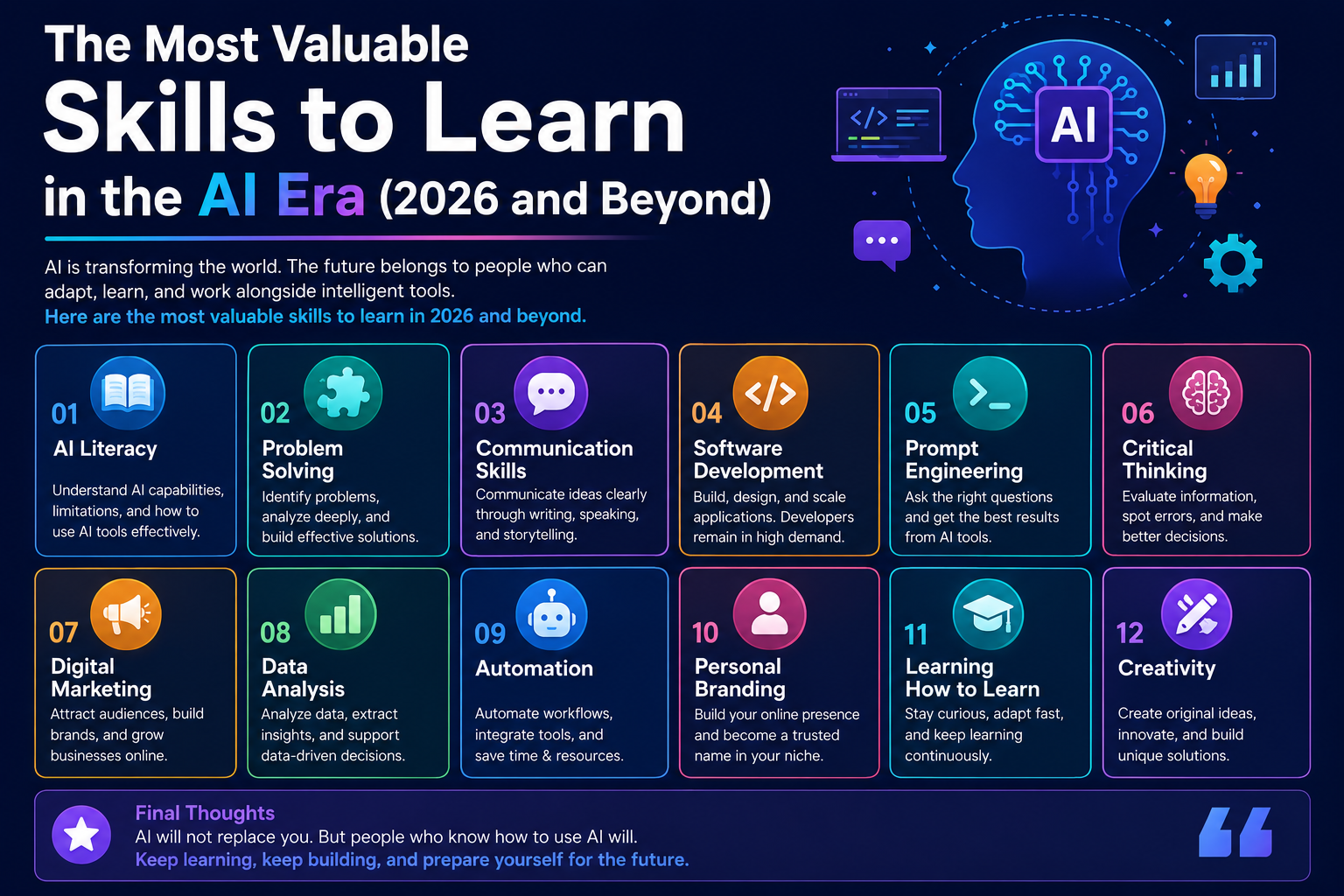
Career & Technology
The Most Valuable Skills to Learn in the AI Era (2026 and Beyond)
Artificial Intelligence is changing how we work, learn, and build products. Some skills are becoming less valuable, while others are becoming more important than ever. If you want to stay relevant and thrive in 2026 and beyond, these are the skills you should focus on developing.
4 min read · 331 views
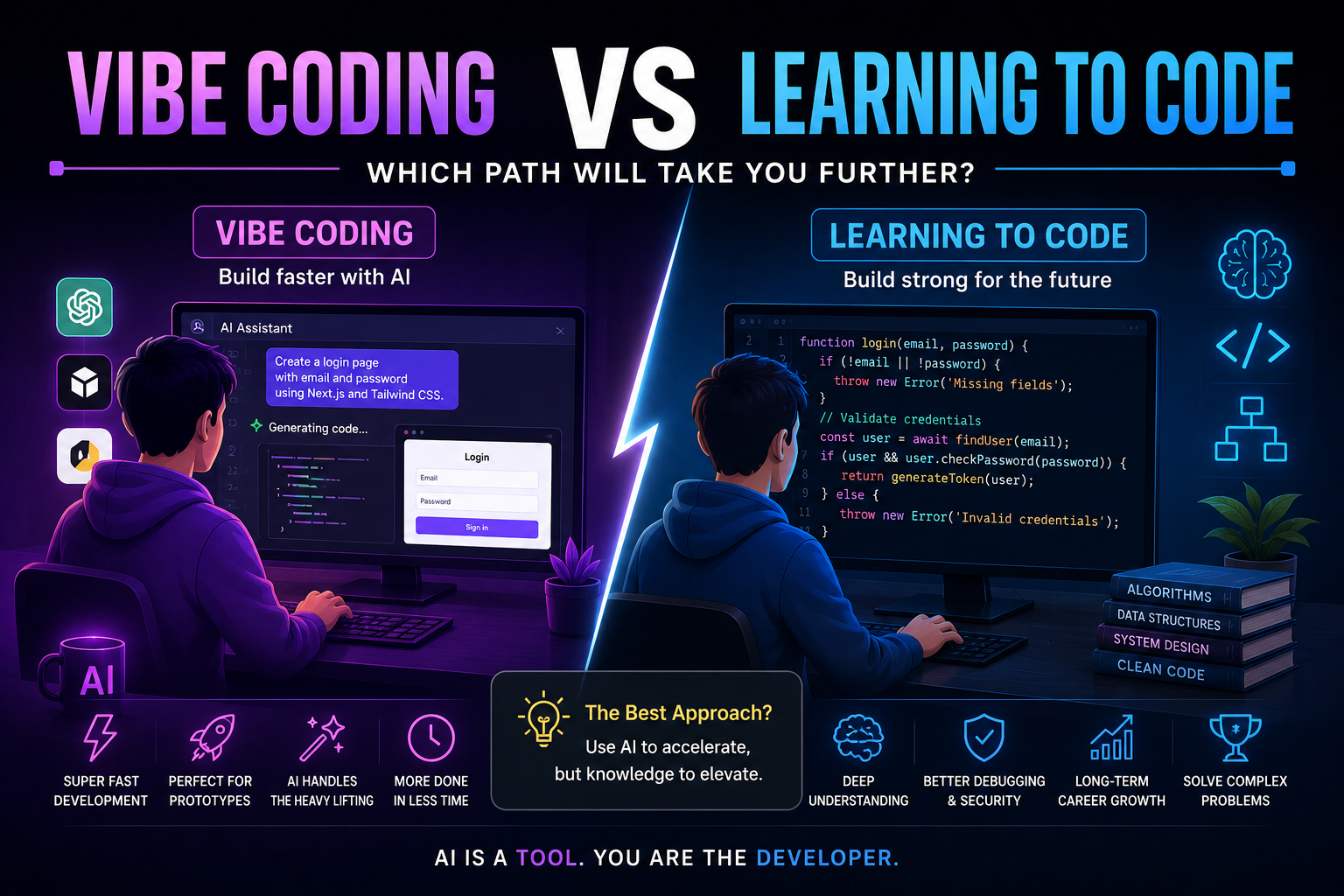
Programming
Vibe Coding vs Learning to Code: Which Path Will Take You Further?
AI can build apps faster than ever, leading to the rise of "vibe coding." But does that mean learning to code is no longer necessary? Let's explore the strengths, weaknesses, and future of both approaches to discover which path offers the greatest long-term value.
4 min read · 277 views
Trending
Popular Posts
Productivity Tools That Save Developers Hours in 2026
681 views
The Most Valuable Skills to Learn in the AI Era (2026 and Beyond)
331 views
Vibe Coding vs Learning to Code: Which Path Will Take You Further?
277 views
Next.js 16 Features Every Developer Should Know in 2026
192 views
The Best Folder Structure for Next.js Projects in 2026
152 views
Comments
No approved comments yet.