CSS
Tailwind CSS Is Easy to Learn: Why Modern Developers Should Use It
By Yahya Saeed · 4 min read · 131 views
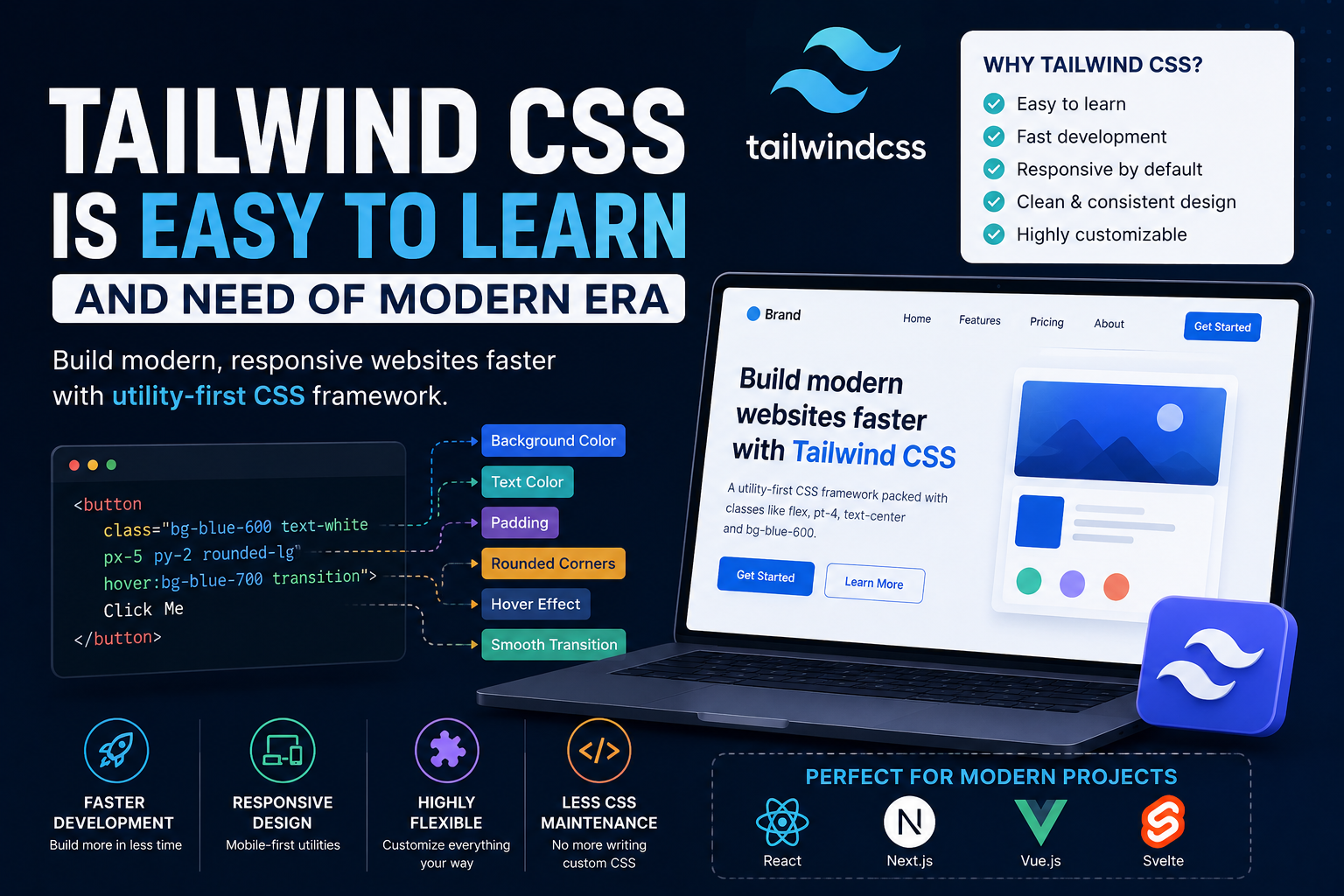
Tailwind CSS Is Easy to Learn: Why Modern Developers Should Use It
Web design has changed a lot over the years. In the past, developers had to write long CSS files, create custom class names, manage stylesheets, and constantly switch between HTML and CSS. While traditional CSS is still important, modern development needs faster and cleaner ways to build beautiful user interfaces.
This is where Tailwind CSS becomes powerful.
Tailwind CSS is a utility-first CSS framework that helps developers design websites directly inside their markup. Instead of writing custom CSS for every button, card, form, or layout, you can use small utility classes to build designs quickly and consistently.
For many developers, Tailwind CSS makes styling easier, faster, and more enjoyable.
What Is Tailwind CSS?
Tailwind CSS is a modern CSS framework based on utility classes. These classes represent individual CSS properties such as margin, padding, color, font size, border radius, shadow, and layout behavior.
For example, instead of writing custom CSS like this:
.button {
  background-color: blue;
  color: white;
  padding: 12px 20px;
  border-radius: 8px;
}
You can write:
<button class="bg-blue-600 text-white px-5 py-3 rounded-lg">
  Click Me
</button>
The result is simple, readable, and fast to build.
Why Tailwind CSS Is Easy to Learn
Tailwind CSS may look strange at first because the styling happens inside class names. But once you understand the pattern, it becomes very easy.
Most Tailwind classes are simple and predictable.
For example:
text-centercenters textfont-boldmakes text boldp-4adds paddingm-4adds marginrounded-lgadds rounded cornersshadow-mdadds a medium shadowflexcreates a flexbox layoutgridcreates a grid layout
The class names are close to normal CSS concepts, so learning Tailwind also helps you understand CSS better.
Faster Development
One of the biggest benefits of Tailwind CSS is speed.
You don't need to constantly switch between files. You can build, test, and adjust designs directly inside your components.
This is especially useful when building:
Landing pages
Dashboards
Admin panels
Blog websites
SaaS applications
E-commerce interfaces
Portfolio websites
Tailwind CSS allows you to move from idea to design much faster.
Perfect for Responsive Design
Modern websites must work on mobile, tablet, and desktop screens. Tailwind CSS makes responsive design very simple.
You can add responsive prefixes like:
<div class="text-sm md:text-lg lg:text-xl">
  Responsive Text
</div>
This means:
Small screens use small text
Medium screens use larger text
Large screens use even larger text
The same approach works for spacing, layout, grids, visibility, and many other styles.
Clean and Consistent Design
Tailwind CSS encourages consistency because it uses a predefined design system. Instead of randomly choosing values for spacing, colors, and sizes, you use a controlled set of utility classes.
This helps your website look more professional.
For example:
<div class="p-6 rounded-xl shadow-md bg-white">
  <h2 class="text-xl font-bold">Card Title</h2>
  <p class="text-gray-600 mt-2">This is a clean card design.</p>
</div>
With just a few classes, you can create a modern card layout.
Great for Component-Based Frameworks
Tailwind CSS works extremely well with modern frameworks like React, Next.js, Vue, and Svelte.
In component-based development, styles often belong close to the component itself. Tailwind makes this natural because the design is written directly inside the component.
This makes components easier to copy, reuse, and modify.
Less Custom CSS
Traditional CSS can become difficult to manage as projects grow. Class names become confusing, styles override each other, and unused CSS piles up.
Tailwind CSS reduces this problem by encouraging reusable utility classes instead of large custom stylesheets.
You still can write custom CSS when needed, but most of the design can be handled with utilities.
Is Tailwind CSS Better Than Normal CSS?
Tailwind CSS does not replace the need to understand CSS. It makes CSS easier to apply in real projects.
You should still understand concepts like:
Flexbox
Grid
Positioning
Box model
Responsive design
Colors and typography
Tailwind gives you a faster way to use these concepts.
In simple words, Tailwind CSS is not a shortcut around CSS. It is a better workflow for writing CSS.
Why Tailwind CSS Is Important Today
Modern web development is fast-paced. Clients and users expect websites to be clean, responsive, and professional. Developers need tools that help them build quickly without sacrificing quality.
Tailwind CSS fits perfectly into this modern workflow.
It helps developers:
Build faster
Maintain consistency
Create responsive layouts
Design modern interfaces
Reduce CSS complexity
Work better with components
That is why Tailwind CSS has become a must-learn tool for frontend developers.
Final Thoughts
Tailwind CSS is easy to learn, powerful to use, and highly valuable in modern web development. It allows developers to create beautiful websites faster while keeping designs consistent and responsive.
If you are learning frontend development, Tailwind CSS is a great skill to add after understanding basic HTML and CSS.
It can help you build professional projects, improve your workflow, and prepare you for modern frontend development.
Tailwind CSS is not just a trend. It is a practical tool for the modern era of web design.
Keep reading
Related Posts

Programming
Vibe Coding vs Learning to Code: Which Path Will Take You Further?
AI can build apps faster than ever, leading to the rise of "vibe coding." But does that mean learning to code is no longer necessary? Let's explore the strengths, weaknesses, and future of both approaches to discover which path offers the greatest long-term value.
4 min read · 277 views

Next.js
Next.js 16 Features Every Developer Should Know in 2026
Next.js 16 continues to push modern web development forward with improved performance, better developer experience, enhanced routing, and powerful server-side capabilities. Whether you're building a blog, SaaS platform, portfolio, or enterprise application, these are the most important Next.js 16 features every developer should understand.
4 min read · 192 views
Next.js
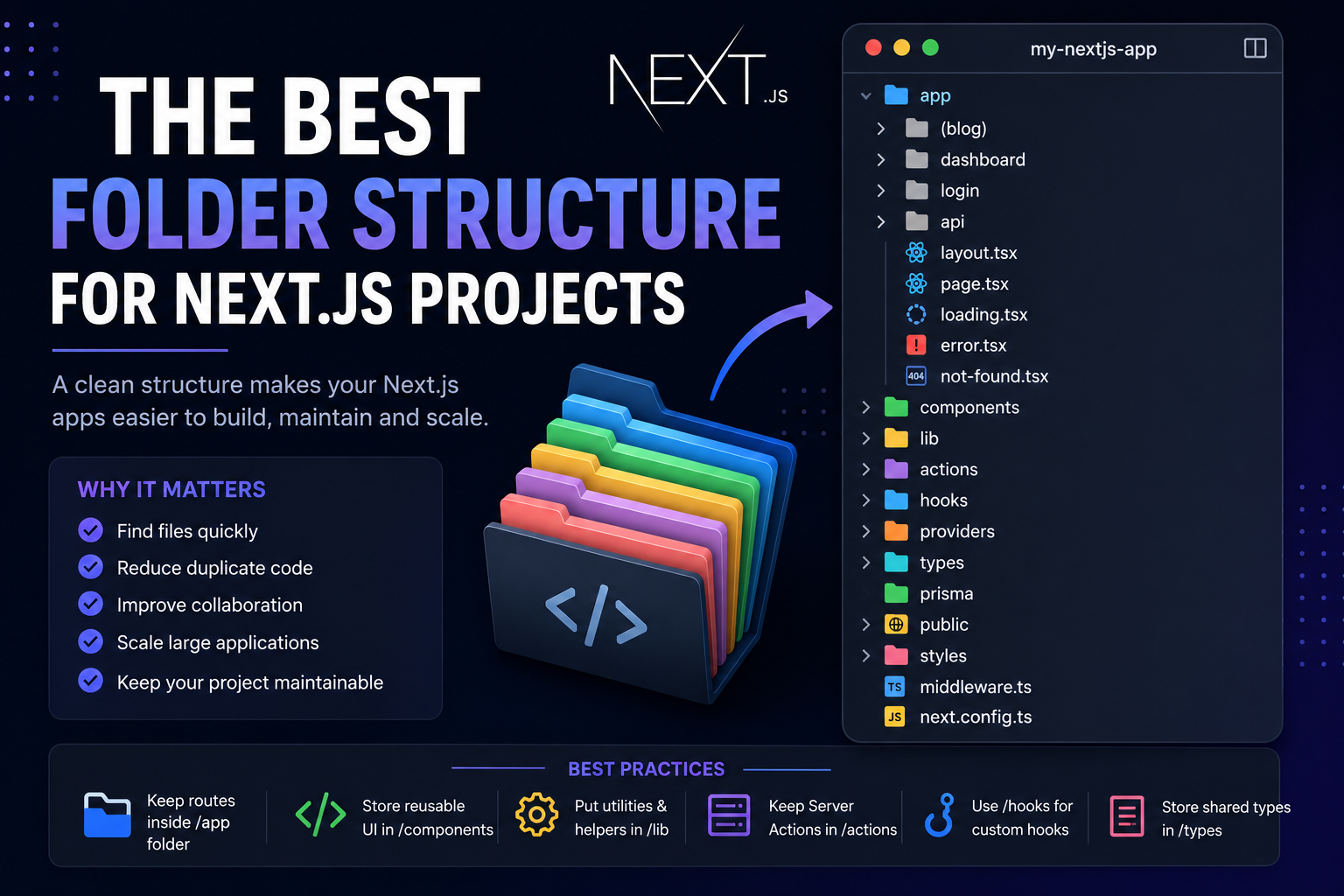
The Best Folder Structure for Next.js Projects in 2026
A clean folder structure makes every Next.js project easier to build, maintain, and scale. Discover the best folder organization for modern Next.js applications in 2026, whether you're building a blog, SaaS, dashboard, or enterprise application.
4 min read · 151 views
Trending
Popular Posts
Productivity Tools That Save Developers Hours in 2026
681 views
The Most Valuable Skills to Learn in the AI Era (2026 and Beyond)
331 views
Vibe Coding vs Learning to Code: Which Path Will Take You Further?
277 views
Next.js 16 Features Every Developer Should Know in 2026
192 views
The Best Folder Structure for Next.js Projects in 2026
151 views
Comments
No approved comments yet.