SaaS & Startups
Building a SaaS While Working Full-Time
By Yahya Saeed · 4 min read · 63 views
Building a SaaS While Working Full-Time
One of the biggest myths in entrepreneurship is that you need to quit your job before starting a SaaS business.
You don't.
In fact, many successful SaaS companies began as side projects built during evenings, weekends, and early mornings.
Keeping a full-time job while building your product offers something many founders overlook:
Financial stability.
Instead of rushing to make money immediately, you have the freedom to build carefully, validate your idea, and improve your product without the constant pressure of paying the bills.
If you're thinking about launching your own SaaS while working full-time, here's how to do it successfully.
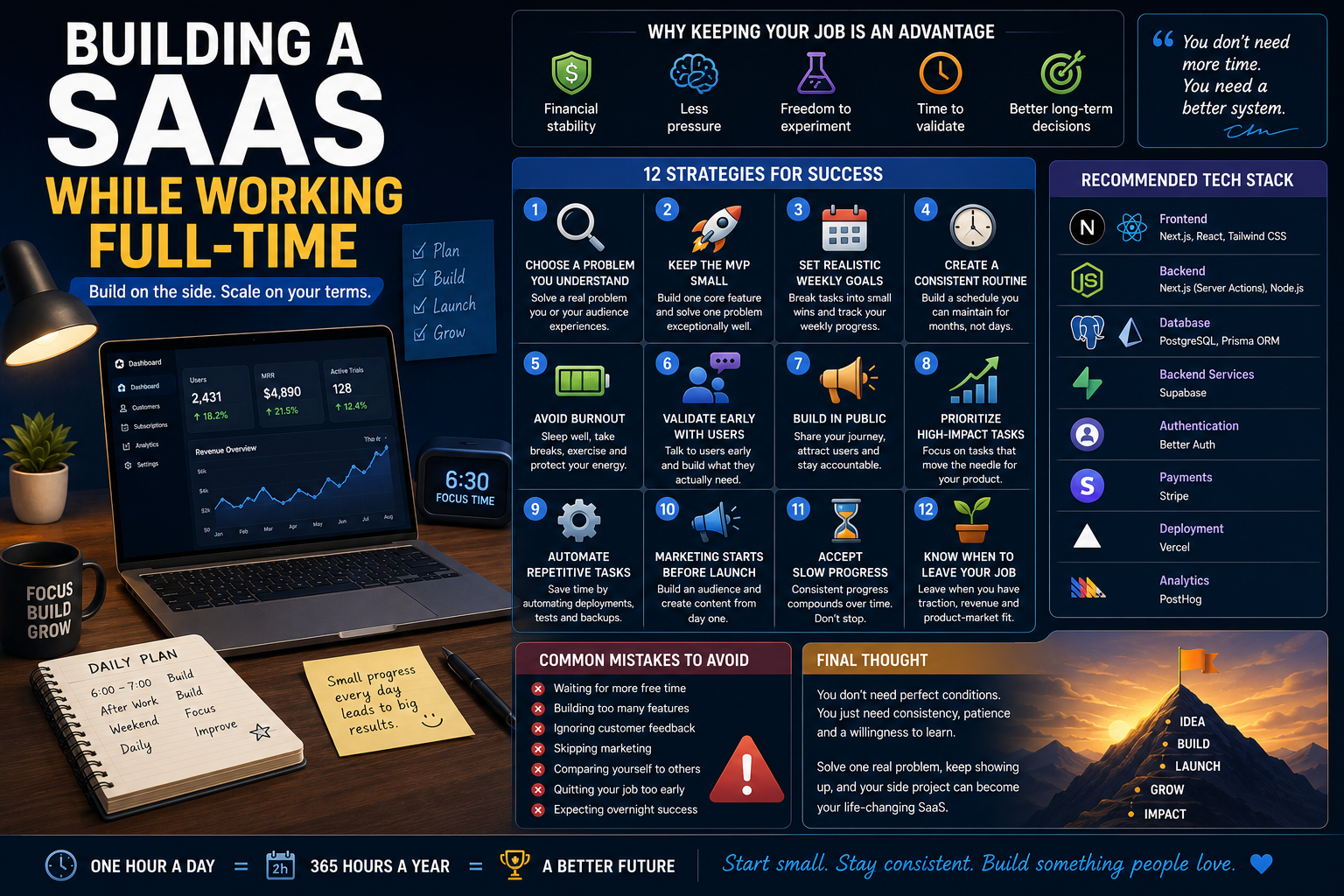
Why Keeping Your Job Can Be an Advantage
Many developers believe quitting their job will help them build faster.
Sometimes that's true.
But it also comes with risks.
Without a stable income, every decision becomes stressful.
Keeping your job provides:
Reliable income
Less financial pressure
Time to validate ideas
Freedom to experiment
Better long-term decision making
Your salary becomes the investment that funds your startup.
Don't Wait for the Perfect Moment
Many people delay starting because they think they'll have more time later.
Later rarely comes.
The perfect time doesn't exist.
Start with the time you already have.
Even one focused hour every day adds up over time.
Consistency beats intensity.
Choose a Problem You Understand
The best side projects solve problems you already know.
Ask yourself:
What tasks waste your time?
What software frustrates you?
What repetitive work could be automated?
What problems do people around you complain about?
Building something familiar makes development much easier.
Keep the MVP Small
One of the biggest reasons side projects fail is that they're too ambitious.
Instead of building fifty features, build one that solves one important problem.
Ask yourself:
"If I could only ship one feature, what would it be?"
Everything else can wait.
Set Realistic Weekly Goals
Working full-time means your available hours are limited.
Don't create impossible schedules.
Instead, focus on achievable goals such as:
Finish authentication
Design one page
Build one API
Fix five bugs
Write one blog post
Interview three users
Small wins keep motivation high.
Create a Consistent Routine
You don't need ten hours every day.
You need a routine.
For example:
One hour before work
Two hours after dinner
Saturday morning development
Sunday planning session
Choose a schedule you can maintain for months not just a few days.
Avoid Burnout
Working a full-time job and building a startup is demanding.
Protect your energy.
Remember to:
Get enough sleep
Exercise regularly
Take breaks
Spend time with family
Celebrate small wins
Building a SaaS is a marathon, not a sprint.
Validate Before Building Everything
Don't spend months building features nobody wants.
Talk to potential users early.
Ask questions like:
Would you use this?
What frustrates you most?
What solution are you using today?
Would you pay for something better?
Feedback saves months of wasted work.
Build in Public
Share your journey online.
Post about:
Progress updates
New features
Lessons learned
Challenges
Screenshots
Milestones
Building in public helps you:
Find early users
Receive feedback
Build credibility
Stay accountable
People enjoy following real journeys.
Learn to Prioritize
You won't have time for everything.
Focus on work that moves the product forward.
High-impact tasks include:
Talking to users
Improving onboarding
Fixing bugs
Writing documentation
Marketing
Shipping features
Avoid spending weeks choosing fonts or redesigning logos.
Automate Repetitive Tasks
Save your limited time by automating routine work.
Examples include:
Deployments
Testing
Backups
Email responses
Analytics reports
Automation gives you more time to build.
Marketing Starts Before Launch
Many founders wait until launch day to think about marketing.
That's too late.
Start building an audience early through:
Blogging
LinkedIn
X (Twitter)
YouTube
Reddit
Developer communities
Email newsletters
An audience makes launching much easier.
Accept Slow Progress
Some weeks you'll make incredible progress.
Other weeks you'll barely write any code.
That's normal.
The important thing is not stopping.
A year of consistent progress usually beats one month of nonstop work followed by burnout.
Know When to Leave Your Job
Don't quit simply because you're excited.
Consider leaving when your SaaS begins to demonstrate signs of sustainability, such as:
Consistent monthly recurring revenue
Growing customer base
Product-market fit
Predictable demand
Financial runway
Your business should support the transition not hope for it.
A Simple Weekly Plan
If you only have ten hours each week, you could organize them like this:
Monday
Product planning
Tuesday
Development
Wednesday
Development
Thursday
Bug fixes
Friday
Marketing
Saturday
Major feature development
Sunday
User feedback and planning
Even a modest schedule becomes powerful over time.
Recommended Tech Stack
For a modern SaaS built as a side project, I'd recommend:
Frontend
Next.js
React
Tailwind CSS
Backend
Next.js Server Actions
Node.js
Database
PostgreSQL
Prisma ORM
Backend Services
Supabase
Authentication
Better Auth
Payments
Stripe
Deployment
Vercel
This stack allows solo developers to build quickly while keeping maintenance manageable.
Common Mistakes
Avoid these common traps:
Waiting for more free time.
Building too many features.
Ignoring customer feedback.
Skipping marketing.
Comparing yourself to full-time founders.
Quitting your job too early.
Expecting overnight success.
Slow, consistent progress almost always wins.
Final Thoughts
Building a SaaS while working full-time isn't easy, but it's one of the safest and most practical ways to start a software business.
Your full-time job gives you financial stability while your side project gives you freedom to learn, experiment, and grow.
You don't need perfect conditions.
You don't need unlimited time.
You don't even need to build the next billion-dollar company.
You simply need to solve one real problem, keep showing up consistently, and improve your product a little every week.
Months of steady progress can become a profitable SaaS that changes your career and possibly your life.
Keep reading
Related Posts
Developer Tools
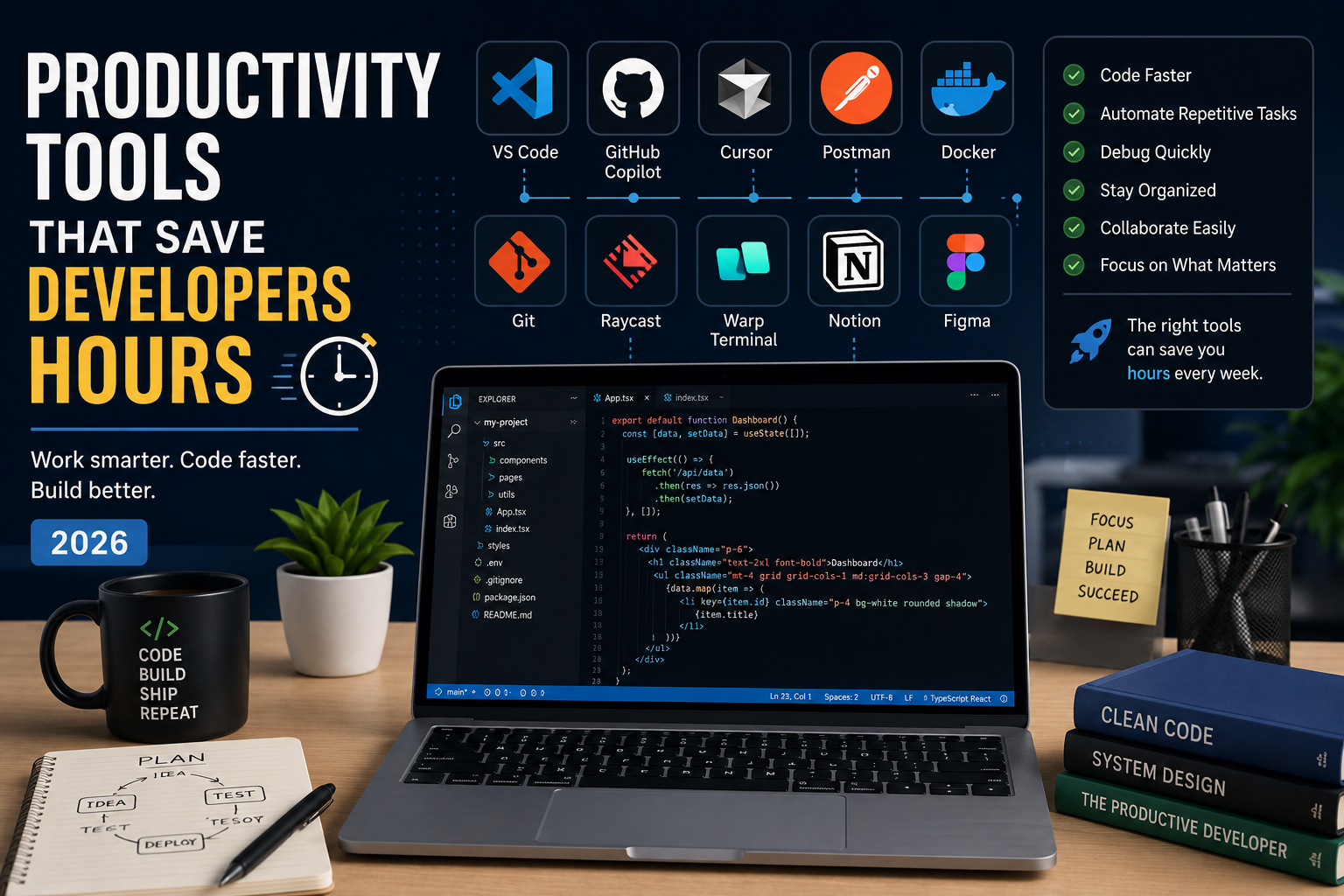
Productivity Tools That Save Developers Hours in 2026
The best developers aren't just fast—they use the right tools. From AI coding assistants to terminal upgrades and API testing platforms, these productivity tools can save developers hours every week and help them focus on building great software instead of repetitive tasks.
4 min read · 681 views
Web Development
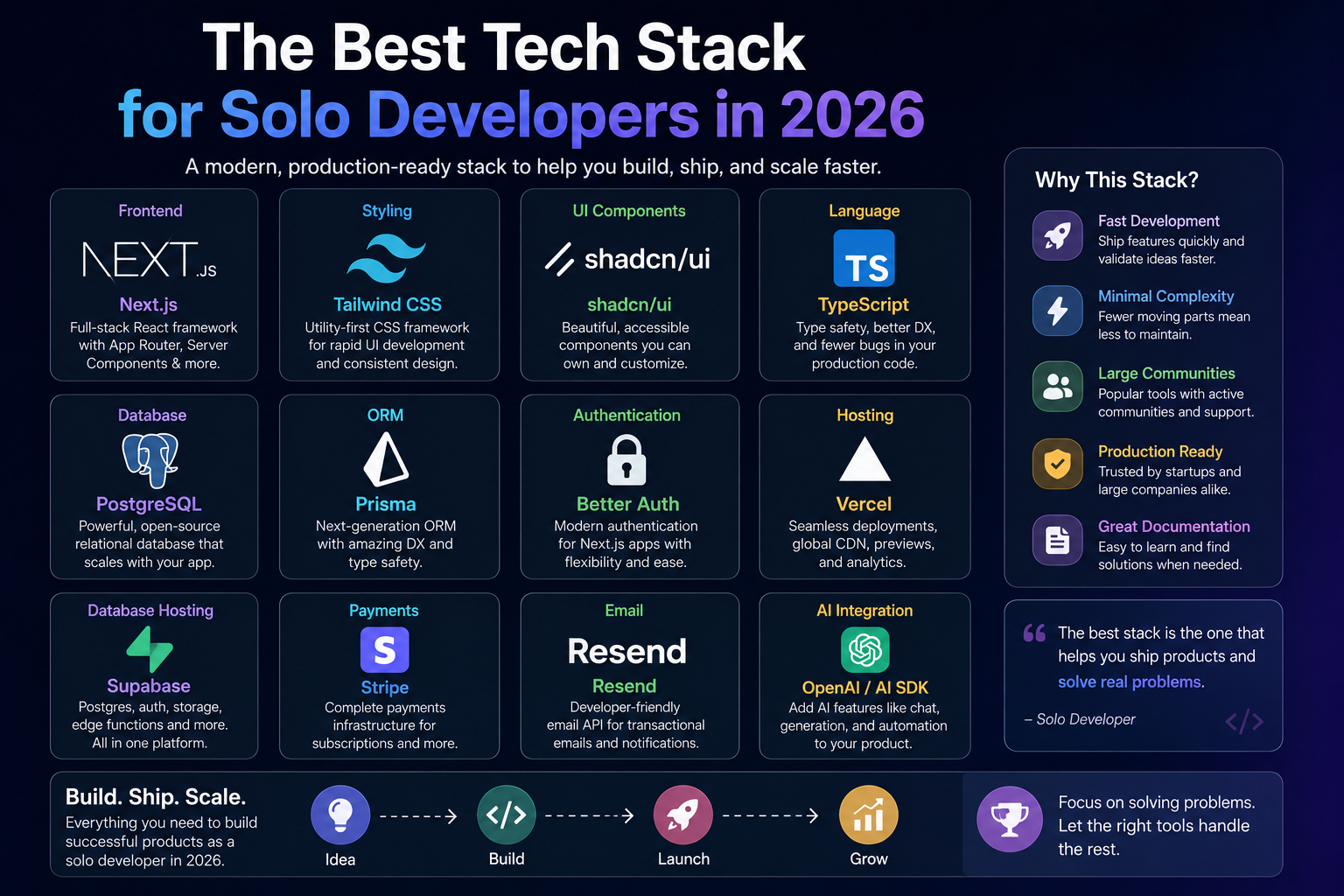
The Best Tech Stack for Solo Developers in 2026
Choosing the right tech stack can make or break a project—especially when you're building alone. As a solo developer, you need tools that help you move fast, stay productive, and scale without unnecessary complexity. Here's the tech stack I believe offers the best balance of speed, simplicity, and power in 2026.
4 min read · 114 views
AI & SaaS
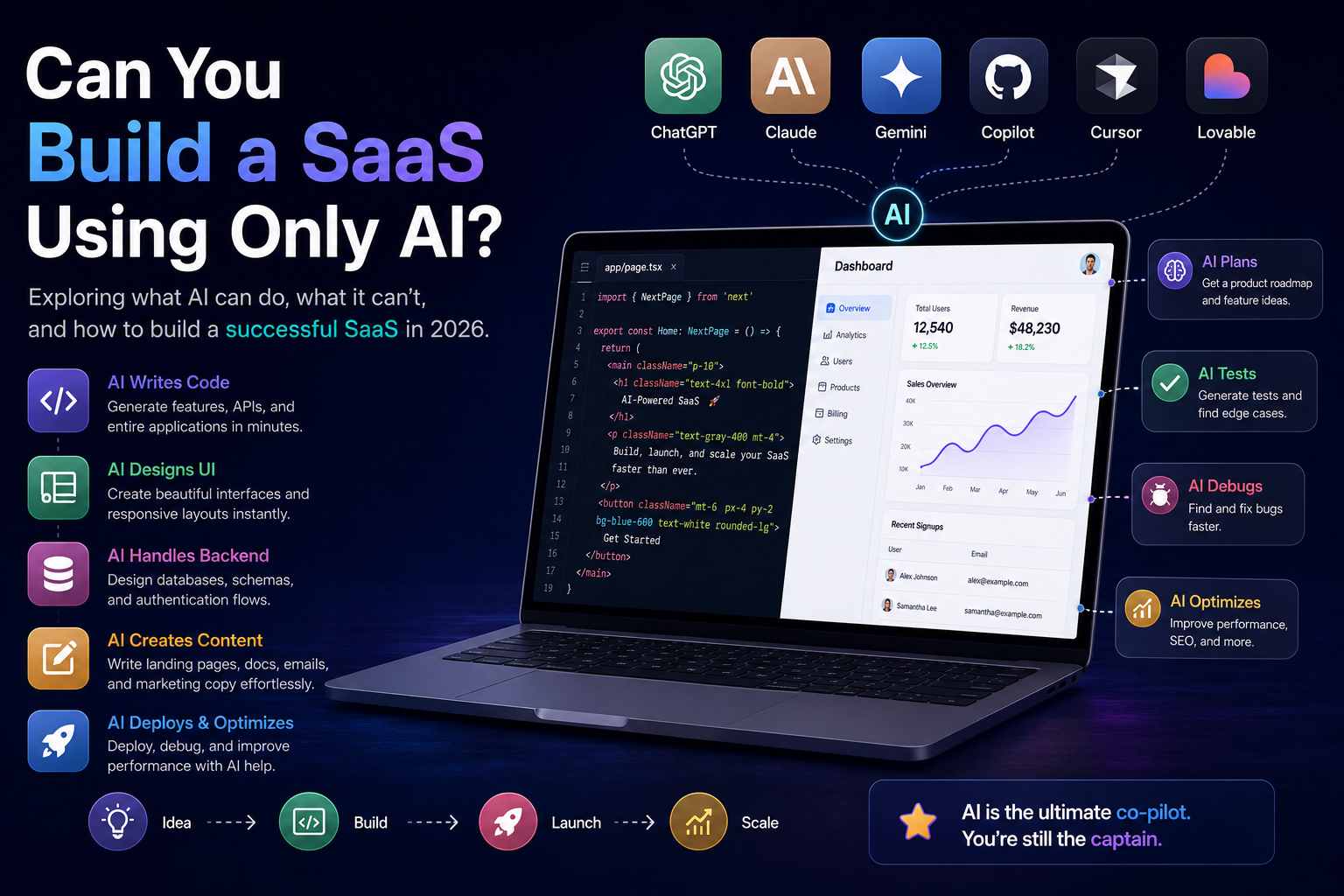
Can You Build a SaaS Using Only AI in 2026? The Honest Answer
AI can write code, design interfaces, generate content, and even help deploy applications. But can it build an entire SaaS business by itself? Let's separate hype from reality and explore what AI can—and cannot—do when building a modern SaaS product.
4 min read · 103 views
Trending
Popular Posts
Productivity Tools That Save Developers Hours in 2026
681 views
The Most Valuable Skills to Learn in the AI Era (2026 and Beyond)
331 views
Vibe Coding vs Learning to Code: Which Path Will Take You Further?
277 views
Next.js 16 Features Every Developer Should Know in 2026
192 views
The Best Folder Structure for Next.js Projects in 2026
152 views
Comments
No approved comments yet.