CSS
Why Tailwind CSS Has Taken Over Frontend Development
By Yahya Saeed · 4 min read · 80 views
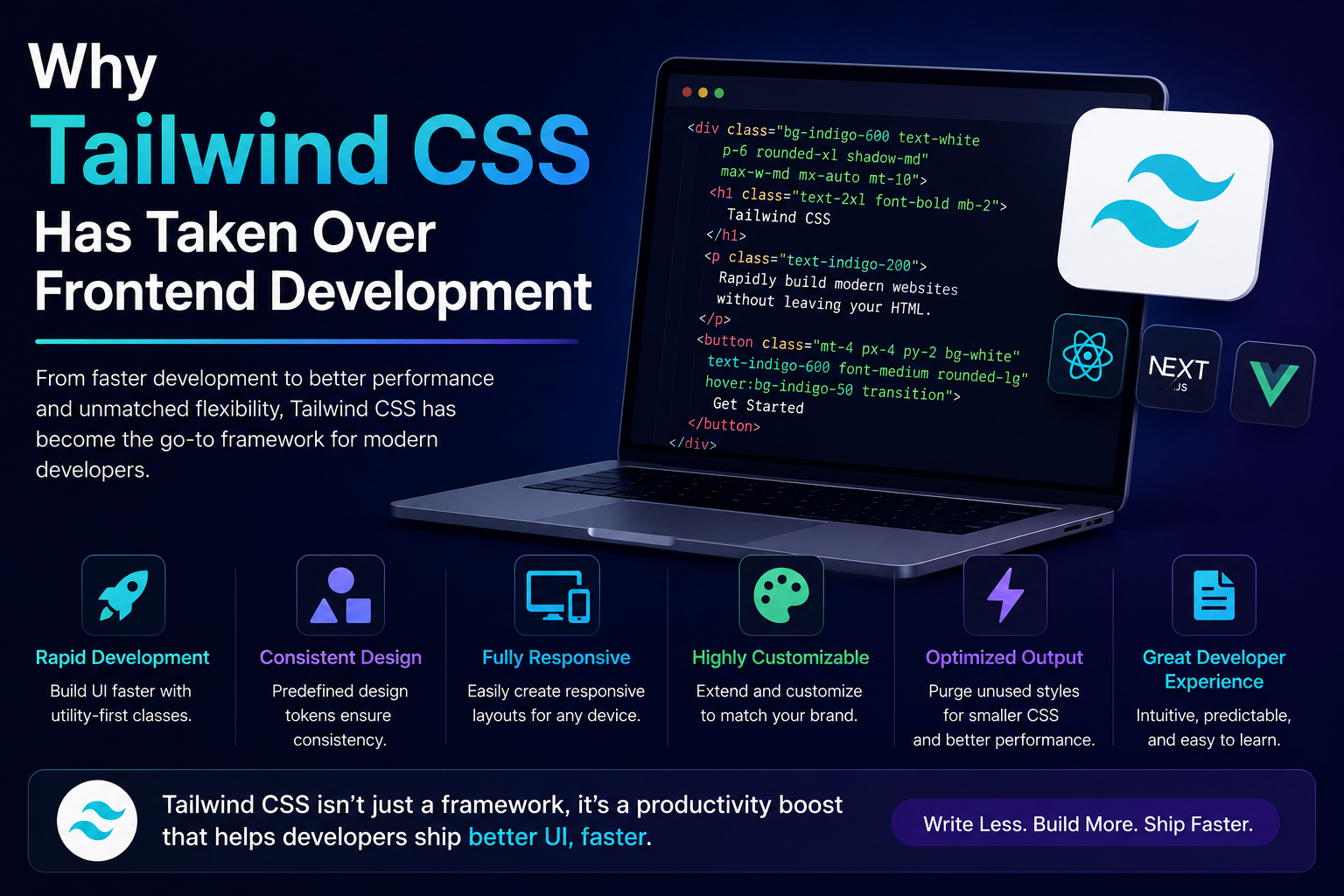
Why Tailwind CSS Has Taken Over Frontend Development
Frontend development has changed dramatically over the last decade.
Developers have gone from writing large CSS files and complex stylesheets to building interfaces with utility-first frameworks like Tailwind CSS.
What initially looked strange to many developers has now become one of the most popular approaches to styling modern applications.
Today, Tailwind CSS is used by startups, freelancers, agencies, and enterprise teams worldwide.
But why has it become so popular?
Let's explore the reasons Tailwind CSS has taken over frontend development.
The Problem with Traditional CSS
Traditional CSS works.
But as projects grow, CSS often becomes difficult to maintain.
Developers commonly face issues such as:
Large stylesheets
Naming conflicts
Unused CSS
Repeated code
Difficult maintenance
A project may start with a simple stylesheet, but after months of development, it can become challenging to manage.
Finding where a specific style is defined often turns into a frustrating experience.
Tailwind CSS Solves These Problems
Tailwind CSS takes a different approach.
Instead of writing custom CSS classes for everything, developers build interfaces using utility classes.
For example:
<div class="bg-blue-600 text-white p-6 rounded-lg">
  Hello Tailwind
</div>
Instead of creating a separate CSS file, the styling is applied directly through utility classes.
This approach provides several advantages.
Faster Development
One of Tailwind's biggest strengths is speed.
Developers can build interfaces quickly without constantly switching between:
HTML
CSS
Component files
Everything happens in one place.
This significantly speeds up development.
Many developers report building interfaces two to three times faster after becoming comfortable with Tailwind.
Consistent Design Systems
Consistency is important in modern applications.
Without a design system, different developers may use:
Different spacing values
Different font sizes
Different colors
Different layouts
Tailwind encourages consistency by providing predefined design tokens.
Instead of using random values, developers work within a structured system.
This creates cleaner and more professional user interfaces.
Perfect for Component-Based Frameworks
Modern frontend development relies heavily on components.
Frameworks like:
React
Next.js
Vue
Svelte
encourage building reusable UI components.
Tailwind fits perfectly into this workflow.
Styles stay close to the component they belong to.
This makes components easier to understand and maintain.
No More Naming Classes
One of the most annoying parts of traditional CSS is naming classes.
Developers spend time thinking about names such as:
.hero-section
.main-button
.primary-card
.content-wrapper
Tailwind eliminates much of this problem.
Instead of inventing class names, developers use utility classes directly.
This reduces mental overhead and speeds up development.
Smaller CSS Files
Tailwind automatically removes unused styles during production builds.
This process is known as tree-shaking.
The result is:
Smaller CSS bundles
Faster page loads
Better performance
Applications only include the styles they actually use.
This is a major advantage over traditional CSS frameworks.
Excellent Developer Experience
Developer experience is one of the main reasons Tailwind became successful.
Features include:
Fast autocomplete
Excellent documentation
Predictable utilities
Easy customization
Once developers learn the naming patterns, building interfaces becomes extremely efficient.
The workflow feels smooth and productive.
Responsive Design Is Easier
Creating responsive layouts is simple with Tailwind.
Example:
<div class="text-sm md:text-lg lg:text-2xl">
  Responsive Text
</div>
This allows developers to define styles for multiple screen sizes directly in the markup.
No complex media queries are required for common responsive patterns.
Dark Mode Support
Dark mode has become a standard feature in modern applications.
Tailwind makes dark mode implementation straightforward.
Example:
<div class="bg-white dark:bg-gray-900">
  Content
</div>
This simplicity allows developers to support multiple themes with minimal effort.
Tailwind Works Great with Next.js
One reason Tailwind has exploded in popularity is its integration with Next.js.
The combination offers:
Fast development
Excellent performance
Clean code organization
Easy deployment
Many modern SaaS applications use this stack because it balances productivity and scalability.
The Rise of Tailwind UI Libraries
Another reason for Tailwind's success is the ecosystem.
Developers now have access to tools such as:
shadcn/ui
DaisyUI
Flowbite
Headless UI
These libraries allow teams to build professional interfaces even faster.
The ecosystem continues to grow every year.
Common Criticism of Tailwind
Not everyone loves Tailwind.
The most common criticism is:
"There are too many classes in the HTML."
This criticism is understandable.
A component may contain many utility classes.
However, many developers find this trade-off worthwhile because:
Styles remain predictable
Maintenance becomes easier
Development becomes faster
After spending time with Tailwind, many developers find it difficult to return to traditional CSS workflows.
Is Tailwind CSS Worth Learning?
Absolutely.
If you're learning:
React
Next.js
Frontend development
SaaS development
Tailwind CSS is one of the most valuable tools you can add to your skill set.
It is widely used across modern web applications and continues to grow in popularity.
Final Thoughts
Tailwind CSS did not become popular by accident.
It solved real problems that developers faced with traditional CSS workflows.
Its utility-first approach enables faster development, better consistency, easier maintenance, and improved productivity.
While it may feel unusual at first, many developers quickly discover why so many teams have adopted it.
In 2026, Tailwind CSS is no longer just a trend.
It has become a fundamental part of modern frontend development.
For developers building modern web applications, learning Tailwind CSS is one of the smartest investments they can make.
Keep reading
Related Posts

Programming
Vibe Coding vs Learning to Code: Which Path Will Take You Further?
AI can build apps faster than ever, leading to the rise of "vibe coding." But does that mean learning to code is no longer necessary? Let's explore the strengths, weaknesses, and future of both approaches to discover which path offers the greatest long-term value.
4 min read · 277 views

Next.js
Next.js 16 Features Every Developer Should Know in 2026
Next.js 16 continues to push modern web development forward with improved performance, better developer experience, enhanced routing, and powerful server-side capabilities. Whether you're building a blog, SaaS platform, portfolio, or enterprise application, these are the most important Next.js 16 features every developer should understand.
4 min read · 192 views
Next.js
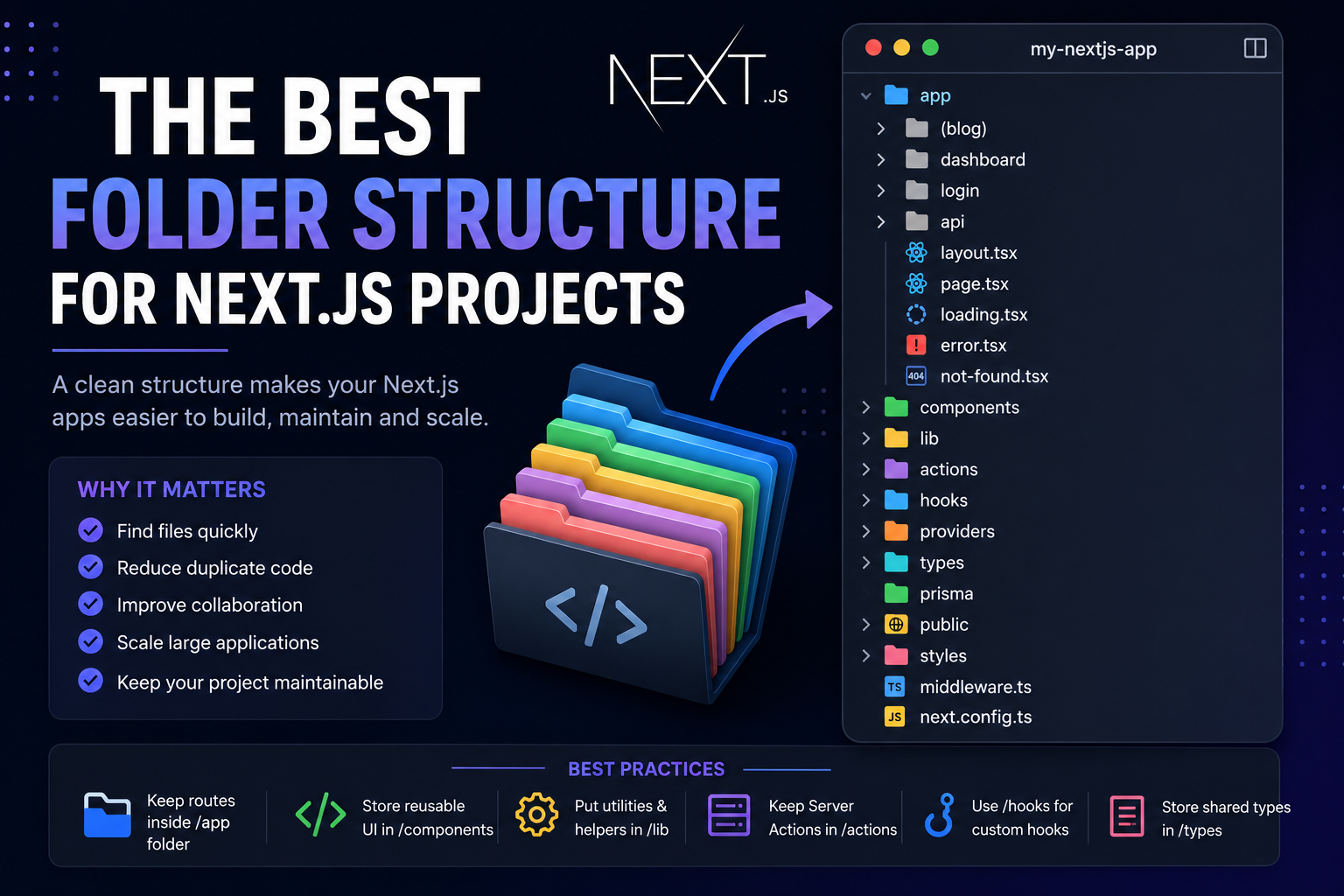
The Best Folder Structure for Next.js Projects in 2026
A clean folder structure makes every Next.js project easier to build, maintain, and scale. Discover the best folder organization for modern Next.js applications in 2026, whether you're building a blog, SaaS, dashboard, or enterprise application.
4 min read · 151 views
Trending
Popular Posts
Productivity Tools That Save Developers Hours in 2026
681 views
The Most Valuable Skills to Learn in the AI Era (2026 and Beyond)
331 views
Vibe Coding vs Learning to Code: Which Path Will Take You Further?
277 views
Next.js 16 Features Every Developer Should Know in 2026
192 views
The Best Folder Structure for Next.js Projects in 2026
151 views
Comments
No approved comments yet.