Next.js
Why Next.js Is the Best React Framework in 2026
By Yahya Saeed · 4 min read · 90 views
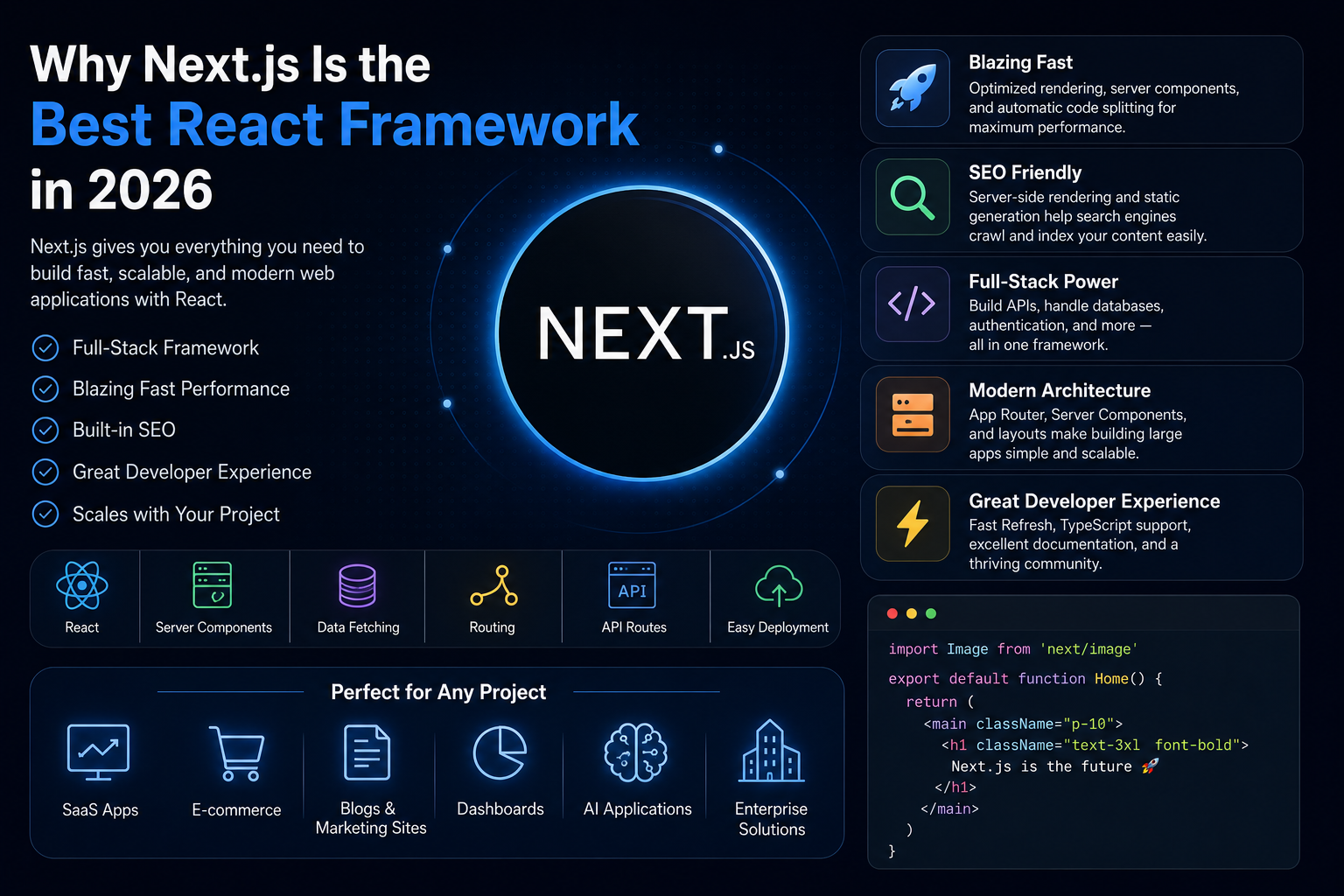
Why Next.js Is the Best React Framework in 2026
Web development moves fast.
New frameworks appear every year, promising better performance, improved developer experience, and easier deployment. Yet despite growing competition, one framework continues to stand out among React developers: Next.js.
What started as a simple React framework has evolved into a complete platform for building modern web applications.
From personal portfolios and blogs to enterprise SaaS platforms and AI-powered applications, Next.js has become the preferred choice for developers worldwide.
In 2026, it remains one of the strongest frameworks in the JavaScript ecosystem.
What Makes Next.js Different?
React is excellent for building user interfaces.
However, React itself does not provide solutions for many common application requirements such as:
Routing
Server-side rendering
SEO optimization
Data fetching
API development
Performance optimization
Developers often need to integrate multiple libraries to create a complete application.
Next.js solves this problem by providing a full framework built around React.
Instead of assembling dozens of tools, developers can focus on building products.
Built for Modern Web Applications
Modern applications require more than static pages.
They need:
Fast loading times
Dynamic content
Authentication
Databases
API integrations
Excellent SEO
Next.js handles these requirements exceptionally well.
Whether you're building:
SaaS platforms
Dashboards
E-commerce stores
Blogs
AI applications
Enterprise software
Next.js provides the tools necessary to scale effectively.
App Router Changed Everything
One of the most significant advancements in Next.js has been the App Router.
The App Router introduces:
Nested layouts
Server Components
Better data fetching
Improved organization
Enhanced performance
Large applications become easier to structure and maintain.
Instead of managing complex routing systems, developers can focus on application logic.
This has become one of the biggest reasons developers prefer modern versions of Next.js.
Server Components Improve Performance
Performance is critical for modern applications.
Users expect websites to load instantly.
Next.js Server Components allow developers to render content on the server while sending less JavaScript to the browser.
Benefits include:
Faster page loads
Better SEO
Improved user experience
Reduced bundle sizes
This approach helps applications remain fast even as they grow larger.
SEO Comes Built In
Search engine optimization remains important for:
Blogs
Marketing websites
E-commerce stores
Documentation platforms
Traditional client-side React applications often require additional work to achieve good SEO.
Next.js provides SEO-friendly rendering out of the box.
This helps search engines:
Crawl pages
Understand content
Index websites effectively
For businesses that depend on organic traffic, this is a major advantage.
Full-Stack Development in One Framework
One of the biggest strengths of Next.js is that developers can build both frontend and backend functionality within the same project.
Using:
Route Handlers
Server Actions
Middleware
API Routes
Developers can create complete applications without maintaining separate frontend and backend repositories.
This simplifies development and improves productivity.
Excellent Developer Experience
A great framework should not only perform well—it should also be enjoyable to use.
Next.js offers:
Fast refresh
TypeScript support
Simple file-based routing
Easy deployment
Strong documentation
These features help developers spend less time configuring tools and more time building products.
Developer experience has become one of the framework's greatest strengths.
Perfect for SaaS Applications
SaaS products require many features that Next.js handles exceptionally well.
Examples include:
Authentication
Dashboards
User management
Database integration
Payment systems
Admin panels
Frameworks such as:
Prisma
Better Auth
Clerk
Stripe
Tailwind CSS
Integrate seamlessly with Next.js.
This makes it one of the most popular choices for startup founders and solo developers.
The Ecosystem Is Massive
A framework becomes stronger when it has a thriving community.
Next.js benefits from:
Millions of developers
Extensive tutorials
Open-source libraries
Community support
Frequent updates
When developers encounter problems, solutions are often easy to find.
This reduces development friction and speeds up learning.
Deployment Has Never Been Easier
Getting applications online should not be difficult.
Next.js applications can be deployed quickly with modern hosting platforms.
Features include:
Global content delivery
Automatic deployments
Preview environments
Performance optimization
This allows developers to move from idea to production faster than ever.
AI Applications Love Next.js
The rise of AI has created new opportunities for developers.
Many modern AI products use Next.js because it provides:
Fast interfaces
Streaming support
Server-side processing
API integration
Excellent performance
Whether building AI chatbots, AI agents, content generators, or productivity tools, Next.js has become a natural choice.
Is Next.js Perfect?
No framework is perfect.
Some developers may find:
Server Components confusing initially
The learning curve steeper than basic React
Certain advanced concepts complex
However, these challenges are often outweighed by the productivity and performance benefits.
For most projects, the advantages significantly outweigh the drawbacks.
Why Developers Continue Choosing Next.js
Developers choose Next.js because it provides:
Performance
Scalability
Flexibility
Great developer experience
Strong community support
Full-stack capabilities
It allows teams to build modern applications without constantly assembling and maintaining multiple tools.
In many ways, it has become the default choice for serious React development.
Final Thoughts
The JavaScript ecosystem continues to evolve, but Next.js remains at the center of modern web development.
Its combination of React, server-side capabilities, performance optimizations, SEO support, and full-stack features makes it one of the most powerful frameworks available today.
No framework can guarantee a successful product.
But choosing the right tools can make development significantly easier.
For developers building modern applications in 2026, Next.js continues to be one of the best choices available.
Fast, scalable, flexible, and production-ready—it's easy to see why Next.js remains the king of React frameworks.
Keep reading
Related Posts

Programming
Vibe Coding vs Learning to Code: Which Path Will Take You Further?
AI can build apps faster than ever, leading to the rise of "vibe coding." But does that mean learning to code is no longer necessary? Let's explore the strengths, weaknesses, and future of both approaches to discover which path offers the greatest long-term value.
4 min read · 277 views
Next.js
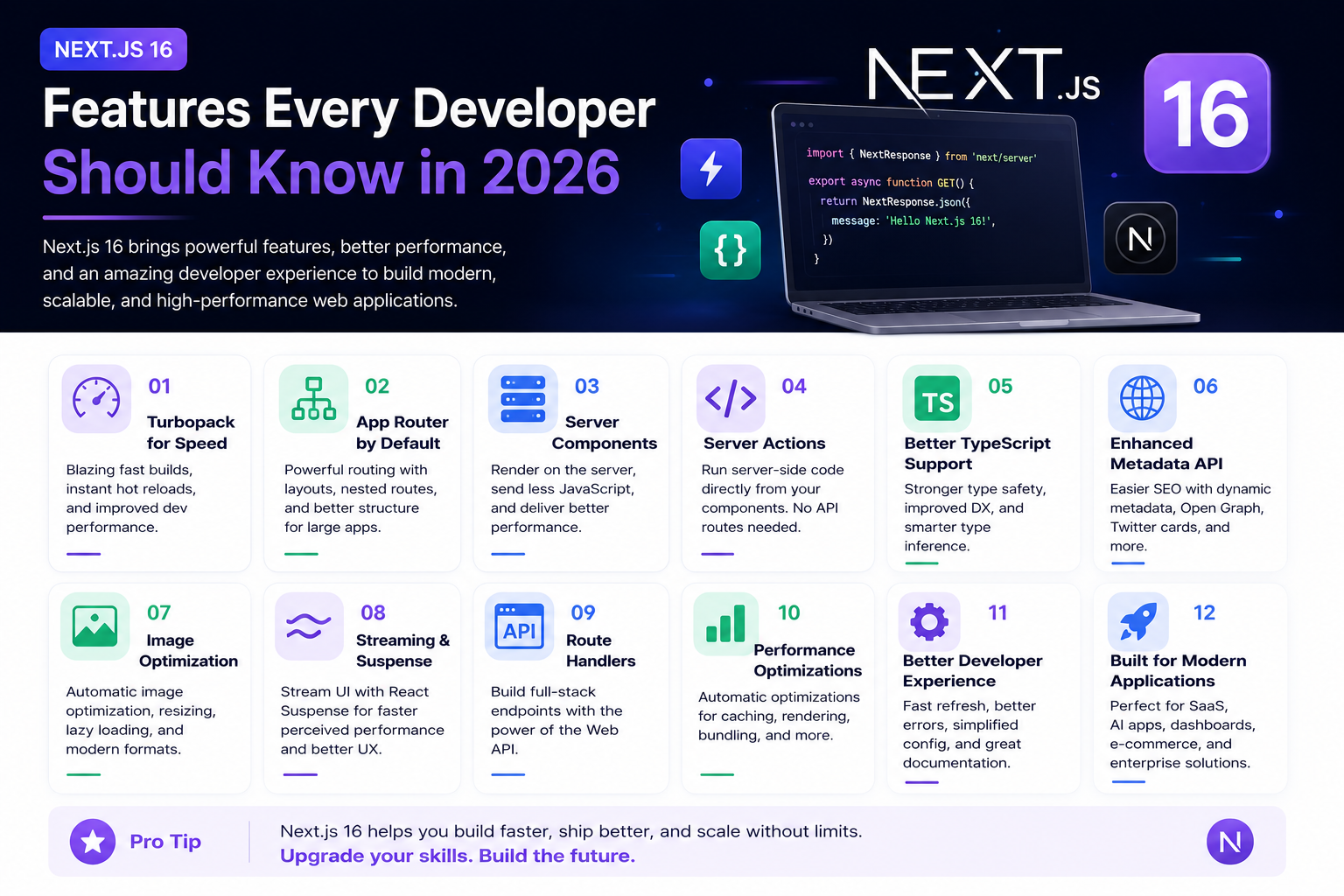
Next.js 16 Features Every Developer Should Know in 2026
Next.js 16 continues to push modern web development forward with improved performance, better developer experience, enhanced routing, and powerful server-side capabilities. Whether you're building a blog, SaaS platform, portfolio, or enterprise application, these are the most important Next.js 16 features every developer should understand.
4 min read · 192 views
Next.js
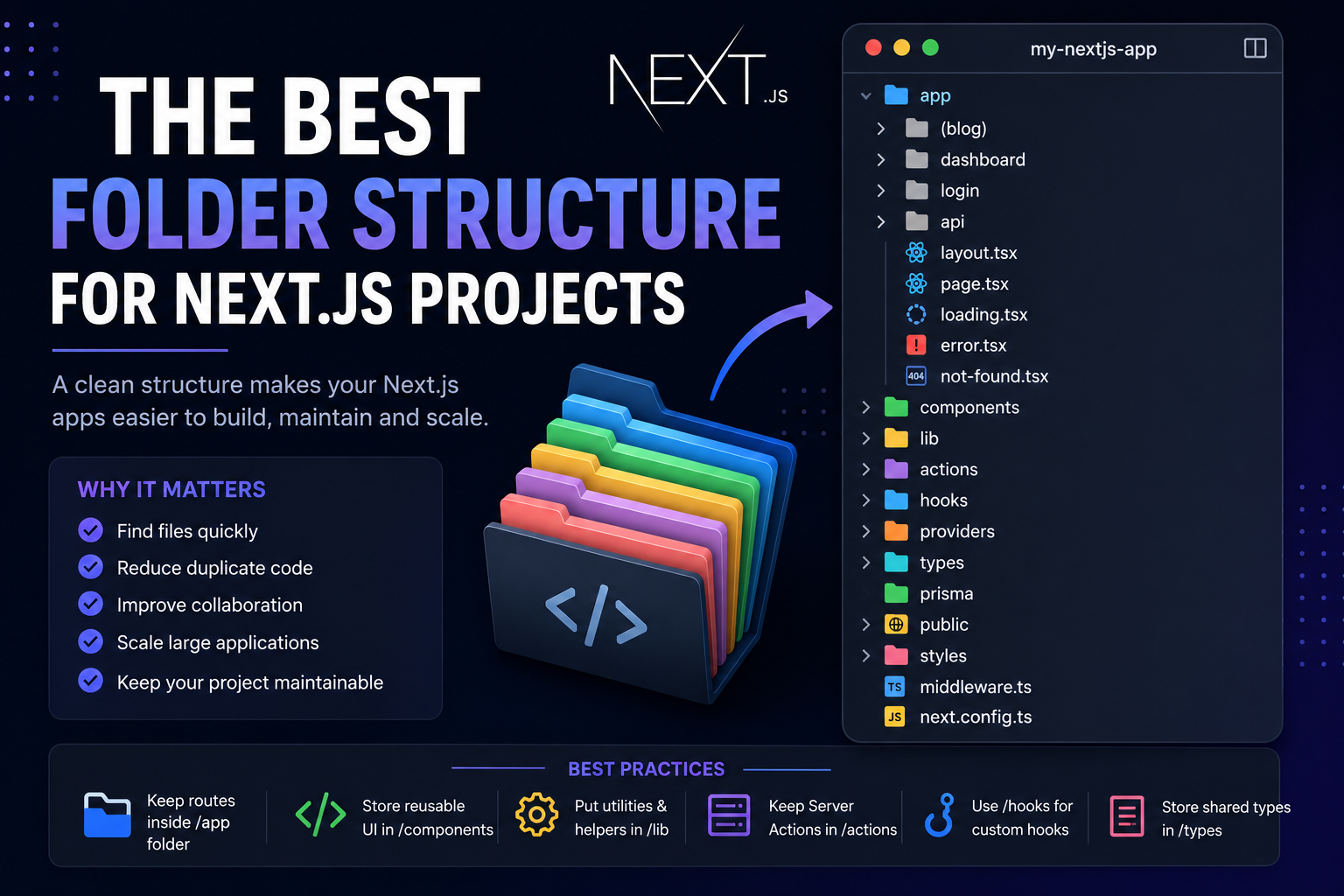
The Best Folder Structure for Next.js Projects in 2026
A clean folder structure makes every Next.js project easier to build, maintain, and scale. Discover the best folder organization for modern Next.js applications in 2026, whether you're building a blog, SaaS, dashboard, or enterprise application.
4 min read · 151 views
Trending
Popular Posts
Productivity Tools That Save Developers Hours in 2026
681 views
The Most Valuable Skills to Learn in the AI Era (2026 and Beyond)
331 views
Vibe Coding vs Learning to Code: Which Path Will Take You Further?
277 views
Next.js 16 Features Every Developer Should Know in 2026
192 views
The Best Folder Structure for Next.js Projects in 2026
151 views
Comments
No approved comments yet.