AI & Development
Why Every Developer Should Learn Prompt Engineering in 2026
By Yahya Saeed · 4 min read · 110 views
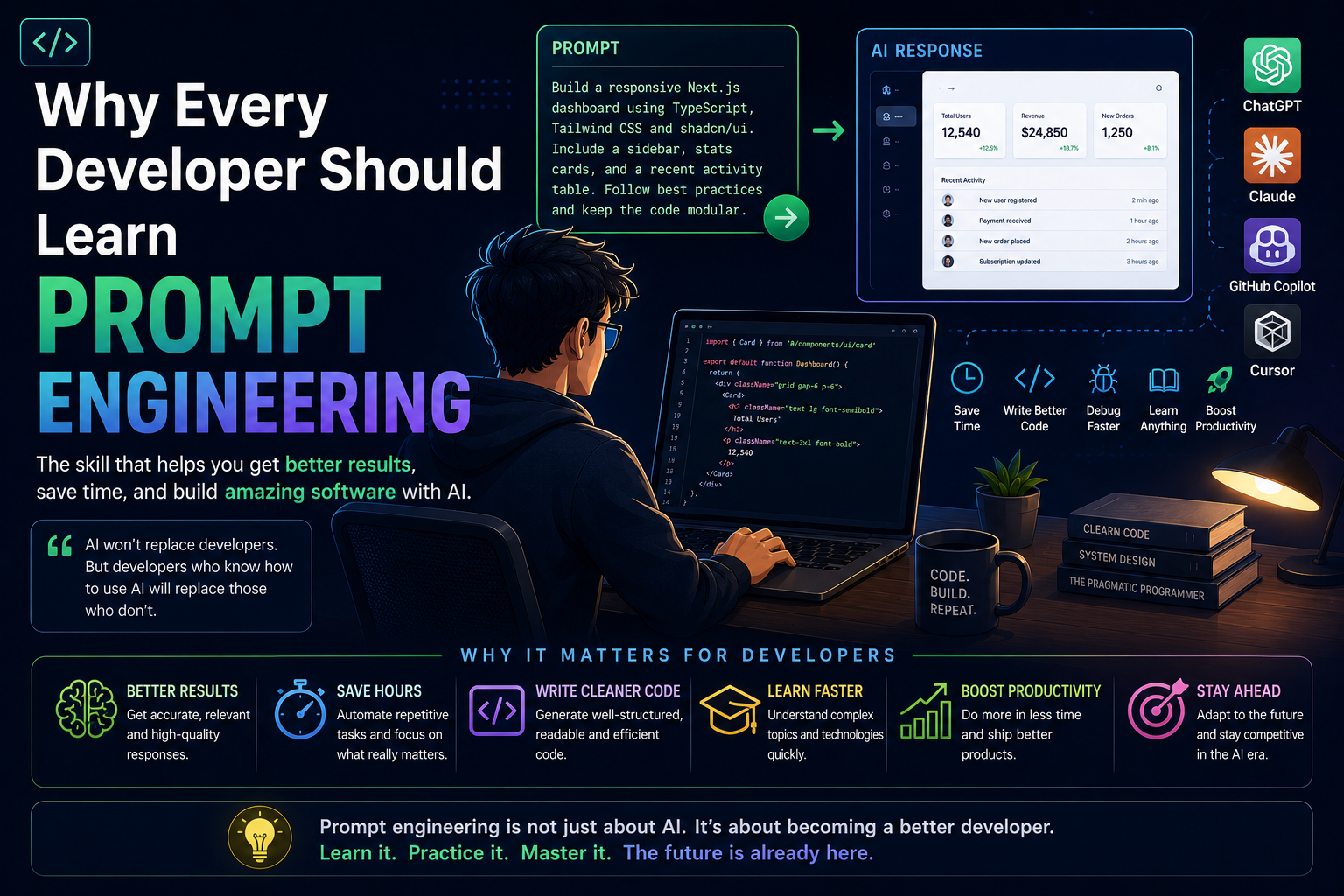
Why Every Developer Should Learn Prompt Engineering in 2026
Artificial Intelligence has become a daily companion for millions of developers.
Whether you're using ChatGPT, Claude, GitHub Copilot, Cursor, or another AI assistant, one thing determines the quality of the results you receive:
Your prompt.
Many developers think prompt engineering is just about asking better questions.
It's much more than that.
Prompt engineering is the ability to communicate with AI in a way that produces accurate, useful, and reliable results.
In 2026, it's becoming one of the most valuable skills a developer can learn.
What Is Prompt Engineering?
Prompt engineering is the process of writing clear, structured instructions for AI systems.
A prompt can include:
Context
Requirements
Constraints
Examples
Desired output
Formatting instructions
The better your prompt, the better the AI's response.
Think of it as writing a specification for another developer.
The clearer your instructions, the better the outcome.
Why Developers Need It
Modern software development is changing rapidly.
Developers now use AI for:
Writing code
Debugging
Refactoring
Documentation
Code reviews
Architecture planning
Learning new technologies
But AI isn't magic.
It only works as well as the instructions it receives.
Learning prompt engineering allows you to unlock the full potential of these tools.
Good Prompts Save Time
Imagine asking AI:
"Build a login page."
You'll probably receive something generic.
Now imagine asking:
"Create a responsive login page using Next.js, TypeScript, Tailwind CSS, shadcn/ui, server actions, and Better Auth. Follow accessibility best practices and keep the code modular."
The difference is enormous.
The second prompt provides context, technologies, and expectations.
That means fewer revisions and better results.
AI Is Becoming Part of Every Workflow
AI is no longer just a chatbot.
It's integrated into:
IDEs
Design tools
Documentation platforms
Search engines
Cloud services
Developers who know how to communicate effectively with AI will complete tasks faster than those who don't.
Prompt engineering is becoming a productivity skill.
Better Prompts Mean Better Code
AI-generated code isn't always perfect.
However, detailed prompts often produce:
Cleaner architecture
Better naming
More secure code
Fewer bugs
Better documentation
Prompt quality directly influences output quality.
Prompt Engineering Isn't Just for AI Experts
Many people believe prompt engineering is only useful for machine learning engineers.
That's not true.
Frontend developers use it.
Backend developers use it.
Mobile developers use it.
DevOps engineers use it.
Even technical writers and designers benefit from writing better prompts.
It's a universal skill.
Learn to Think Like an Architect
Good prompt engineering forces developers to think before coding.
Instead of immediately asking AI to build something, you'll naturally begin asking questions like:
What problem am I solving?
What are the requirements?
What technologies should be used?
What edge cases exist?
What constraints should AI follow?
These are the same questions experienced software architects ask.
In that sense, prompt engineering improves more than AI output—it improves your thinking.
Common Prompting Mistakes
Many beginners write prompts like:
"Fix this."
"Build a website."
"Make it better."
These prompts are too vague.
Instead, include:
Project context
Technology stack
Goal
Constraints
Expected output
Specific prompts produce significantly better responses.
AI Won't Replace Critical Thinking
Prompt engineering doesn't eliminate the need for programming knowledge.
In fact, the opposite is true.
Developers with strong technical skills write better prompts because they understand:
Software architecture
Design patterns
Security
Performance
User experience
AI becomes more powerful when paired with real expertise.
Prompt Engineering for Learning
One of the best uses of prompt engineering is education.
Instead of asking:
"Explain React."
Ask:
"Explain React Hooks as if I'm an intermediate JavaScript developer building my first Next.js application. Include simple examples and common mistakes."
The second prompt leads to a much more personalized learning experience.
The Future of Software Development
Over the next few years, developers won't be judged only by how quickly they can write code.
They'll also be judged by how effectively they use AI.
Prompt engineering is becoming similar to Git.
Years ago, Git was considered optional.
Today, it's an essential developer skill.
Prompt engineering is following a similar path.
How to Improve Your Prompting Skills
Practice writing prompts that include:
Background information
Clear objectives
Technical requirements
Examples
Output format
Constraints
Experiment with different wording and compare the results.
Like programming, prompt engineering improves with practice.
My Advice
Don't think of prompt engineering as a replacement for coding.
Think of it as a new programming language for communicating with AI.
The better you communicate, the better your results.
Developers who master this skill won't necessarily write more code.
They'll build better software in less time.
Final Thoughts
Prompt engineering is no longer just a buzzword.
It's becoming an essential skill for modern developers.
As AI becomes deeply integrated into software development, the ability to communicate effectively with intelligent tools will separate average developers from exceptional ones.
Learning prompt engineering won't replace the need for strong programming fundamentals.
Instead, it will amplify them.
And in 2026, that combination may be one of the greatest competitive advantages a developer can have.
Keep reading
Related Posts
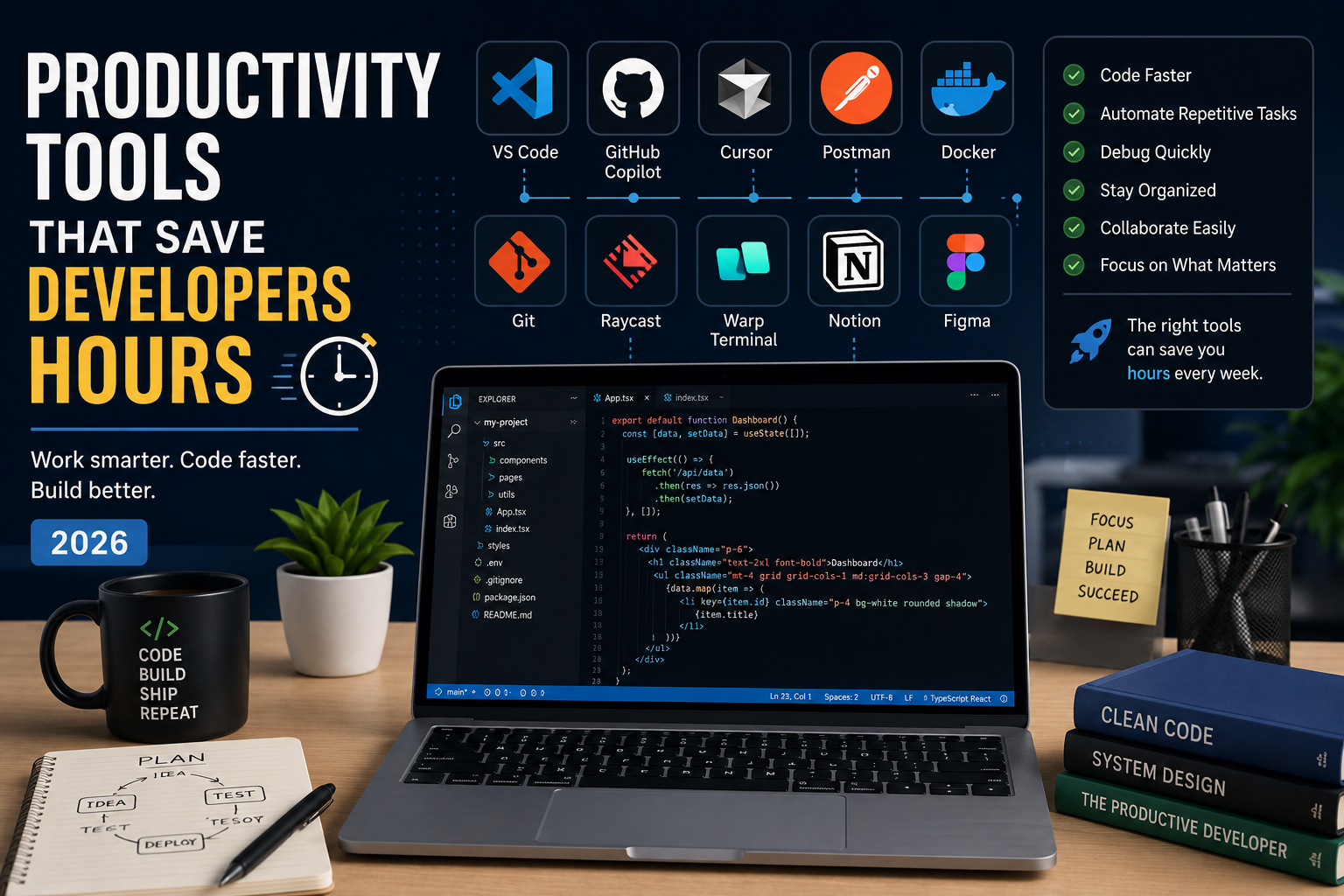
Developer Tools
Productivity Tools That Save Developers Hours in 2026
The best developers aren't just fast—they use the right tools. From AI coding assistants to terminal upgrades and API testing platforms, these productivity tools can save developers hours every week and help them focus on building great software instead of repetitive tasks.
4 min read · 681 views
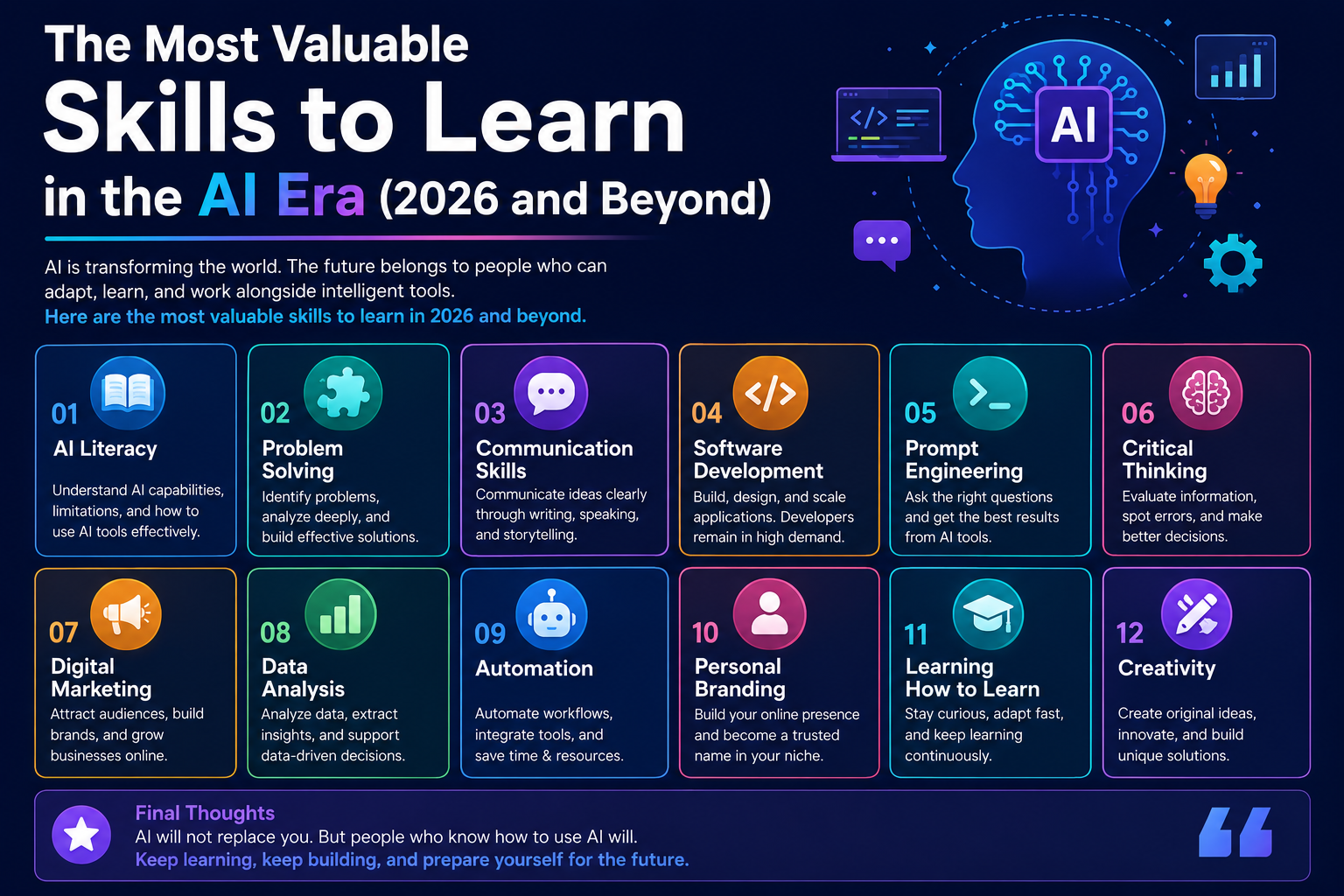
Career & Technology
The Most Valuable Skills to Learn in the AI Era (2026 and Beyond)
Artificial Intelligence is changing how we work, learn, and build products. Some skills are becoming less valuable, while others are becoming more important than ever. If you want to stay relevant and thrive in 2026 and beyond, these are the skills you should focus on developing.
4 min read · 331 views
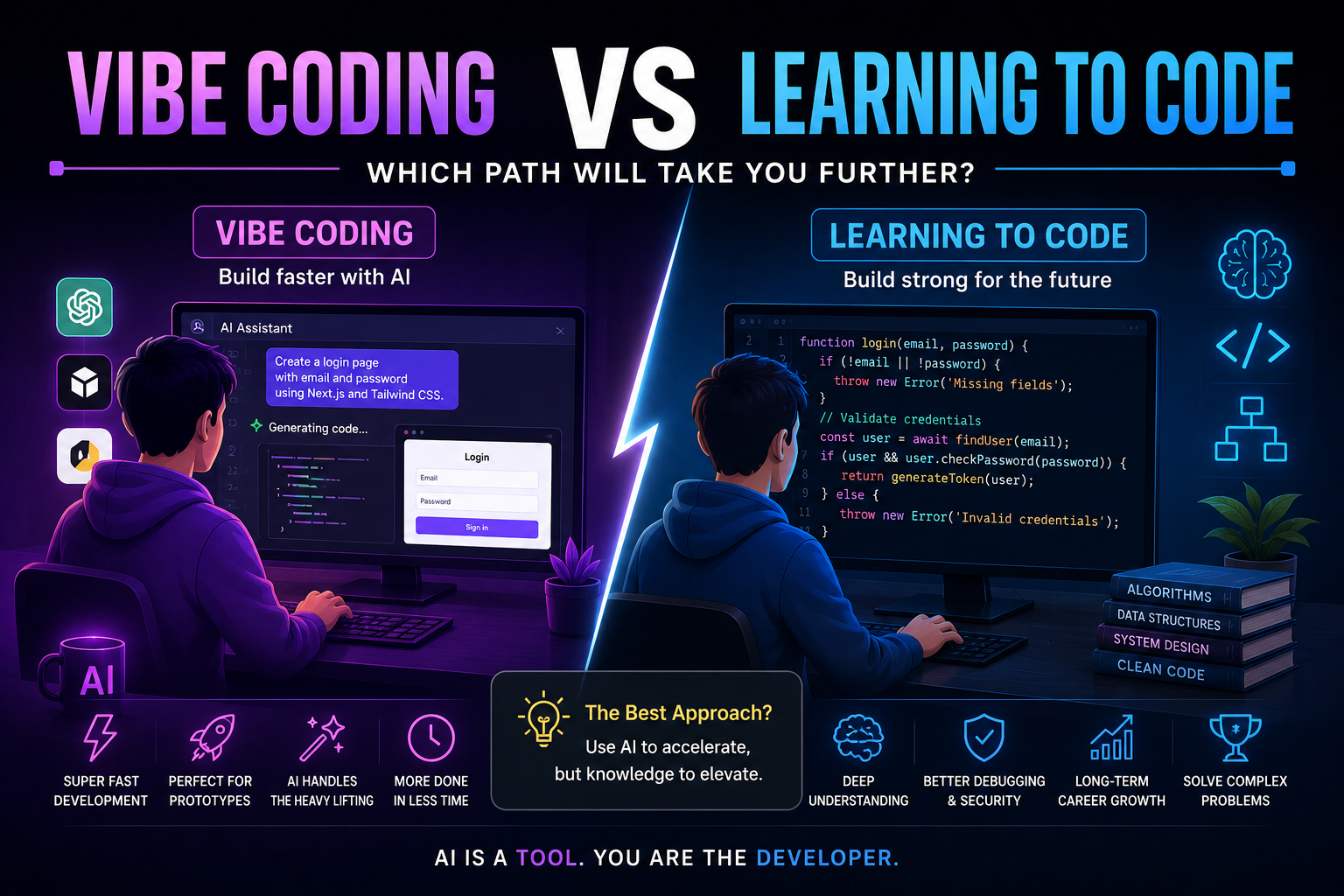
Programming
Vibe Coding vs Learning to Code: Which Path Will Take You Further?
AI can build apps faster than ever, leading to the rise of "vibe coding." But does that mean learning to code is no longer necessary? Let's explore the strengths, weaknesses, and future of both approaches to discover which path offers the greatest long-term value.
4 min read · 277 views
Trending
Popular Posts
Productivity Tools That Save Developers Hours in 2026
681 views
The Most Valuable Skills to Learn in the AI Era (2026 and Beyond)
331 views
Vibe Coding vs Learning to Code: Which Path Will Take You Further?
277 views
Next.js 16 Features Every Developer Should Know in 2026
192 views
The Best Folder Structure for Next.js Projects in 2026
151 views
Comments
No approved comments yet.