Career & Productivity
Why Developers Should Build in Public
By Yahya Saeed · 4 min read · 86 views
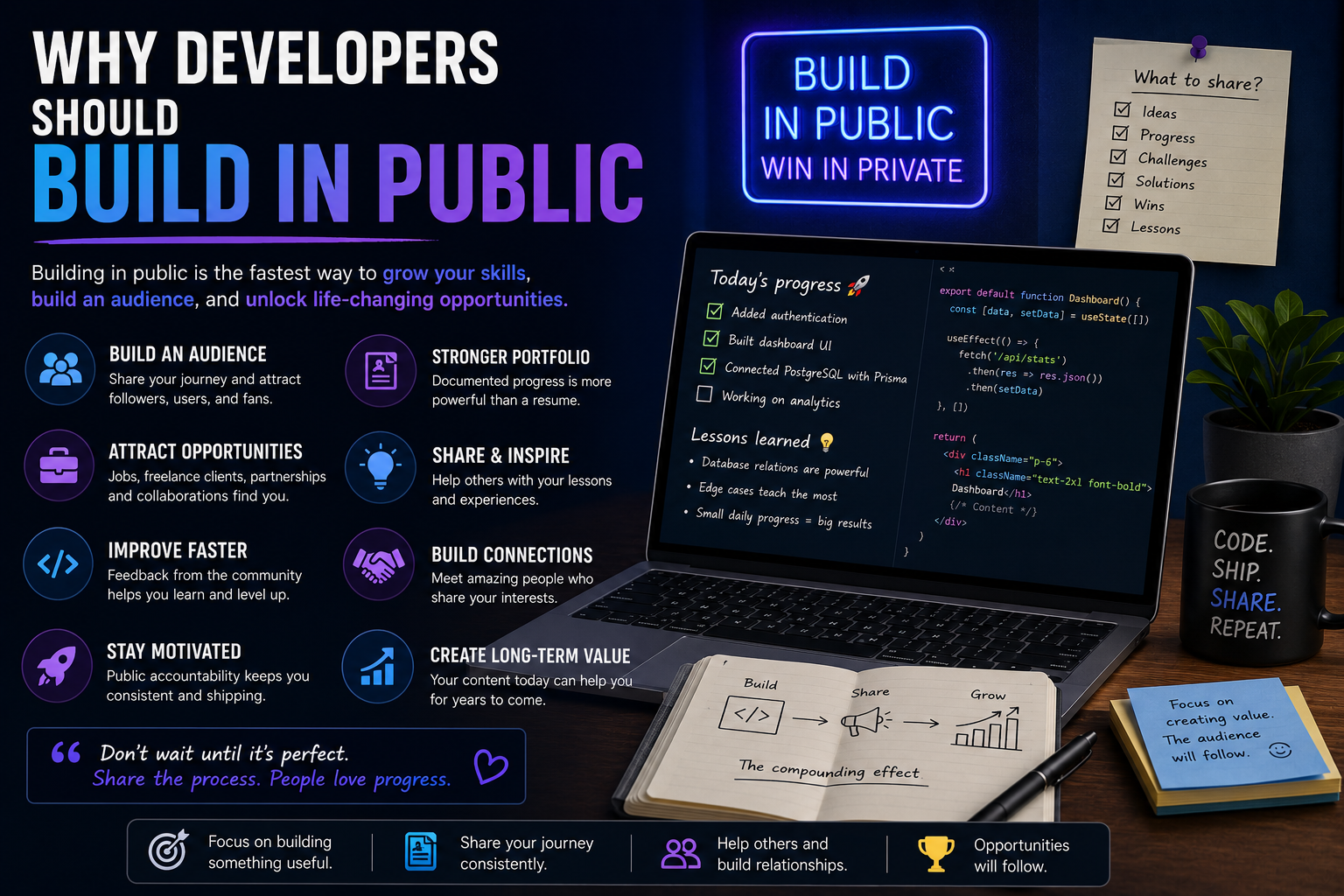
Why Developers Should Build in Public
Imagine spending six months building an incredible project.
You launch it...
And nobody knows it exists.
This happens to thousands of developers every year.
Not because their projects are bad.
But because they build in silence.
In today's developer ecosystem, writing good code is only half the job. The other half is making sure people know what you're building.
That's where building in public comes in.
Instead of waiting until your project is finished, you share your journey as you build. You document your progress, your mistakes, your lessons, and your wins.
It might feel uncomfortable at first, but it can completely change your career.
What Does "Build in Public" Mean?
Building in public means openly sharing your development journey.
Instead of only posting the final product, you share the entire process.
This can include:
Project ideas
UI screenshots
Code snippets
Problems you're solving
Bugs you fixed
New features
Lessons you learned
Milestones
Launch updates
People don't just enjoy seeing finished products—they enjoy watching progress.
You Build an Audience While You Build Your Product
Many developers spend months building an app before thinking about marketing.
The problem?
When launch day arrives, nobody is waiting.
Building in public solves this.
Every update introduces new people to your project.
By launch day, you may already have:
Followers
Early users
Beta testers
Supporters
Potential customers
Marketing becomes much easier because you've been doing it all along.
Opportunities Start Finding You
One of the biggest benefits of building in public is visibility.
People begin to notice your work.
That can lead to:
Freelance clients
Job offers
Speaking opportunities
Collaborations
Open-source contributions
Startup partnerships
Mentorship opportunities
Sometimes a single post reaches the right person at the right time.
Your Portfolio Grows Naturally
Every project update becomes proof of your skills.
Instead of saying:
"I know React."
You can show:
A project timeline
Real screenshots
Technical decisions
Architecture discussions
Deployment updates
Performance improvements
This creates a much stronger portfolio than simply listing technologies.
You Learn Faster
Teaching others is one of the best ways to learn.
When you explain:
Why you chose PostgreSQL
How you fixed a bug
Why you switched to Next.js
How Prisma works
You reinforce your own understanding.
Sharing knowledge helps both your audience and yourself.
Feedback Improves Your Projects
When you build privately, you're limited to your own ideas.
When you build publicly, other developers can suggest:
Better UI designs
Cleaner code
New features
Performance improvements
Better user experiences
Constructive feedback often saves hours of work.
You Become More Consistent
Public accountability is powerful.
If people know you're working on a project, you're naturally more motivated to keep making progress.
Even posting one update each week creates momentum.
Consistency beats occasional bursts of motivation.
You Inspire Other Developers
Many beginners think experienced developers never struggle.
By sharing your challenges, debugging sessions, and mistakes, you show that learning is a normal part of development.
Your journey might encourage someone else to start building.
That's a meaningful impact.
You Don't Need Thousands of Followers
One common misconception is that building in public only works if you're already famous.
That's not true.
Even if only ten people see your updates today, that's ten more people than yesterday.
Audiences grow through consistency—not overnight success.
What Should You Share?
You don't need to reveal everything.
Start with simple updates like:
Built the authentication system today.
Finally fixed a frustrating bug.
Added dark mode.
Finished the dashboard.
Learning Prisma this week.
Just deployed version one.
Small updates add up over time.
Best Platforms for Developers
Developers have many places to share their work.
Popular platforms include:
X (Twitter)
LinkedIn
GitHub
Hashnode
Reddit
YouTube
Personal blogs
Choose one or two platforms and stay consistent.
You don't need to be everywhere.
Building in Public Doesn't Mean Sharing Everything
You can still keep sensitive information private.
Avoid sharing:
API keys
Passwords
Client code
Confidential business information
Personal user data
Share your learning—not your secrets.
Overcoming the Fear
Many developers hesitate because they think:
I'm not experienced enough.
Nobody will care.
My code isn't good enough.
What if I make mistakes?
The truth is:
Everyone starts somewhere.
People appreciate authenticity more than perfection.
Most developers are supportive and enjoy learning alongside others.
A Simple Weekly Routine
Building in public doesn't have to consume your day.
Try this routine:
Monday: Share your goal.
Wednesday: Post a progress update.
Friday: Share what you learned.
Weekend: Publish a screenshot or demo.
In less than fifteen minutes each week, you'll steadily build your online presence.
Build First, Share Second
One important rule:
Don't spend more time posting than building.
The purpose of building in public is to document your work—not replace it.
Focus on creating real value first.
Then share what you've learned.
Final Thoughts
The internet rewards people who create consistently.
Building in public isn't about showing off—it's about documenting your journey, helping others, and creating opportunities that wouldn't exist otherwise.
Every project you build teaches you something valuable.
Every lesson you share helps someone else.
And every update increases the chances that the right person discovers your work.
Don't wait until your project is perfect.
Start sharing today.
A single post might lead to your next client, your next job, your next collaborator, or even your next startup.
The best time to start building was yesterday.
The second-best time is today.
Keep reading
Related Posts
Developer Tools
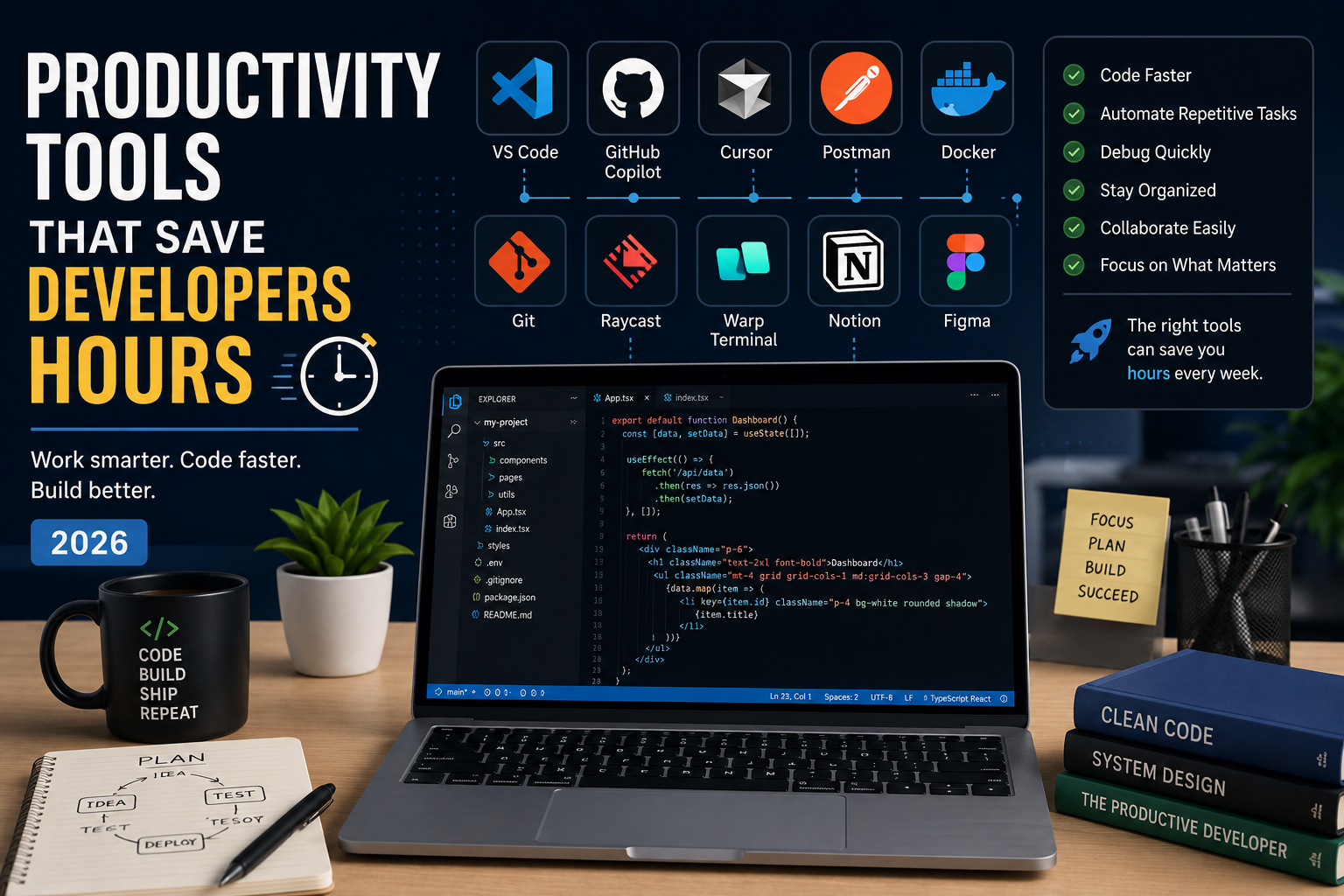
Productivity Tools That Save Developers Hours in 2026
The best developers aren't just fast—they use the right tools. From AI coding assistants to terminal upgrades and API testing platforms, these productivity tools can save developers hours every week and help them focus on building great software instead of repetitive tasks.
4 min read · 681 views

Career & Technology
The Most Valuable Skills to Learn in the AI Era (2026 and Beyond)
Artificial Intelligence is changing how we work, learn, and build products. Some skills are becoming less valuable, while others are becoming more important than ever. If you want to stay relevant and thrive in 2026 and beyond, these are the skills you should focus on developing.
4 min read · 331 views

Programming
Vibe Coding vs Learning to Code: Which Path Will Take You Further?
AI can build apps faster than ever, leading to the rise of "vibe coding." But does that mean learning to code is no longer necessary? Let's explore the strengths, weaknesses, and future of both approaches to discover which path offers the greatest long-term value.
4 min read · 277 views
Trending
Popular Posts
Productivity Tools That Save Developers Hours in 2026
681 views
The Most Valuable Skills to Learn in the AI Era (2026 and Beyond)
331 views
Vibe Coding vs Learning to Code: Which Path Will Take You Further?
277 views
Next.js 16 Features Every Developer Should Know in 2026
192 views
The Best Folder Structure for Next.js Projects in 2026
152 views
Comments
No approved comments yet.