SaaS & Startups
The SaaS Ideas I'd Build Today
By Yahya Saeed · 5 min read · 85 views
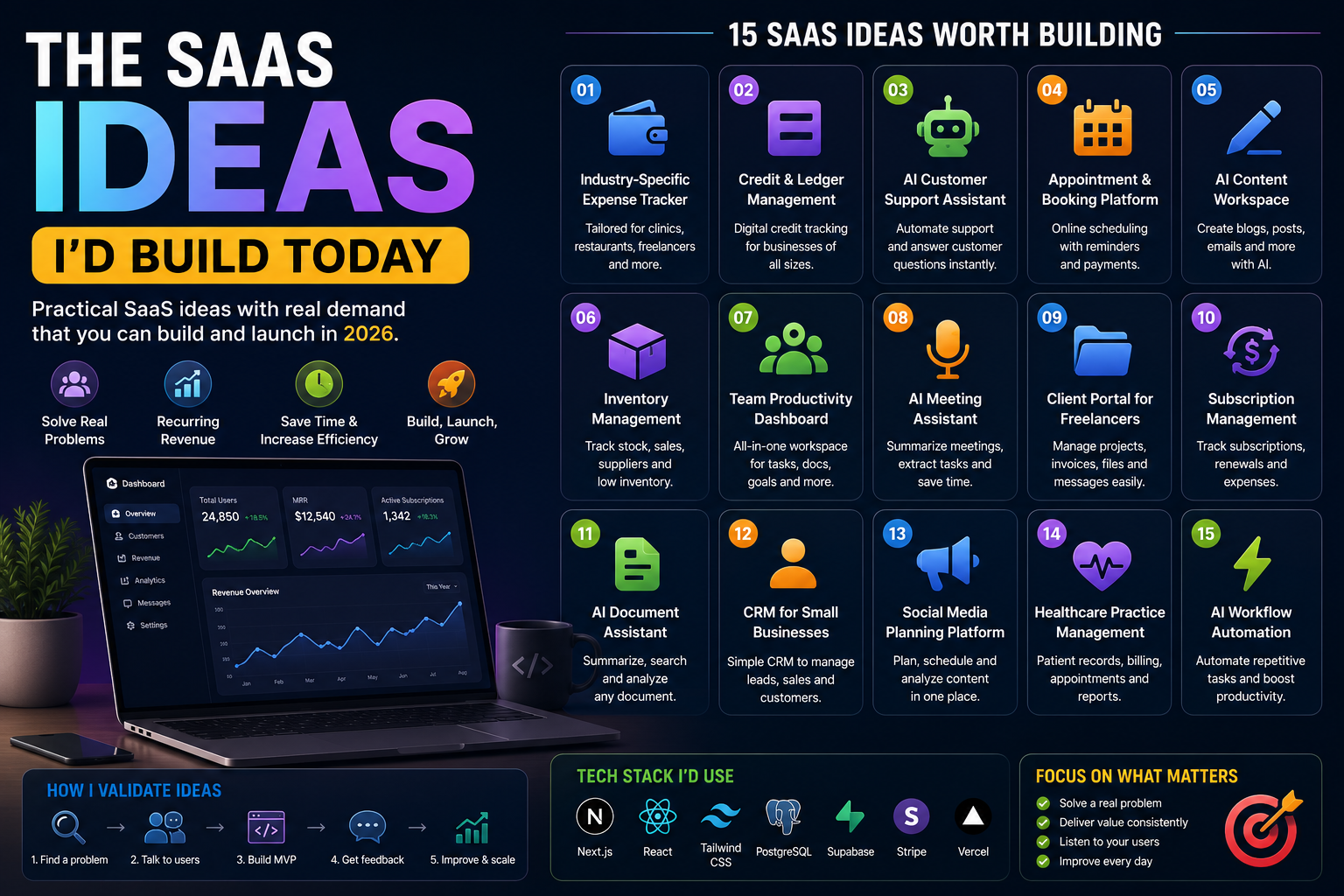
The SaaS Ideas I'd Build Today
If I had to start from zero today, I wouldn't spend months waiting for the perfect startup idea.
I'd start by solving real problems.
One of the biggest mistakes developers make is believing success comes from having a revolutionary idea.
It doesn't.
Successful SaaS businesses usually solve everyday problems better than existing solutions.
You don't need the next Facebook or ChatGPT.
You need software that saves people time, reduces manual work, or helps businesses make money.
In this article, I'll share the kinds of SaaS products I'd seriously consider building in 2026.
What Makes a Good SaaS Idea?
Before choosing a project, I ask a few simple questions.
Does it solve a real problem?
Would someone happily pay every month to use it?
Can I build a simple version within a few weeks?
Can I improve it over time based on customer feedback?
If the answer is yes, it's worth exploring.
1. Industry-Specific Expense Tracker
Instead of creating another generic expense app, I'd focus on a specific audience.
Examples include:
Medical clinics
Restaurants
Construction companies
Schools
Retail shops
Freelancers
Delivery businesses
When software speaks the language of one industry, it becomes far more valuable than a generic alternative.
2. Modern Credit & Ledger Management
Millions of small businesses still manage customer credit using notebooks.
A cloud-based ledger platform could provide:
Customer accounts
Credit history
Payment tracking
Digital receipts
Payment reminders
Multi-user access
Mobile support
Simple software can replace years of paperwork.
3. AI Customer Support Assistant
Businesses receive the same questions repeatedly.
An AI-powered assistant could:
Answer customer questions
Search company documentation
Generate replies
Escalate complex issues
Learn from previous conversations
This saves support teams countless hours.
4. Appointment & Booking Platform
Many service businesses still rely on phone calls for appointments.
A modern booking system could include:
Online scheduling
Calendar integration
SMS reminders
WhatsApp notifications
Staff management
Customer history
Payment collection
Healthcare, salons, consultants, and repair services could all benefit.
5. AI Content Workspace
Instead of generating random AI content, I'd build software that helps businesses create content faster.
Features might include:
Blog writing
SEO suggestions
Social media posts
Email campaigns
Brand voice templates
Content calendar
AI editing
Businesses care about productivity, not just AI.
6. Inventory Management for Small Businesses
Small businesses often use spreadsheets to track inventory.
A modern solution could offer:
Barcode scanning
Low stock alerts
Purchase history
Supplier management
Sales tracking
Reports
Mobile access
Simple inventory software can save hours every week.
7. Team Productivity Dashboard
Businesses use multiple tools every day.
Imagine one dashboard that combines:
Tasks
Calendar
Notes
Documents
Time tracking
Goals
Team announcements
Reducing context switching improves productivity.
8. AI Meeting Assistant
Meetings generate lots of information that quickly gets forgotten.
An AI assistant could:
Record meetings
Generate summaries
Extract action items
Assign tasks
Create follow-up emails
Companies increasingly value automation in their daily workflows.
9. Client Portal for Freelancers
Freelancers often juggle multiple tools.
A dedicated client portal could include:
Contracts
File sharing
Messaging
Invoices
Payments
Project updates
Feedback
Everything in one place.
10. Subscription Management Platform
Many businesses struggle to manage recurring subscriptions.
A SaaS solution could help track:
Monthly expenses
Renewal dates
Payment history
Budget alerts
Vendor information
Team subscriptions
Saving money is an easy product to sell.
11. AI Document Assistant
Businesses deal with countless documents.
An AI-powered workspace could:
Summarize PDFs
Extract important information
Answer questions
Search documents
Generate reports
Organize files
This is especially useful for legal, finance, and healthcare industries.
12. CRM for Small Businesses
Large CRM platforms are often expensive and overly complex.
A simpler CRM could focus on:
Leads
Customers
Notes
Sales pipeline
Follow-ups
Reminders
Email integration
Many businesses prefer simple software over enterprise systems.
13. Social Media Planning Platform
Content creators and businesses need to stay consistent.
Features could include:
Content calendar
AI captions
Hashtag suggestions
Approval workflows
Multi-platform scheduling
Performance analytics
Helping creators save time is valuable.
14. Healthcare Practice Management
Healthcare remains one of the largest software markets.
Potential features include:
Patient records
Appointment scheduling
Billing
Prescription history
Reports
Payment reminders
Multi-clinic management
Industry-specific software often commands higher subscription prices.
15. AI Workflow Automation
Businesses repeat the same digital tasks every day.
Imagine software that automates workflows like:
Sending emails
Updating spreadsheets
Creating invoices
Moving files
Generating reports
Creating tasks
Automation is one of the fastest-growing SaaS markets.
The Biggest Lesson
Notice something?
None of these ideas are completely new.
That's intentional.
The goal isn't to invent something nobody has imagined before.
The goal is to build something people already need—and make it simpler, faster, or more affordable.
Execution almost always matters more than originality.
How I'd Validate an Idea
Before writing thousands of lines of code, I'd validate the idea.
My process would look like this:
Identify a specific audience.
Talk to potential users.
Understand their biggest frustrations.
Build a small MVP.
Launch quickly.
Collect feedback.
Improve continuously.
This approach reduces risk and increases the chances of building something people will actually pay for.
The Tech Stack I'd Use
For most SaaS products in 2026, I'd choose:
Frontend
Next.js
React
Tailwind CSS
Backend
Node.js
Next.js Server Actions
Database
PostgreSQL
Prisma ORM
Backend Services
Supabase
Authentication
Better Auth or Clerk
Payments
Stripe
Deployment
Vercel
Analytics
PostHog
This stack is modern, scalable, and productive for solo developers.
Common Mistakes Founders Make
Many first-time founders spend too much time chasing trends.
Some common mistakes include:
Waiting for the perfect idea.
Building without talking to users.
Adding too many features.
Ignoring marketing.
Targeting everyone instead of a niche.
Launching too late.
Giving up after the first version.
Remember, your first version doesn't need to be perfect.it just needs to solve one problem well.
Final Thoughts
The best SaaS ideas aren't hidden in secret notebooks or billion-dollar brainstorming sessions.
They're all around us.
Every spreadsheet someone updates manually, every repetitive task performed daily, every notebook replacing software, and every inefficient workflow represents an opportunity.
The developers who succeed aren't necessarily the ones with the most original ideas.
They're the ones who build useful products, launch early, listen to customers, and improve consistently.
If I were starting today, I wouldn't wait for inspiration.
I'd pick one real problem, build a simple solution, and start helping people as quickly as possible.
That's how successful SaaS businesses are built.
Keep reading
Related Posts
Developer Tools
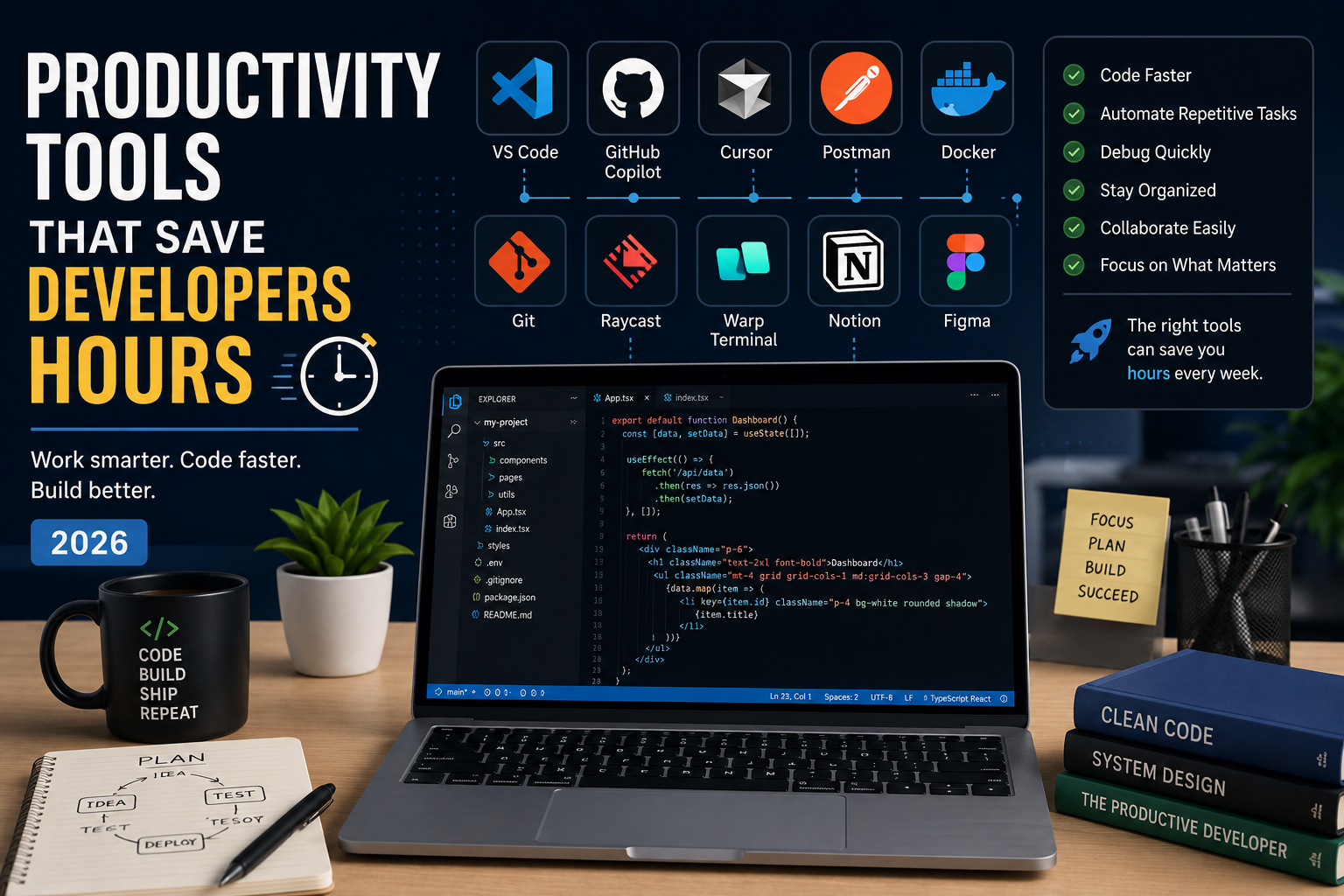
Productivity Tools That Save Developers Hours in 2026
The best developers aren't just fast—they use the right tools. From AI coding assistants to terminal upgrades and API testing platforms, these productivity tools can save developers hours every week and help them focus on building great software instead of repetitive tasks.
4 min read · 681 views
Career & Technology
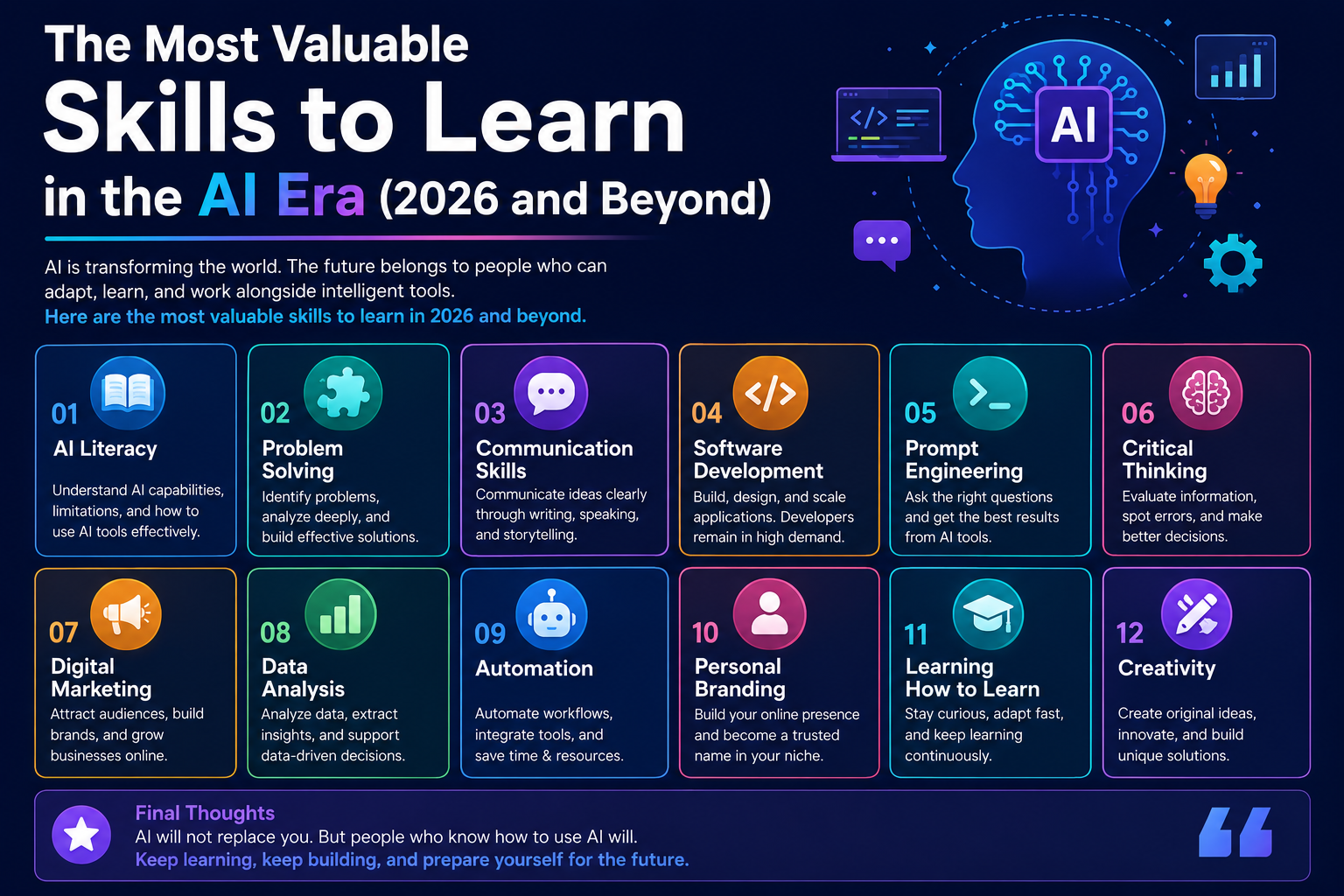
The Most Valuable Skills to Learn in the AI Era (2026 and Beyond)
Artificial Intelligence is changing how we work, learn, and build products. Some skills are becoming less valuable, while others are becoming more important than ever. If you want to stay relevant and thrive in 2026 and beyond, these are the skills you should focus on developing.
4 min read · 331 views
Next.js
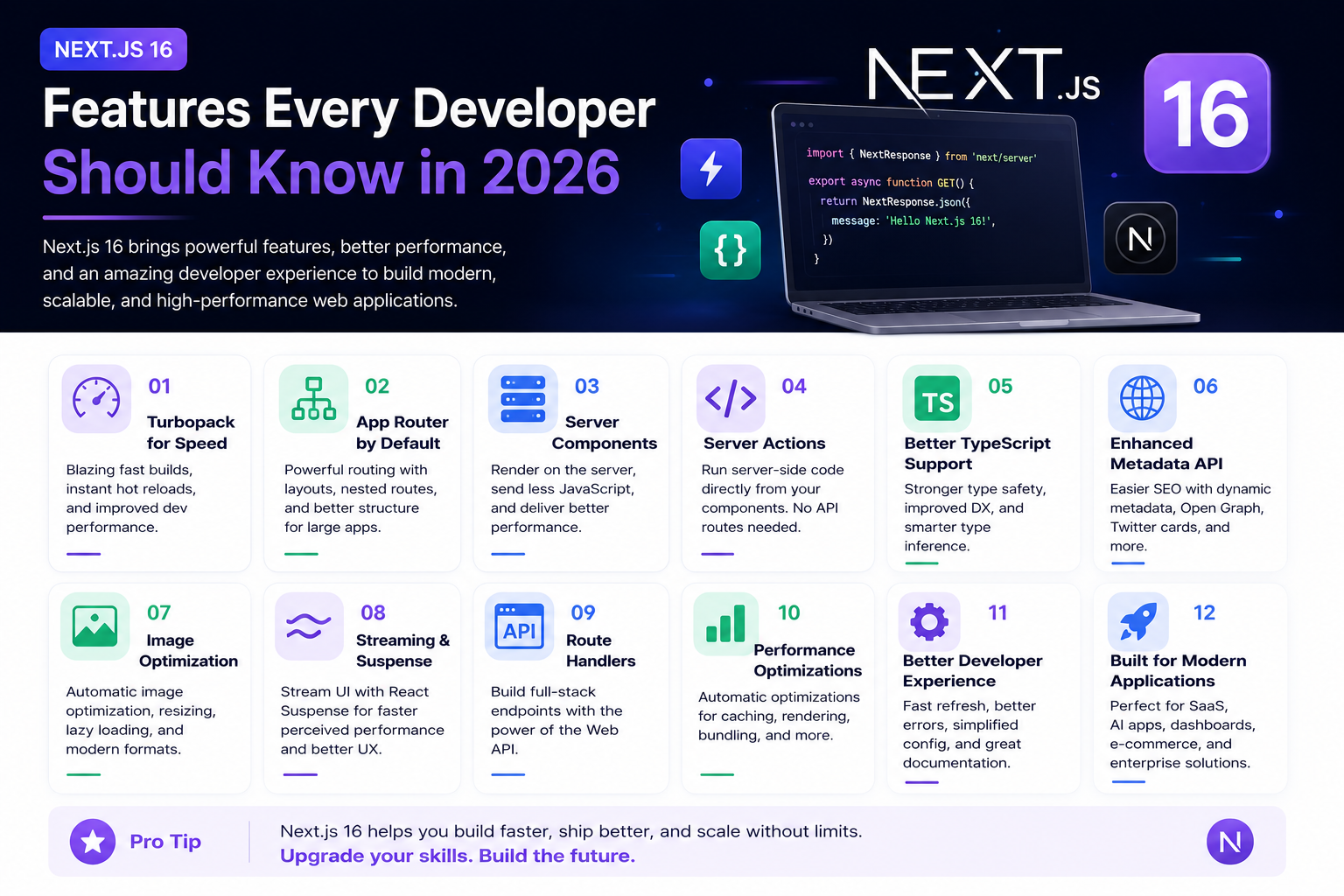
Next.js 16 Features Every Developer Should Know in 2026
Next.js 16 continues to push modern web development forward with improved performance, better developer experience, enhanced routing, and powerful server-side capabilities. Whether you're building a blog, SaaS platform, portfolio, or enterprise application, these are the most important Next.js 16 features every developer should understand.
4 min read · 192 views
Trending
Popular Posts
Productivity Tools That Save Developers Hours in 2026
681 views
The Most Valuable Skills to Learn in the AI Era (2026 and Beyond)
331 views
Vibe Coding vs Learning to Code: Which Path Will Take You Further?
277 views
Next.js 16 Features Every Developer Should Know in 2026
192 views
The Best Folder Structure for Next.js Projects in 2026
152 views
Comments
No approved comments yet.