Career & Technology
The Future of Remote Development Jobs: What Developers Should Expect in 2026 and Beyond
By Yahya Saeed · 4 min read · 88 views
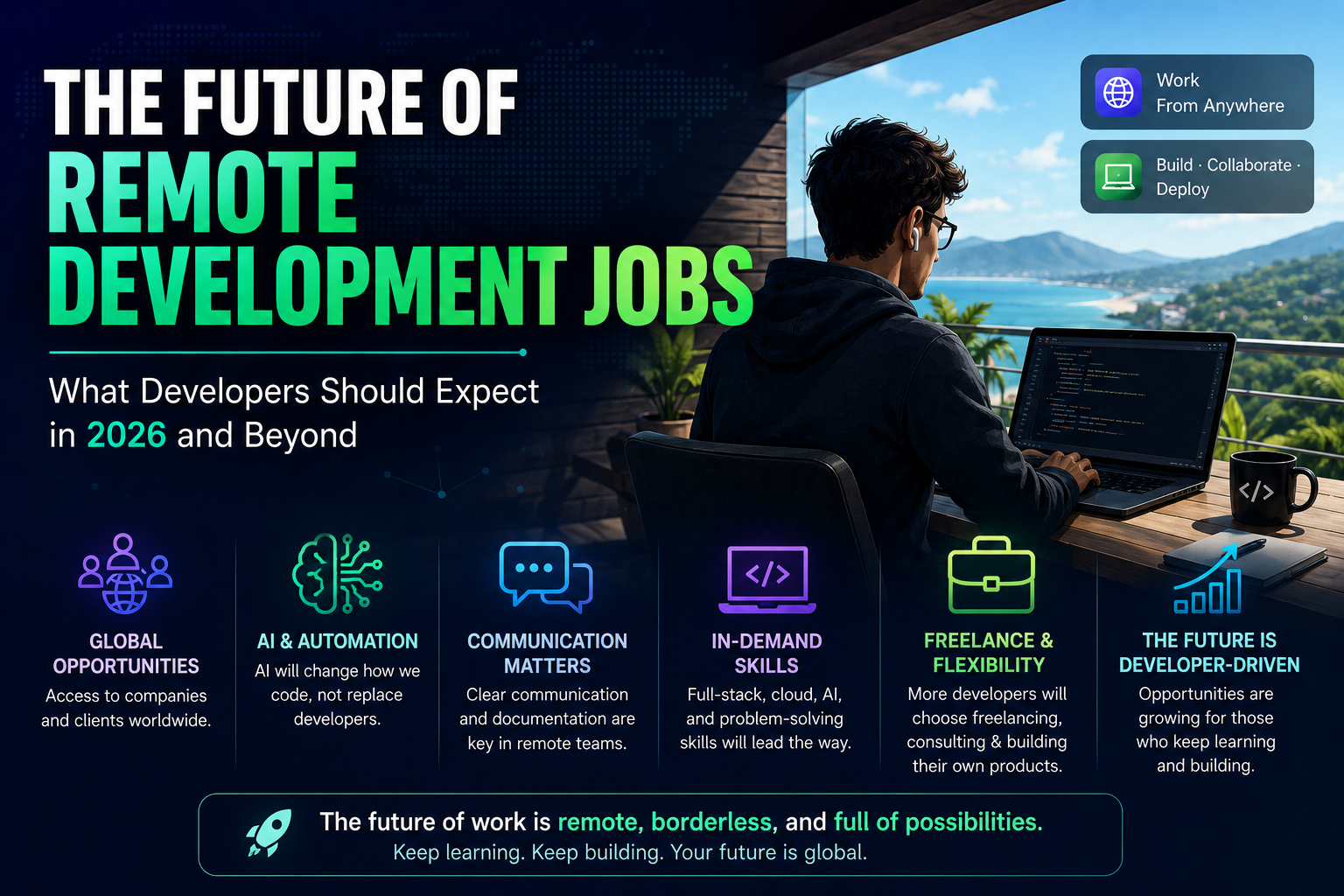
The Future of Remote Development Jobs: What Developers Should Expect in 2026 and Beyond
A decade ago, working remotely as a software developer felt like a rare privilege.
Today, it's a normal part of the technology industry.
Developers build applications, manage infrastructure, collaborate with teams, and launch startups from their homes, coworking spaces, and even while traveling the world.
But recently, many companies have started encouraging employees to return to the office.
This has led many developers to ask:
Is remote work disappearing?
The answer is no.
Remote development jobs are evolving, not disappearing.
And the future remains incredibly promising for skilled developers.
How Remote Work Changed Software Development
The rise of remote work fundamentally changed how software teams operate.
Companies discovered that developers could:
Write code remotely
Attend meetings online
Collaborate through cloud tools
Deploy software from anywhere
For many organizations, productivity remained high.
In some cases, it even improved.
This realization permanently changed hiring practices across the industry.
Why Companies Still Hire Remote Developers
The biggest advantage of remote hiring is access to global talent.
Instead of hiring only within a single city, companies can recruit developers from around the world.
Benefits include:
Larger talent pools
Faster hiring
Lower operational costs
Diverse perspectives
Flexible team structures
For startups especially, remote hiring has become a competitive advantage.
The Rise of Global Opportunities
One of the most exciting changes is that developers are no longer limited by geography.
A developer living in:
Pakistan
India
Egypt
Nigeria
Brazil
can now work with clients and companies worldwide.
This has created opportunities that simply didn't exist a few years ago.
Skills matter more than location than ever before.
AI Is Changing Remote Jobs
Artificial Intelligence is reshaping software development.
Many developers worry that AI might reduce remote opportunities.
The reality is more nuanced.
AI can automate repetitive tasks such as:
Code generation
Documentation
Debugging assistance
Testing support
But companies still need developers who can:
Solve problems
Design systems
Communicate effectively
Understand business requirements
AI is changing how developers work, not eliminating the need for developers.
Communication Skills Are Becoming More Important
In remote environments, communication matters almost as much as technical skills.
Developers must learn to:
Write clearly
Explain decisions
Document work
Collaborate asynchronously
The ability to communicate effectively often separates good remote developers from great ones.
The Growth of Freelancing
Freelancing continues to grow alongside remote work.
Platforms like:
Upwork
Fiverr
Toptal
allow developers to find clients globally.
Many developers now combine:
Freelancing
Contract work
Personal SaaS projects
Content creation
instead of relying on a single employer.
This trend is likely to continue.
The Rise of the Solo Developer
Modern tools have made solo development more powerful than ever.
Today, one developer can build:
SaaS applications
Mobile apps
Blogs
E-commerce platforms
AI-powered products
with tools such as:
Next.js
Tailwind CSS
Supabase
Prisma
AI assistants
This means many developers are creating their own opportunities rather than waiting for job offers.
What Skills Will Be Most Valuable?
The developers who thrive in the future will focus on:
Full-Stack Development
Understanding both frontend and backend systems remains highly valuable.
AI Integration
Knowing how to use AI effectively will become increasingly important.
Cloud Technologies
Modern applications rely heavily on cloud infrastructure.
Problem Solving
Frameworks change.
Problem-solving skills remain valuable forever.
Communication
Remote teams depend on strong communication.
Challenges of Remote Work
Remote work isn't perfect.
Common challenges include:
Isolation
Time zone differences
Communication delays
Self-discipline requirements
Successful remote developers learn how to manage these challenges effectively.
The freedom of remote work comes with responsibility.
Will Remote Jobs Become More Competitive?
Yes.
Remote positions attract applicants from around the world.
Competition is increasing.
However, demand for skilled developers remains strong.
The key is standing out through:
Strong projects
A professional portfolio
Practical skills
Consistent learning
Developers who continuously improve their abilities will always have opportunities.
My Prediction for the Future
The future will likely be a mix of:
Fully remote companies
Hybrid teams
Freelance work
Independent SaaS businesses
Rather than one model dominating, developers will have more choices than ever.
The idea that everyone must work from a physical office is becoming outdated for many technology roles.
Final Thoughts
Remote development jobs are not disappearing.
They are evolving.
Companies are becoming more selective, competition is increasing, and AI is changing workflows.
But the core opportunity remains strong.
Developers who focus on building valuable skills, creating real projects, communicating effectively, and adapting to new technologies will continue to find opportunities worldwide.
The future of remote development isn't about where you work.
It's about what you can build.
And for skilled developers, that future looks brighter than ever.
Keep reading
Related Posts
Developer Tools
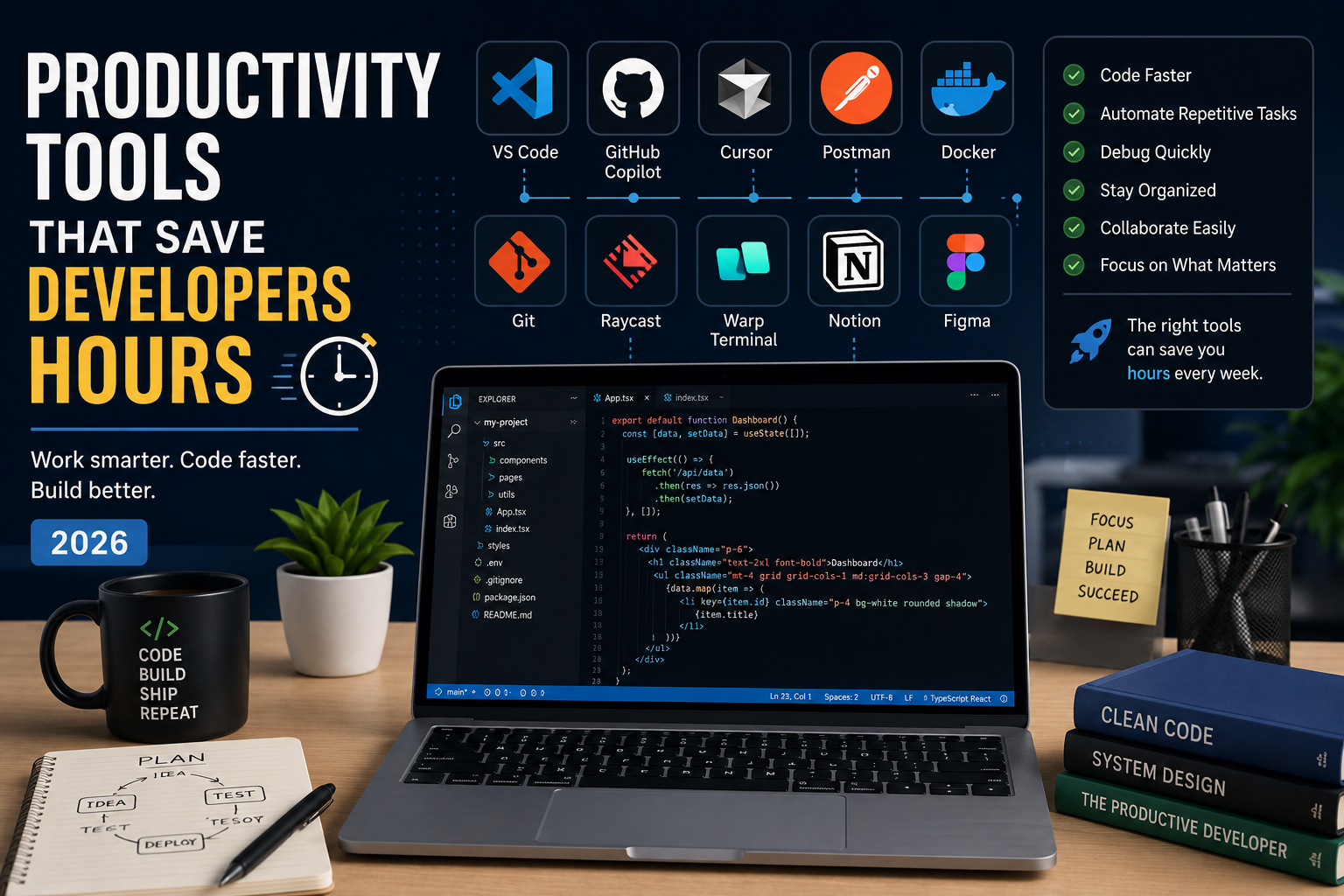
Productivity Tools That Save Developers Hours in 2026
The best developers aren't just fast—they use the right tools. From AI coding assistants to terminal upgrades and API testing platforms, these productivity tools can save developers hours every week and help them focus on building great software instead of repetitive tasks.
4 min read · 681 views
Career & Technology
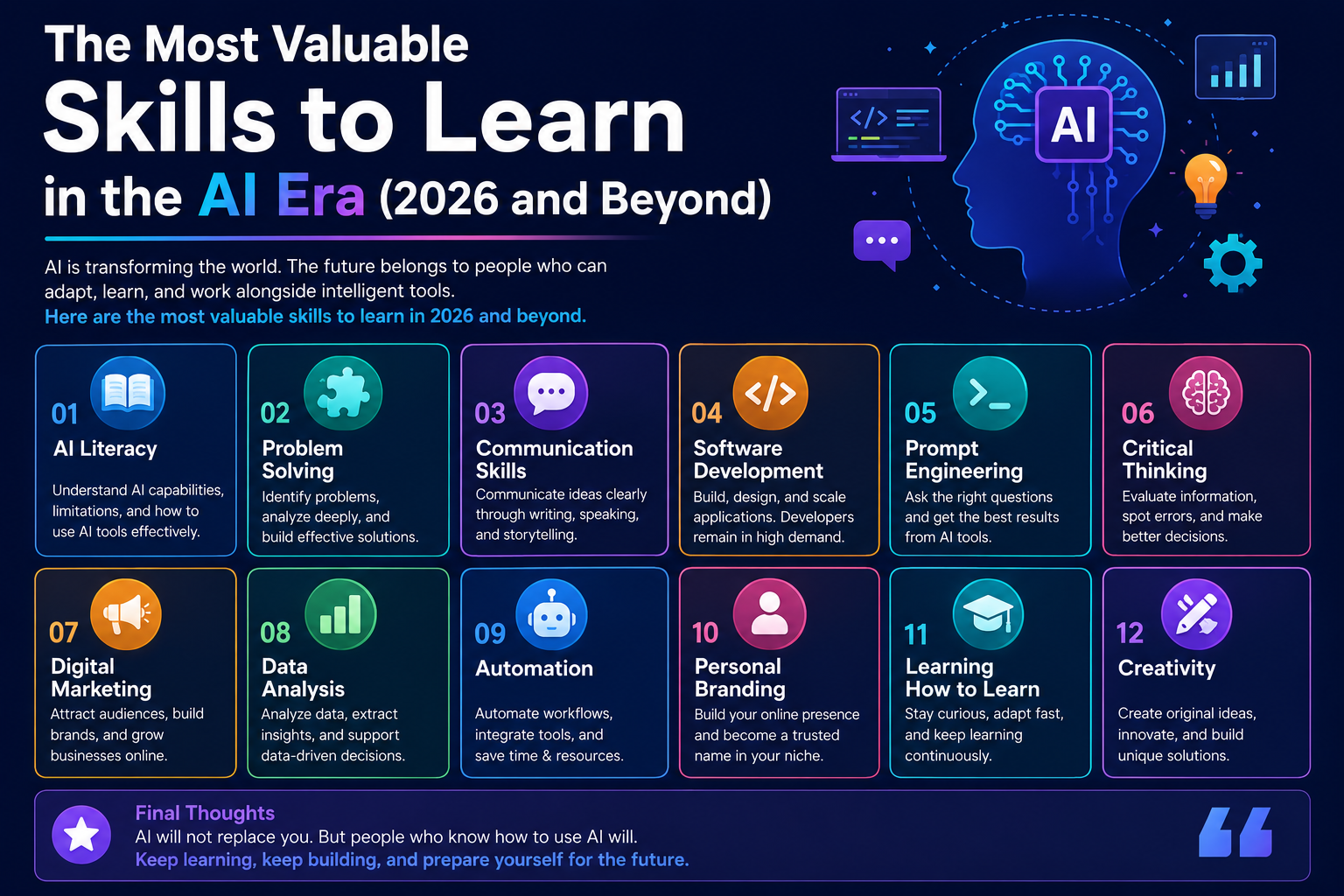
The Most Valuable Skills to Learn in the AI Era (2026 and Beyond)
Artificial Intelligence is changing how we work, learn, and build products. Some skills are becoming less valuable, while others are becoming more important than ever. If you want to stay relevant and thrive in 2026 and beyond, these are the skills you should focus on developing.
4 min read · 331 views

Programming
Vibe Coding vs Learning to Code: Which Path Will Take You Further?
AI can build apps faster than ever, leading to the rise of "vibe coding." But does that mean learning to code is no longer necessary? Let's explore the strengths, weaknesses, and future of both approaches to discover which path offers the greatest long-term value.
4 min read · 277 views
Trending
Popular Posts
Productivity Tools That Save Developers Hours in 2026
681 views
The Most Valuable Skills to Learn in the AI Era (2026 and Beyond)
331 views
Vibe Coding vs Learning to Code: Which Path Will Take You Further?
277 views
Next.js 16 Features Every Developer Should Know in 2026
192 views
The Best Folder Structure for Next.js Projects in 2026
152 views
Comments
No approved comments yet.