Database
Supabase vs Firebase: Which Backend Platform Should You Choose in 2026?
By Yahya Saeed · 4 min read · 94 views
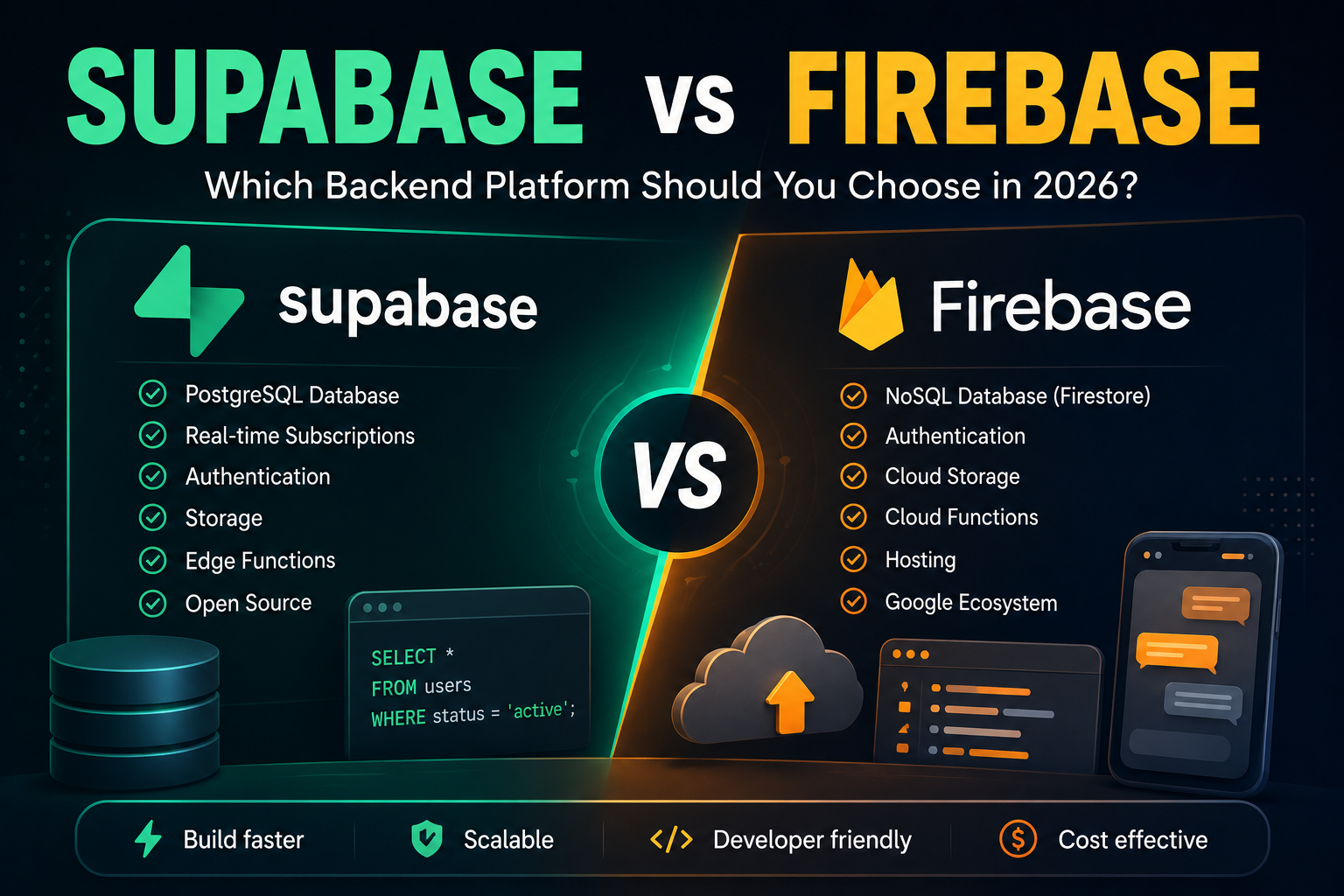
Supabase vs Firebase: Which Backend Platform Should You Choose in 2026?
Building modern applications has become much easier thanks to Backend-as-a-Service (BaaS) platforms.
Instead of spending weeks configuring servers, databases, authentication systems, and storage solutions, developers can now launch products much faster.
Two of the biggest players in this space are:
Supabase
Firebase
Both are excellent tools.
Both power thousands of applications.
And both can dramatically speed up development.
However, they take very different approaches.
If you're building a SaaS, dashboard, mobile app, or startup in 2026, choosing the right platform can save you a lot of time and future headaches.
Let's compare them.
What Is Firebase?
Firebase is Google's Backend-as-a-Service platform.
It provides developers with:
Authentication
Database
Cloud Storage
Hosting
Analytics
Push Notifications
Firebase became popular because developers could quickly build applications without managing backend infrastructure.
For years, it has been one of the easiest ways to launch apps.
What Is Supabase?
Supabase is often described as an open-source alternative to Firebase.
However, it is much more than that.
Supabase provides:
PostgreSQL database
Authentication
File Storage
Realtime updates
Edge Functions
APIs
Unlike Firebase, Supabase is built around PostgreSQL, one of the most trusted databases in the world.
This gives developers much more flexibility.
Database Comparison
This is where the biggest difference exists.
Firebase
Firebase uses NoSQL databases:
Firestore
Realtime Database
Data is stored as documents and collections.
This can work well for certain applications but becomes challenging for complex relationships.
Supabase
Supabase uses PostgreSQL.
Benefits include:
SQL queries
Relationships
Joins
Advanced filtering
Mature database ecosystem
For developers already familiar with SQL, Supabase feels much more natural.
Winner: Supabase
PostgreSQL is one of the strongest reasons developers choose Supabase today.
Authentication
Both platforms provide authentication systems.
Features include:
Email login
Social login
Password reset
User management
Firebase offers a polished experience backed by Google's infrastructure.
Supabase has improved significantly and now provides a modern authentication solution with excellent developer experience.
Winner: Tie
Both are excellent choices.
Learning Curve
Firebase can feel easier initially.
Many developers create working applications very quickly.
However, as applications grow, NoSQL database structures often become more difficult to manage.
Supabase may require some SQL knowledge, but many developers find it easier to scale long-term.
Winner: Firebase for beginners
Winner: Supabase for long-term development
Pricing
Pricing is important, especially for startups and solo developers.
Firebase pricing can become difficult to predict because costs depend on:
Reads
Writes
Storage
Bandwidth
Unexpected traffic can sometimes create unexpected bills.
Supabase pricing is generally easier to understand because it follows a more traditional database model.
Many developers appreciate this transparency.
Winner: Supabase
Open Source vs Proprietary
This is another major difference.
Firebase
Firebase is owned by Google.
You depend entirely on Google's ecosystem.
Supabase
Supabase is open source.
You can:
Self-host it
Export your database
Maintain greater control
Many developers prefer having this flexibility.
Winner: Supabase
Realtime Features
Realtime functionality allows applications to update instantly.
Examples include:
Chat applications
Notifications
Live dashboards
Firebase became famous because of its realtime capabilities.
Supabase has since introduced powerful realtime features as well.
Winner: Tie
Both platforms perform very well here.
Working with Next.js
Both platforms integrate nicely with Next.js.
However, many Next.js developers prefer Supabase because:
PostgreSQL works naturally with modern web applications.
Prisma integrates well.
SQL remains extremely powerful.
Firebase still works well, but many modern SaaS projects lean toward Supabase.
Winner: Supabase
Scalability
Both platforms can scale.
Firebase benefits from Google's infrastructure.
Supabase benefits from PostgreSQL's maturity and reliability.
For most startups, either platform can handle growth.
The difference often comes down to developer preference and data structure.
Winner: Tie
Developer Experience
Developer experience has become a major factor in platform adoption.
Supabase provides:
Clean dashboard
SQL editor
Easy database management
Familiar workflows
Firebase offers:
Excellent documentation
Strong integrations
Mature ecosystem
Many web developers feel more comfortable with Supabase because SQL is easier to reason about than NoSQL documents.
Slight Winner: Supabase
Which Platform Is Better for SaaS?
For modern SaaS applications, Supabase often has an advantage.
Reasons include:
PostgreSQL
Better relational data handling
Easier reporting
Simpler analytics
Better integration with Prisma
Many startups building SaaS products now choose Supabase as their backend.
Which Platform Is Better for Mobile Apps?
Firebase remains extremely strong in mobile development.
Its ecosystem includes:
Analytics
Push notifications
Crash reporting
Mobile-focused services
For mobile-first products, Firebase remains a compelling choice.
When Should You Choose Firebase?
Choose Firebase if:
You're building mobile apps.
You want Google's ecosystem.
You need analytics and notifications.
You prefer NoSQL databases.
When Should You Choose Supabase?
Choose Supabase if:
You're building a SaaS.
You like PostgreSQL.
You prefer SQL.
You use Next.js.
You want open-source flexibility.
You want predictable pricing.
My Recommendation
If I were building a modern SaaS application in 2026 using:
Next.js
Tailwind CSS
Prisma
PostgreSQL
I would choose Supabase.
The PostgreSQL foundation alone makes it incredibly powerful and flexible.
For web applications, dashboards, admin panels, and startup products, Supabase has become one of the strongest backend solutions available.
Final Thoughts
Both Firebase and Supabase are excellent platforms.
Neither choice is wrong.
Firebase pioneered modern Backend-as-a-Service development and remains a fantastic option.
However, Supabase has gained tremendous popularity because it combines modern developer experience with the reliability and power of PostgreSQL.
For many developers building web applications in 2026, Supabase offers the best balance of simplicity, flexibility, and scalability.
And that's exactly why so many startups are choosing it today.
Keep reading
Related Posts

Programming
Vibe Coding vs Learning to Code: Which Path Will Take You Further?
AI can build apps faster than ever, leading to the rise of "vibe coding." But does that mean learning to code is no longer necessary? Let's explore the strengths, weaknesses, and future of both approaches to discover which path offers the greatest long-term value.
4 min read · 277 views
Next.js
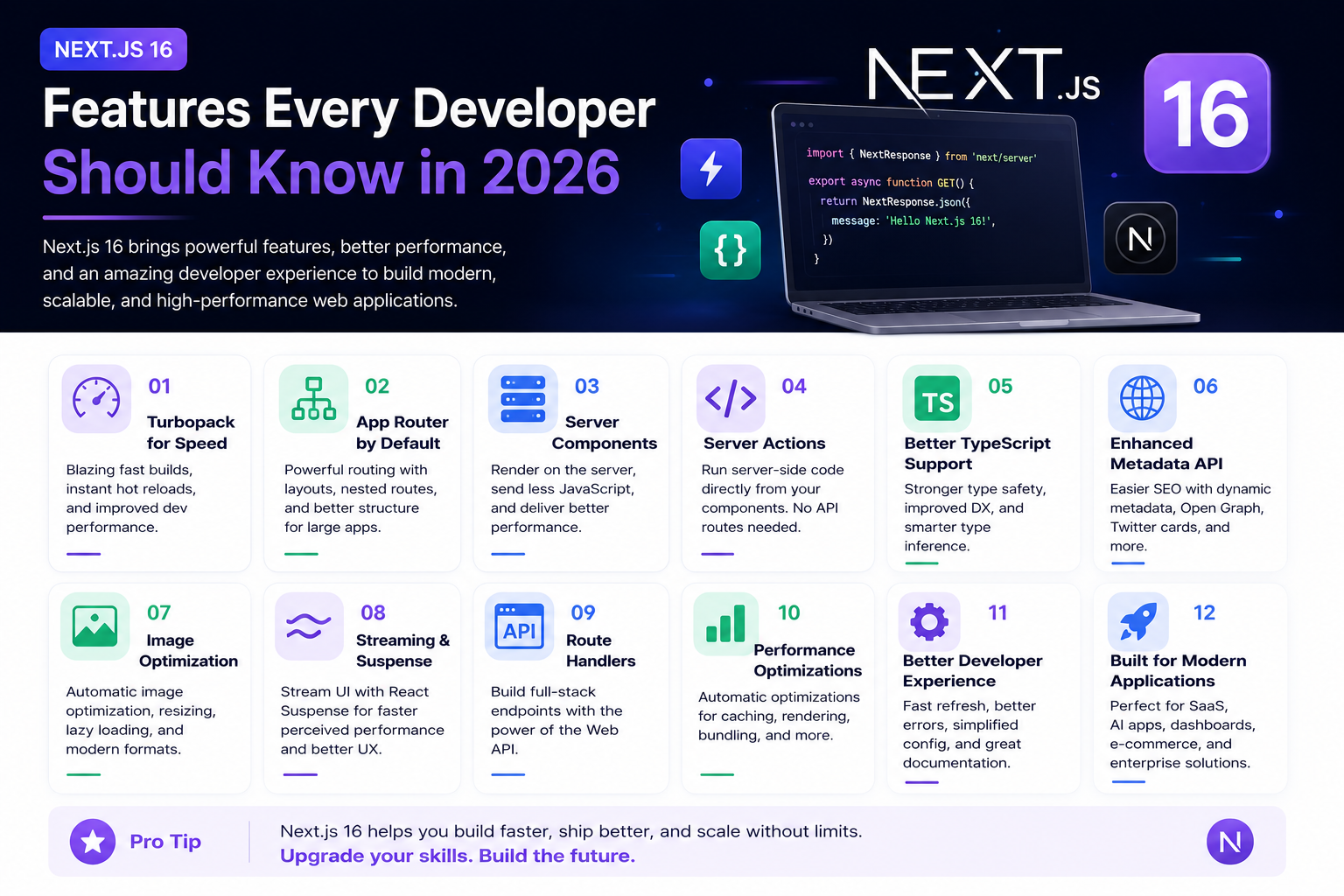
Next.js 16 Features Every Developer Should Know in 2026
Next.js 16 continues to push modern web development forward with improved performance, better developer experience, enhanced routing, and powerful server-side capabilities. Whether you're building a blog, SaaS platform, portfolio, or enterprise application, these are the most important Next.js 16 features every developer should understand.
4 min read · 192 views
Next.js
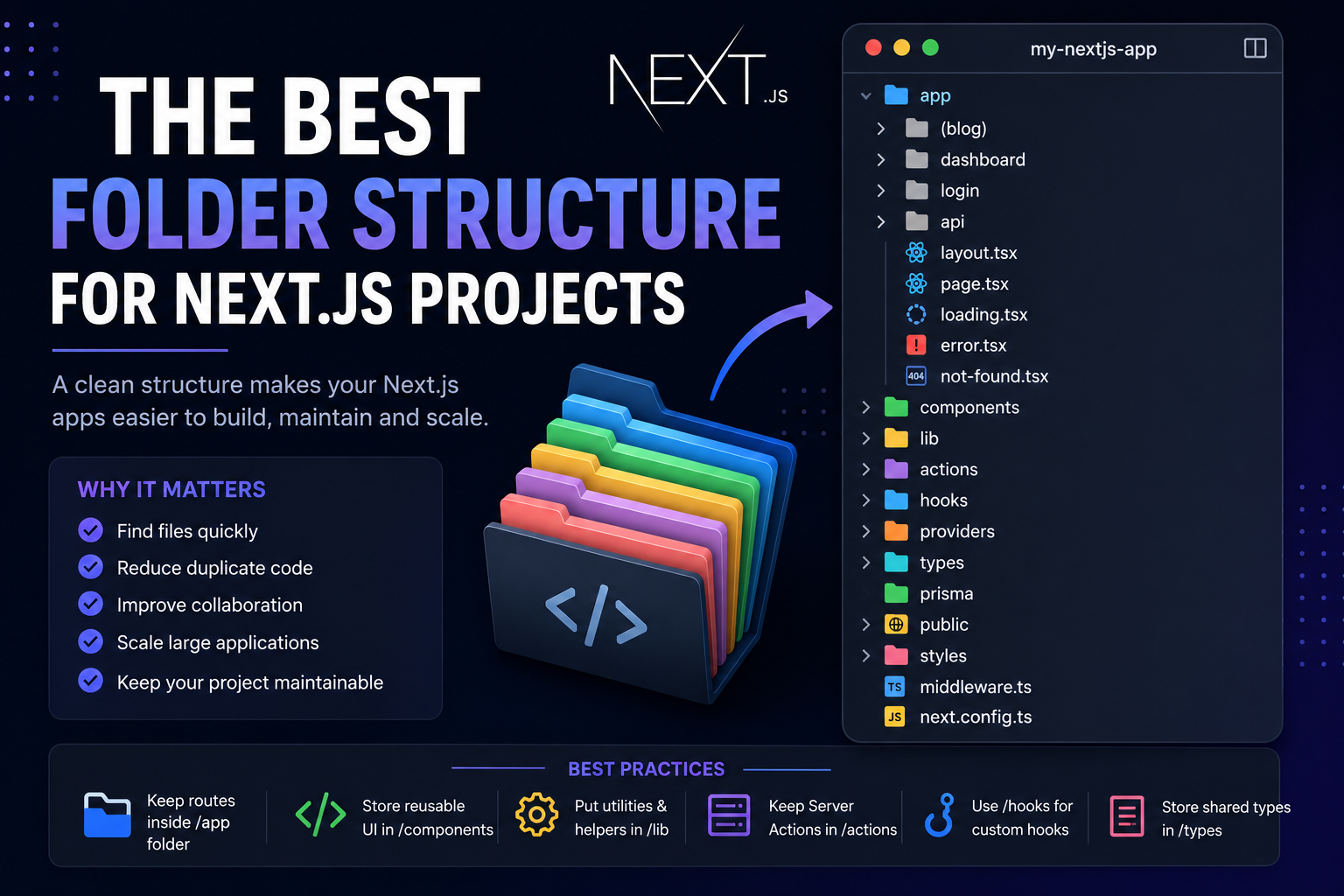
The Best Folder Structure for Next.js Projects in 2026
A clean folder structure makes every Next.js project easier to build, maintain, and scale. Discover the best folder organization for modern Next.js applications in 2026, whether you're building a blog, SaaS, dashboard, or enterprise application.
4 min read · 152 views
Trending
Popular Posts
Productivity Tools That Save Developers Hours in 2026
681 views
The Most Valuable Skills to Learn in the AI Era (2026 and Beyond)
331 views
Vibe Coding vs Learning to Code: Which Path Will Take You Further?
277 views
Next.js 16 Features Every Developer Should Know in 2026
192 views
The Best Folder Structure for Next.js Projects in 2026
152 views
Comments
No approved comments yet.