Career & Freelancing
How to Create a Developer Portfolio That Actually Gets Attention
By Yahya Saeed · 4 min read · 87 views
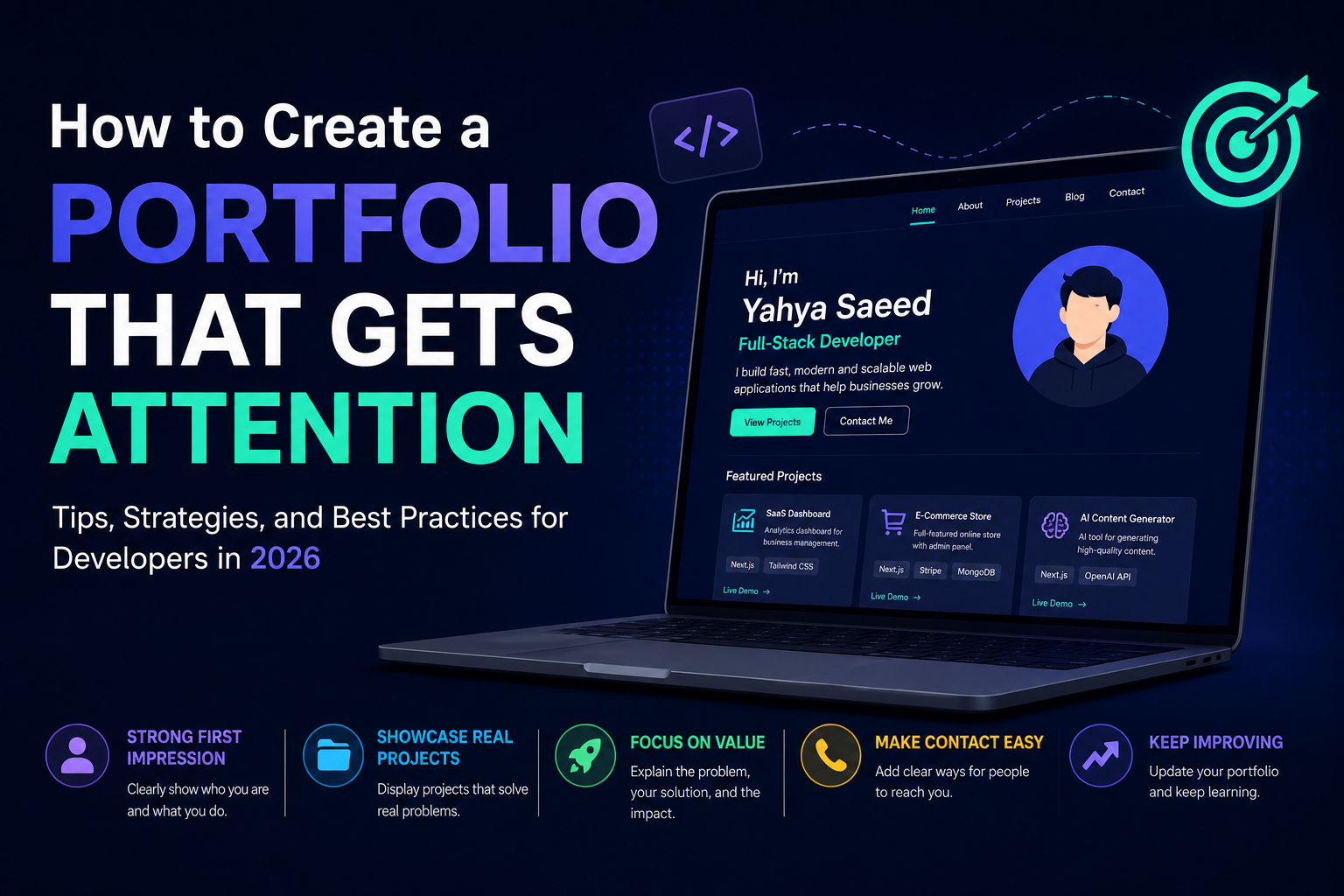
How to Create a Developer Portfolio That Actually Gets Attention
Every developer hears the same advice:
Build a portfolio.
But simply having a portfolio is not enough anymore.
Thousands of developers have beautiful websites with animations, dark themes, and fancy transitions. Yet many of those portfolios receive little attention from recruiters, clients, or potential employers.
The truth is that a portfolio is not just a website.
It is a marketing tool.
Its job is to convince visitors that you can solve real problems.
If your portfolio fails to communicate value quickly, visitors will leave no matter how attractive the design is.
Let's explore how to create a portfolio that actually gets attention.
First Impressions Matter
Most visitors decide within a few seconds whether to stay on your website.
That means your homepage must answer three questions immediately:
Who are you?
What do you do?
Why should someone hire you?
A strong hero section might look like:
John Doe
Full-Stack Developer specializing in Next.js, React, and Modern Web Applications.
Then add a short description explaining how you help businesses or clients.
Avoid generic statements like:
Passionate developer
Coding enthusiast
Technology lover
Instead, focus on results.
For example:
I build fast, modern, and scalable web applications that help businesses grow online.
This immediately sounds more professional.
Show Projects, Not Just Skills
Many developers create long lists of technologies.
Visitors often don't care.
Clients want to see what you can build.
Instead of:
HTML
CSS
JavaScript
React
Next.js
Node.js
Show actual projects.
For every project include:
Screenshot
Short description
Technologies used
Live demo
Source code
A project proves your skills better than a skill list ever can.
Quality Beats Quantity
You do not need twenty projects.
Three excellent projects are often better than twenty average ones.
Choose projects that demonstrate:
Frontend skills
Backend skills
Database usage
Authentication
Real-world functionality
Examples include:
SaaS dashboard
E-commerce website
Blog CMS
AI application
Business website
These projects show practical development skills that clients value.
Explain the Problem
Many portfolios simply show screenshots.
Instead, explain:
What problem the project solves
Why you built it
Challenges you faced
How you solved them
This demonstrates critical thinking and problem-solving abilities.
Remember:
Clients hire problem solvers.
Not code writers.
Make Contact Easy
You would be surprised how many portfolios hide contact information.
If someone wants to hire you, contacting you should be effortless.
Include:
Email address
LinkedIn profile
GitHub profile
Contact form
Add clear buttons like:
Hire Me
Contact Me
Let's Work Together
Never make visitors search for your contact details.
Tell Your Story
People connect with people.
A short About section helps visitors understand who you are.
You don't need your entire life story.
Simply explain:
What you do
What technologies you enjoy
What kind of projects you build
What goals you have
Keep it professional and authentic.
Include Testimonials If Possible
Social proof builds trust.
If you've worked with clients, include:
Testimonials
Reviews
Recommendations
Even one positive testimonial can significantly improve credibility.
If you're a beginner, you can include feedback from project collaborators or open-source contributions.
Focus on Performance
A portfolio is also a demonstration of your skills.
If your website loads slowly, visitors may assume your development skills are weak.
Make sure your portfolio is:
Fast
Responsive
Mobile-friendly
SEO optimized
Tools like Next.js make this much easier.
A fast website creates a professional impression.
Add a Blog
A blog is one of the best ways to stand out.
Writing articles demonstrates:
Communication skills
Technical knowledge
Consistency
Expertise
Topics can include:
Next.js
React
AI
Tailwind CSS
Prisma
Development tips
Every article becomes another opportunity for people to discover your work.
A blog can attract visitors long after you publish it.
Showcase Your Process
Many developers show finished projects.
Few show how they think.
Consider creating case studies that explain:
Requirements
Planning
Development process
Challenges
Final outcome
This helps visitors understand how you approach projects.
For freelancers, this can be extremely valuable.
Don't Overcomplicate the Design
One of the biggest mistakes developers make is prioritizing flashy effects over usability.
Your portfolio should be:
Clean
Modern
Easy to navigate
Easy to read
Animations should enhance the experience, not distract from it.
A simple, professional design often performs better than an overly complex one.
Optimize for Clients and Recruiters
Remember who is visiting your website.
Most visitors are not developers.
They are:
Recruiters
Business owners
Startup founders
Potential clients
Avoid excessive technical jargon.
Focus on outcomes and benefits.
Instead of:
Built using Next.js 16, Prisma, PostgreSQL, and Server Components.
Try:
Built a scalable platform capable of handling user authentication, data management, and real-time updates.
The second statement is easier for non-technical visitors to understand.
Keep Updating It
A portfolio should evolve as your skills improve.
Update it regularly with:
New projects
Blog posts
Skills
Achievements
An outdated portfolio can make even skilled developers appear inactive.
Treat your portfolio like a living project.
Common Portfolio Mistakes
Avoid these common problems:
No live project links
Broken links
Slow loading speed
Generic descriptions
Too many unfinished projects
Poor mobile experience
No clear contact information
These mistakes can cost opportunities.
Final Thoughts
A great portfolio is not about showing everything you've ever built.
It is about showing the right things in the right way.
Focus on demonstrating your ability to solve problems, build real applications, and communicate clearly.
Remember:
Visitors are not looking for the most complex website.
They are looking for confidence that you can help them achieve their goals.
Build a portfolio that highlights value, showcases real work, and makes it easy for people to trust you.
Do that consistently, and your portfolio will start attracting the attention it deserves.
Keep reading
Related Posts
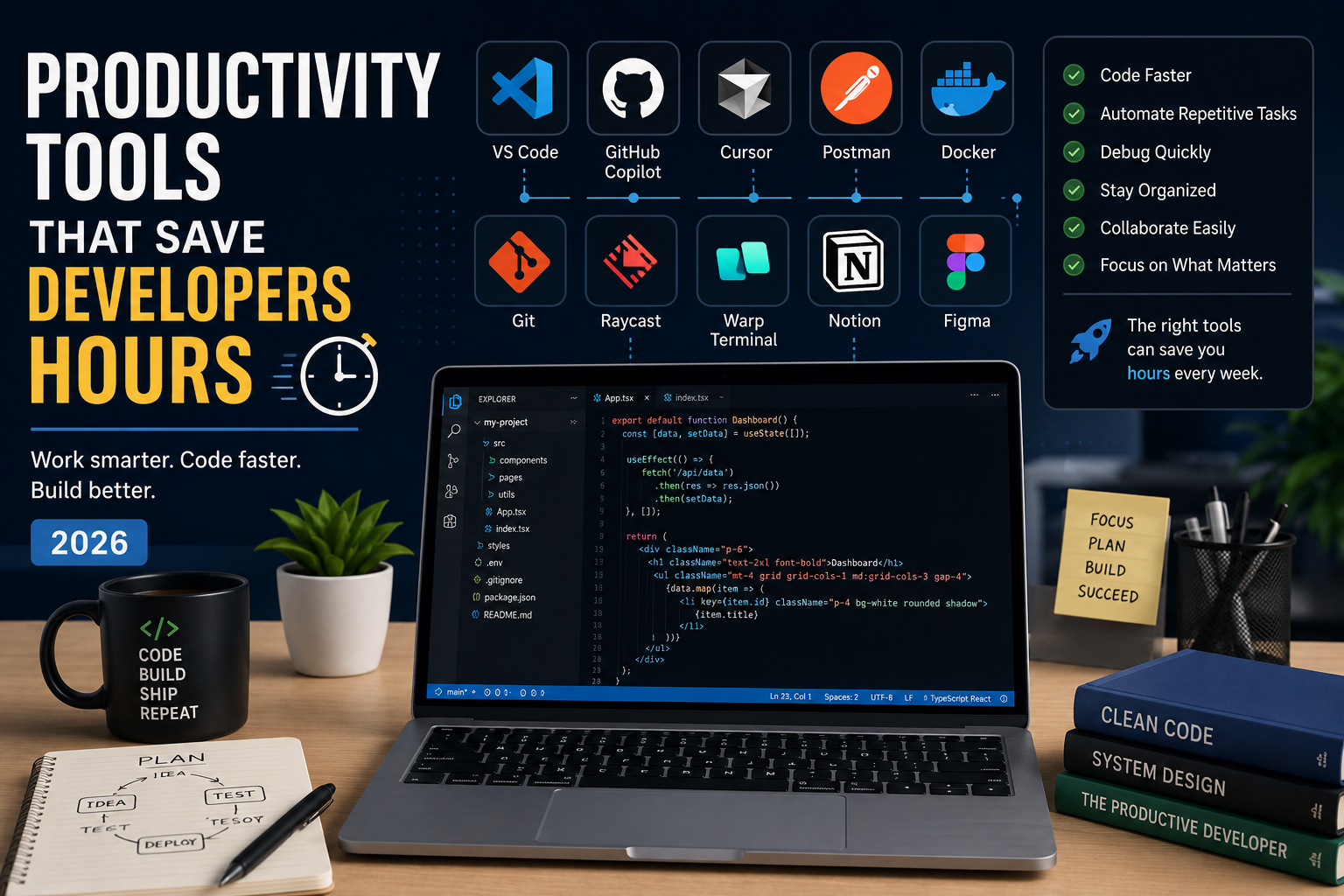
Developer Tools
Productivity Tools That Save Developers Hours in 2026
The best developers aren't just fast—they use the right tools. From AI coding assistants to terminal upgrades and API testing platforms, these productivity tools can save developers hours every week and help them focus on building great software instead of repetitive tasks.
4 min read · 681 views
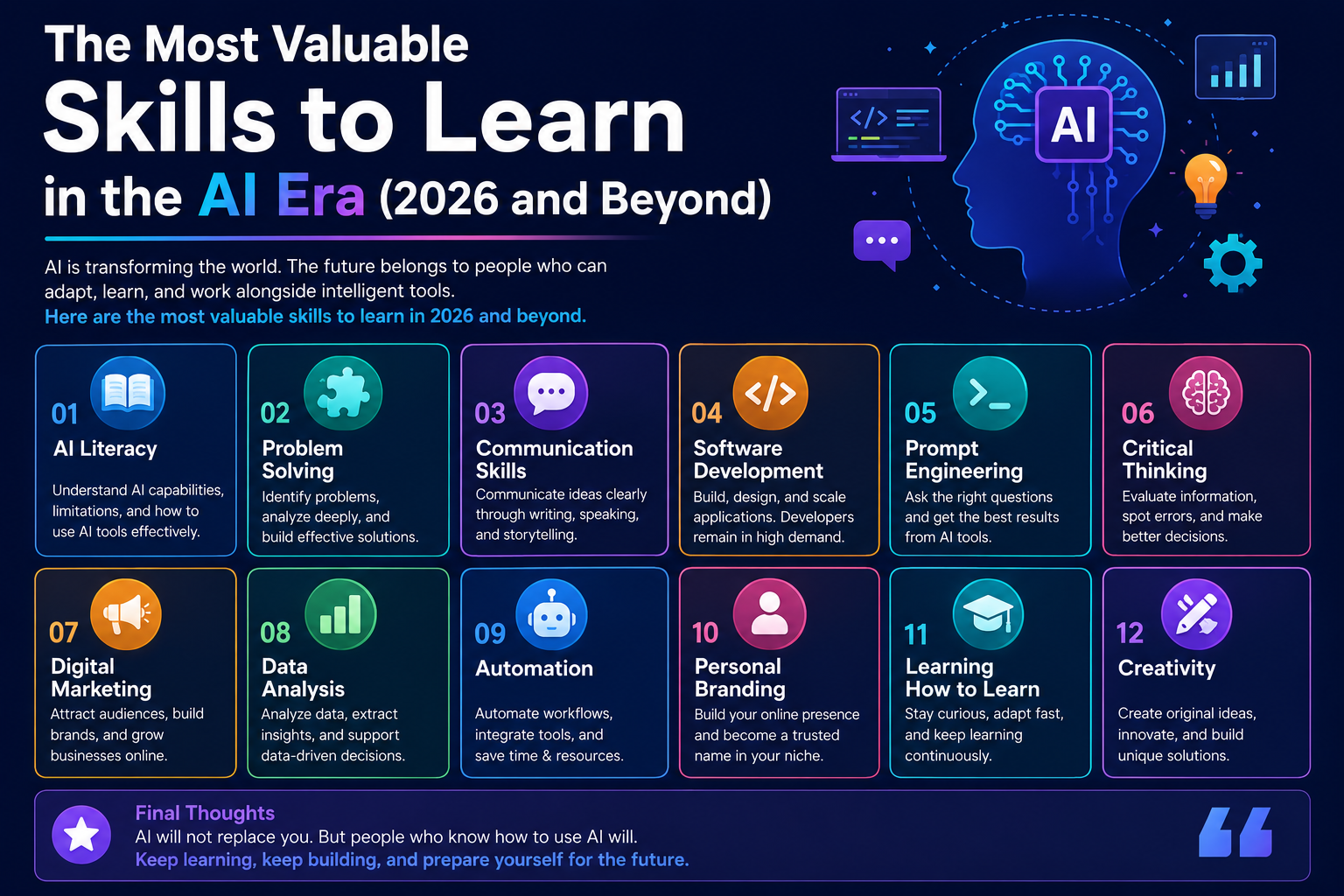
Career & Technology
The Most Valuable Skills to Learn in the AI Era (2026 and Beyond)
Artificial Intelligence is changing how we work, learn, and build products. Some skills are becoming less valuable, while others are becoming more important than ever. If you want to stay relevant and thrive in 2026 and beyond, these are the skills you should focus on developing.
4 min read · 331 views
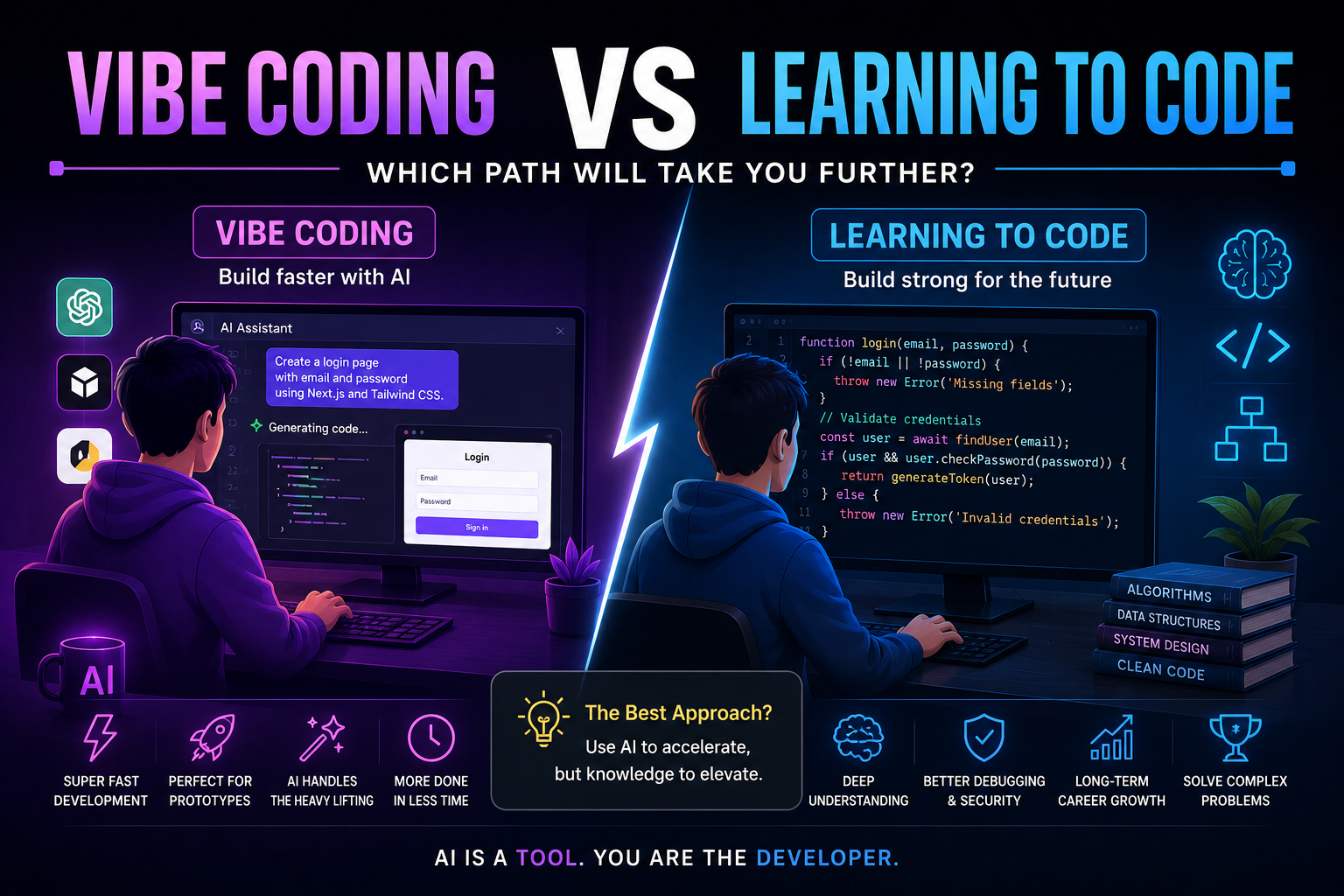
Programming
Vibe Coding vs Learning to Code: Which Path Will Take You Further?
AI can build apps faster than ever, leading to the rise of "vibe coding." But does that mean learning to code is no longer necessary? Let's explore the strengths, weaknesses, and future of both approaches to discover which path offers the greatest long-term value.
4 min read · 277 views
Trending
Popular Posts
Productivity Tools That Save Developers Hours in 2026
681 views
The Most Valuable Skills to Learn in the AI Era (2026 and Beyond)
331 views
Vibe Coding vs Learning to Code: Which Path Will Take You Further?
277 views
Next.js 16 Features Every Developer Should Know in 2026
192 views
The Best Folder Structure for Next.js Projects in 2026
152 views
Comments
No approved comments yet.