Career & Freelancing
Freelancing vs Building a SaaS: Which Path Should Developers Choose in 2026?
By Yahya Saeed · 4 min read · 86 views
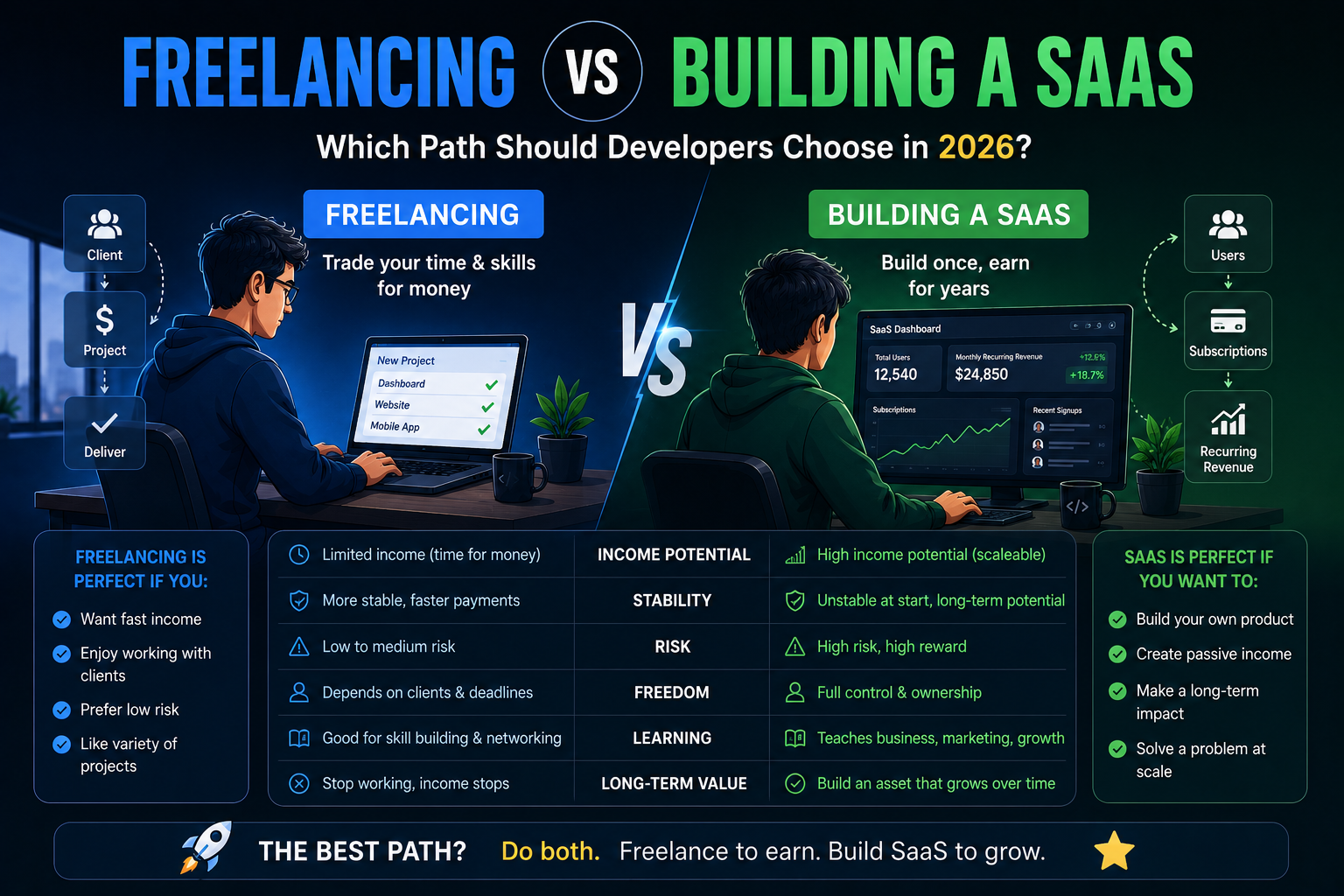
Freelancing vs Building a SaaS: Which Path Should Developers Choose in 2026?
One of the biggest decisions developers face isn't choosing a programming language or framework.
It's deciding how to earn from their skills.
Two of the most popular paths are:
Freelancing
Building a SaaS
Both have created successful careers.
Both have produced financially independent developers.
And both come with unique advantages and challenges.
So which one is better?
The answer depends on your goals, your personality, and how much risk you're willing to take.
Let's compare them.
What Is Freelancing?
Freelancing means offering your skills to clients.
You get paid to build products such as:
Business websites
Dashboards
E-commerce stores
Mobile applications
Custom software
Clients pay you for your time and expertise.
Once the project is complete, so is the income.
Freelancing is essentially exchanging skills for money.
What Is a SaaS?
SaaS stands for Software as a Service.
Instead of building software for one client, you build a product that many customers can subscribe to.
Examples include:
Project management tools
Expense trackers
CRM systems
AI writing tools
Accounting software
Customers pay a recurring monthly or yearly subscription to use your product.
Your goal is to create something valuable enough that many people want to keep using it.
Income Potential
This is often the biggest difference.
Freelancing
Your income grows by:
Charging higher rates
Finding more clients
Working more hours
There is usually a limit to how much one person can earn because time is limited.
SaaS
A SaaS product can continue generating revenue while you sleep.
One successful product can serve thousands of customers at the same time.
Your income isn't directly tied to your working hours.
Winner: SaaS
Stability
Freelancing usually provides faster income.
Complete a project.
Get paid.
SaaS is different.
You may spend months building a product before earning your first dollar.
Success takes patience.
Winner: Freelancing
Risk
Freelancing has relatively low risk.
If one client leaves, you can find another.
Building a SaaS carries much higher risk.
Your product might never find customers.
Many SaaS ideas fail because there isn't enough demand.
Winner: Freelancing
Freedom
Freelancers often work with client deadlines.
Clients decide:
Requirements
Features
Timelines
SaaS founders build products they own.
You decide:
Features
Pricing
Roadmap
Direction
That freedom is one of the biggest reasons developers choose SaaS.
Winner: SaaS
Learning Opportunities
Freelancing teaches valuable skills such as:
Communication
Client management
Estimation
Time management
Building a SaaS teaches even more.
You'll learn:
Product design
Marketing
Sales
Customer support
Pricing
Business strategy
Running a SaaS forces you to think like both a developer and an entrepreneur.
Which One Is Harder?
Many people assume building software is the hardest part of SaaS.
It's not.
The hardest part is getting customers.
Marketing often becomes a bigger challenge than coding.
Freelancing has a similar challenge.
You also need to find clients.
In both cases, building your reputation is essential.
The Biggest Advantage of Freelancing
Freelancing gives you something every developer needs:
Cash flow.
You earn while improving your skills.
Many developers use freelance income to fund their future SaaS ideas.
This makes freelancing an excellent starting point.
The Biggest Advantage of SaaS
A successful SaaS becomes an asset.
Unlike client work, a SaaS product can continue generating recurring revenue for years.
Instead of constantly searching for new projects, you focus on improving one product that serves many customers.
That's the power of recurring income.
Can You Do Both?
Absolutely.
In fact, many successful developers do.
A common journey looks like this:
Learn web development.
Start freelancing.
Build a portfolio.
Earn consistent income.
Identify common client problems.
Build a SaaS that solves one of those problems.
Freelancing can actually become the best research tool for finding SaaS ideas.
Clients constantly reveal problems worth solving.
Which Path Is Better for Beginners?
If you're just starting your career, freelancing usually makes more sense.
Why?
Because it helps you:
Gain experience
Build confidence
Improve communication
Earn income
These skills become incredibly valuable later when building your own products.
My Recommendation
If I were starting today, I wouldn't choose one over the other.
I would combine them.
I would:
Freelance during the day.
Build a SaaS in my spare time.
Freelancing would pay the bills.
The SaaS would become a long-term investment.
This approach reduces financial pressure while giving you the opportunity to create something that could eventually replace client work.
Final Thoughts
Freelancing and SaaS are not competing paths.
They're complementary.
Freelancing teaches you how to solve problems for clients.
SaaS teaches you how to solve problems for the market.
One provides immediate income.
The other offers long-term potential.
The most successful developers in 2026 often combine both.
They use freelancing to build skills, relationships, and financial stability while investing time into products they own.
Whether you choose freelancing, SaaS, or both, the most important step is the same:
Start building.
Because every successful career begins with solving real problems for real people.
Keep reading
Related Posts
Developer Tools
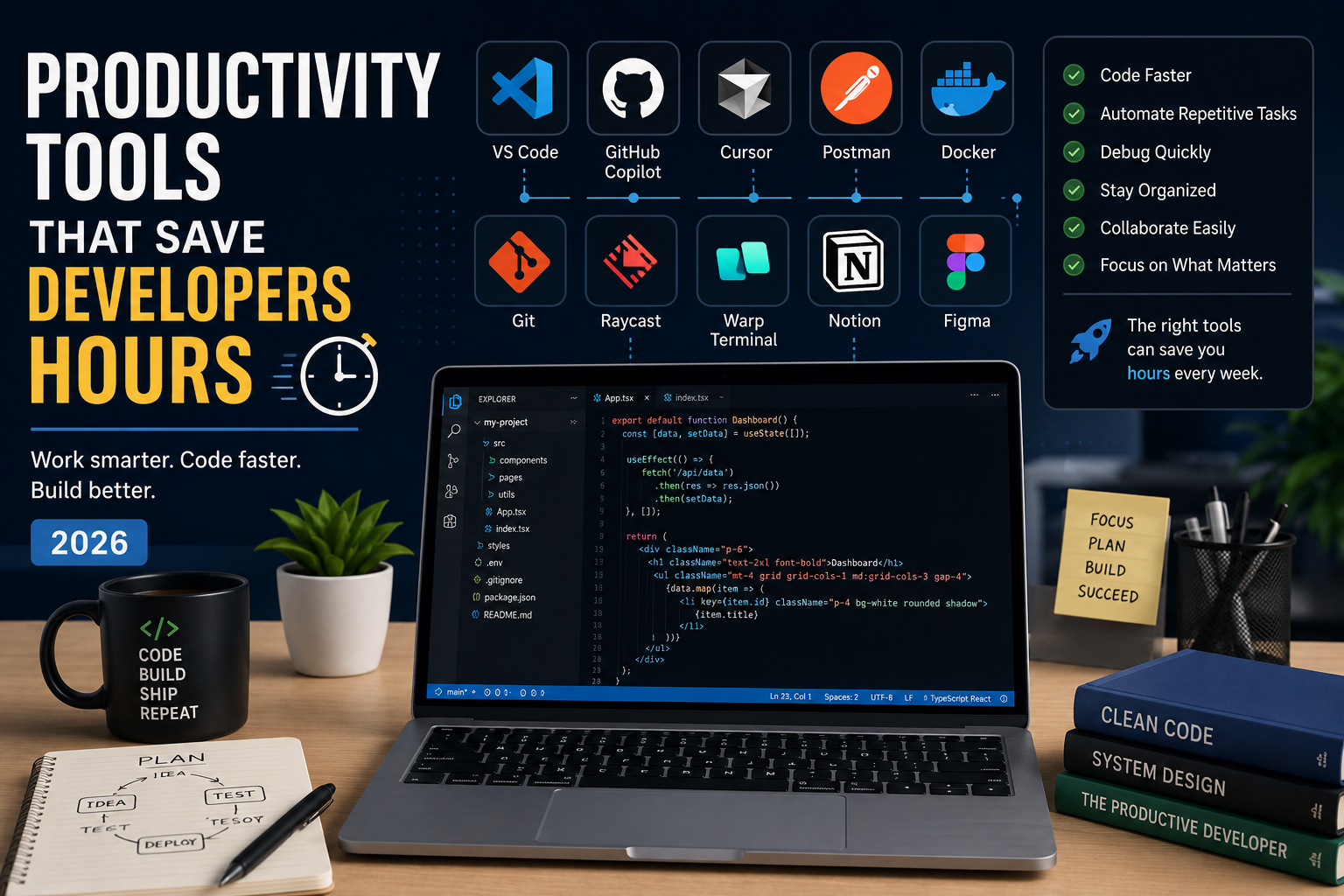
Productivity Tools That Save Developers Hours in 2026
The best developers aren't just fast—they use the right tools. From AI coding assistants to terminal upgrades and API testing platforms, these productivity tools can save developers hours every week and help them focus on building great software instead of repetitive tasks.
4 min read · 682 views
Career & Technology
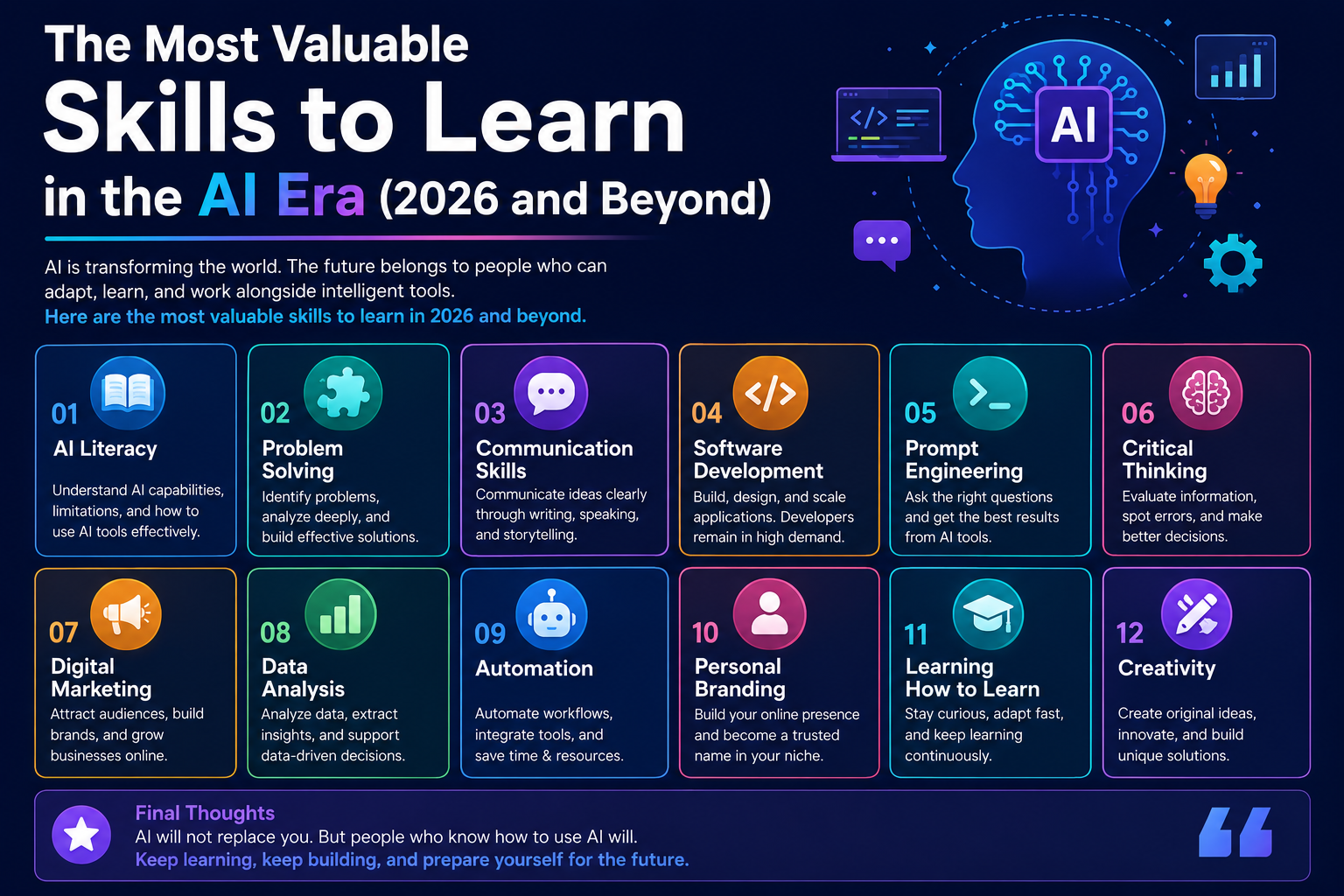
The Most Valuable Skills to Learn in the AI Era (2026 and Beyond)
Artificial Intelligence is changing how we work, learn, and build products. Some skills are becoming less valuable, while others are becoming more important than ever. If you want to stay relevant and thrive in 2026 and beyond, these are the skills you should focus on developing.
4 min read · 331 views
Programming
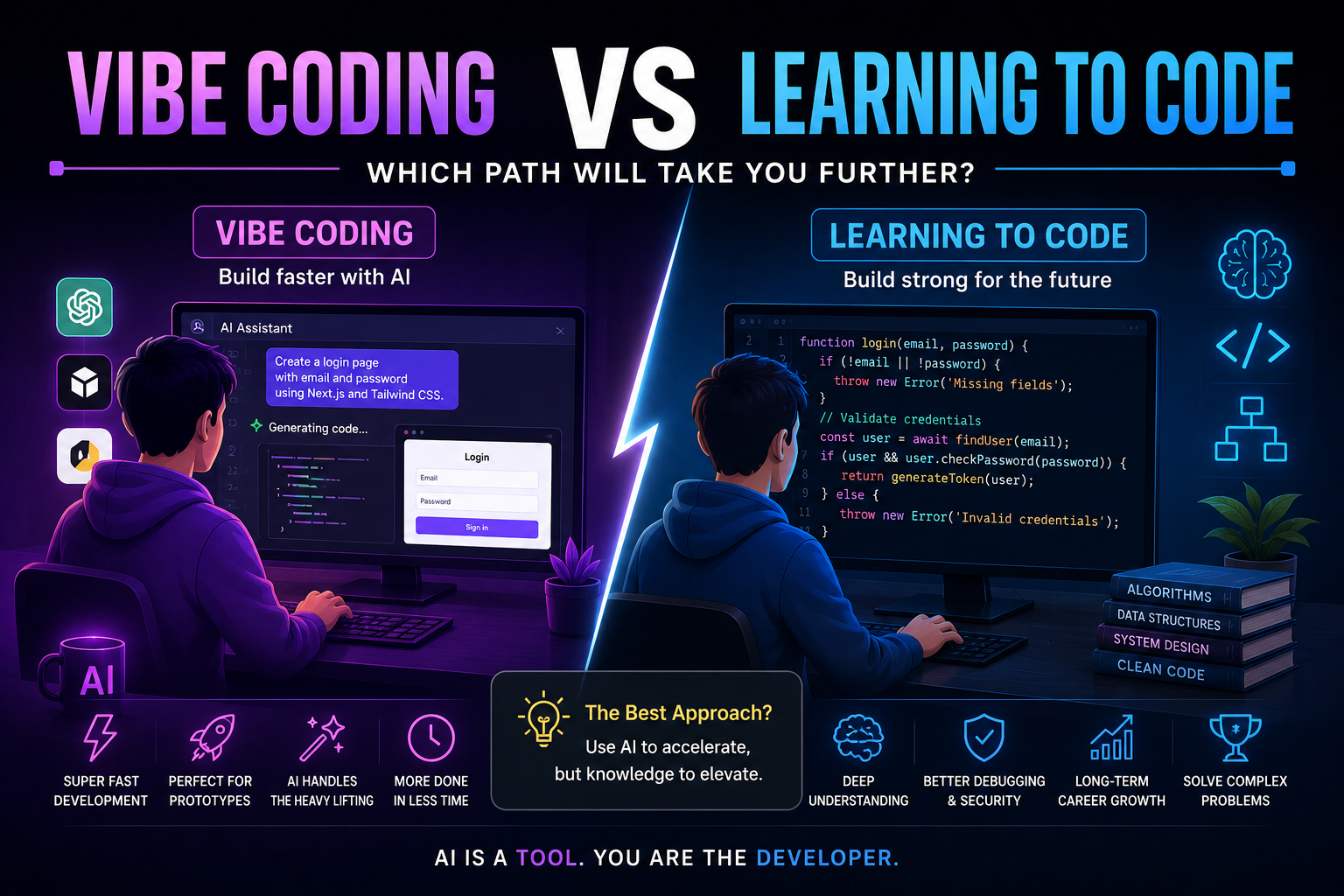
Vibe Coding vs Learning to Code: Which Path Will Take You Further?
AI can build apps faster than ever, leading to the rise of "vibe coding." But does that mean learning to code is no longer necessary? Let's explore the strengths, weaknesses, and future of both approaches to discover which path offers the greatest long-term value.
4 min read · 277 views
Trending
Popular Posts
Productivity Tools That Save Developers Hours in 2026
682 views
The Most Valuable Skills to Learn in the AI Era (2026 and Beyond)
331 views
Vibe Coding vs Learning to Code: Which Path Will Take You Further?
277 views
Next.js 16 Features Every Developer Should Know in 2026
194 views
The Best Folder Structure for Next.js Projects in 2026
153 views
Comments
No approved comments yet.