Artificial Intelligence
AI Agents Explained for Developers: The Next Evolution of Software Development
By Yahya Saeed · 4 min read · 96 views
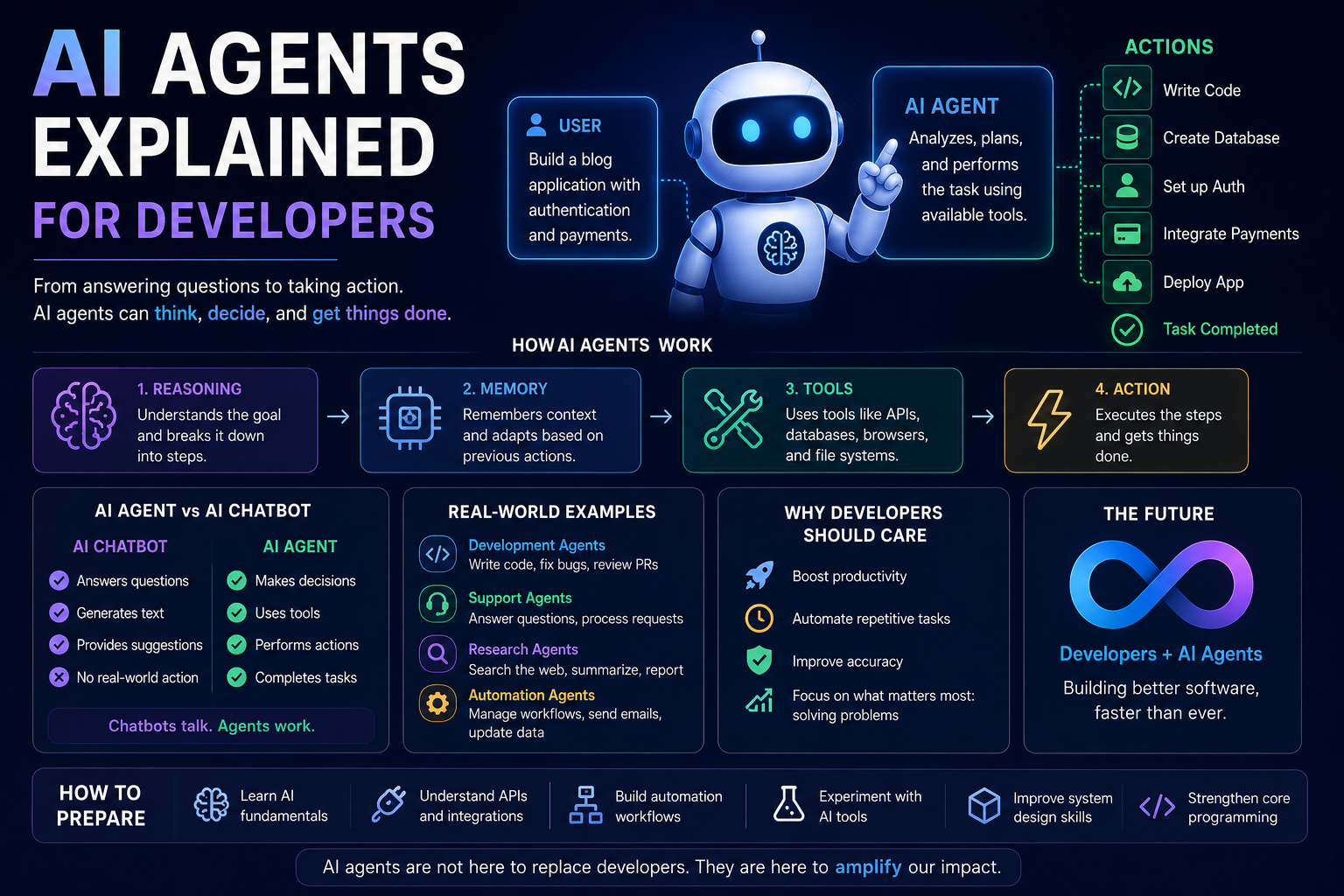
AI Agents Explained for Developers: The Next Evolution of Software Development
Artificial Intelligence is evolving rapidly.
Only a few years ago, most people interacted with AI through simple chatbots that answered questions and generated text. Today, a new generation of AI systems is emerging—systems that can not only think and respond but also take action.
These systems are known as AI Agents.
Many experts believe AI agents will become one of the most important technologies of the next decade, transforming how software is built, businesses operate, and users interact with technology.
For developers, understanding AI agents is quickly becoming a valuable skill.
What Is an AI Agent?
An AI agent is an AI-powered system that can perform tasks on behalf of a user.
Unlike traditional AI chatbots that simply generate responses, AI agents can:
Make decisions
Execute actions
Use tools
Access data
Complete multi-step workflows
Adapt based on results
Think of the difference this way:
A chatbot gives advice.
An agent gets things done.
For example:
A chatbot might tell you how to create a database.
An AI agent could actually create the database, configure it, test the connection, and report the results.
This ability to take action is what makes agents so powerful.
How AI Agents Work
Most AI agents combine several key components.
1. Reasoning
The agent analyzes the user's goal and determines what steps are required.
Example:
Build a blog application.
The agent may decide it needs to:
Create the project
Configure the database
Build authentication
Create pages
Deploy the application
2. Memory
Agents can remember information during a task.
This allows them to maintain context and make better decisions throughout a workflow.
Instead of treating every interaction as a new conversation, agents can build on previous actions.
3. Tools
Tools are what allow agents to interact with the real world.
Examples include:
File systems
Databases
APIs
Web browsers
Email systems
Code editors
The more tools an agent can access, the more capable it becomes.
4. Action Execution
Once a decision is made, the agent performs the required actions.
This is what separates agents from traditional chatbots.
They don't simply recommend actions.
They execute them.
AI Agents vs AI Chatbots
Many developers confuse agents with chatbots.
While both use AI models, their capabilities are very different.
Chatbot
Answers questions
Generates text
Explains concepts
Provides suggestions
Agent
Makes decisions
Uses tools
Performs actions
Completes tasks
Automates workflows
In simple terms:
Chatbots talk.
Agents work.
Why Developers Should Care
AI agents are already beginning to influence software development.
Modern agents can:
Generate code
Review pull requests
Fix bugs
Create documentation
Run tests
Deploy applications
Monitor systems
This allows developers to focus more on solving problems and less on repetitive tasks.
The result is faster development and increased productivity.
Real-World Examples of AI Agents
The concept may sound futuristic, but AI agents are already appearing in real products.
Examples include:
Development Agents
Agents that can:
Build applications
Refactor code
Create APIs
Generate database schemas
Customer Support Agents
Agents that:
Answer customer questions
Access account information
Process requests
Escalate issues when necessary
Research Agents
Agents that:
Search the web
Gather information
Summarize findings
Generate reports
Business Automation Agents
Agents that:
Manage workflows
Send emails
Update databases
Create tasks
These systems are becoming increasingly capable.
The Rise of Multi-Agent Systems
One of the most exciting developments is the concept of multiple agents working together.
Imagine:
One agent researches information
Another writes code
Another tests the application
Another deploys it
Each agent specializes in a particular task.
Together, they form a complete workflow.
Many experts believe this approach will play a major role in future software development.
Will AI Agents Replace Developers?
Not likely.
AI agents can automate many technical tasks, but they still require human guidance.
Developers remain responsible for:
Product vision
Architecture
Security decisions
Business requirements
User experience
Critical thinking
Agents can increase productivity, but they do not replace expertise.
The most effective developers will be those who learn how to collaborate with AI agents.
The Future of Software Development
Software development is gradually moving from:
Writing code manually
to
Directing intelligent systems.
Developers are becoming architects, strategists, and problem-solvers while AI handles more of the implementation work.
This does not make developers less important.
It makes their role more valuable.
The ability to understand systems, make decisions, and guide AI will become increasingly important.
How to Prepare for the Agent Era
Developers who want to stay ahead should focus on:
Learning AI fundamentals
Understanding APIs
Building automation workflows
Experimenting with AI tools
Improving system design skills
Learning prompt engineering
Most importantly, continue strengthening core programming knowledge.
AI agents are powerful, but they work best when guided by people who understand technology deeply.
Final Thoughts
AI agents represent one of the most significant shifts in software development since the rise of cloud computing and mobile applications.
Unlike traditional AI systems that simply answer questions, agents can plan, reason, and take action. They are transforming how developers build software, automate workflows, and solve problems.
The future is not about humans versus AI agents.
The future is about humans working alongside AI agents to accomplish more than ever before.
Developers who understand this shift today will be better prepared for the opportunities of tomorrow.
Keep reading
Related Posts
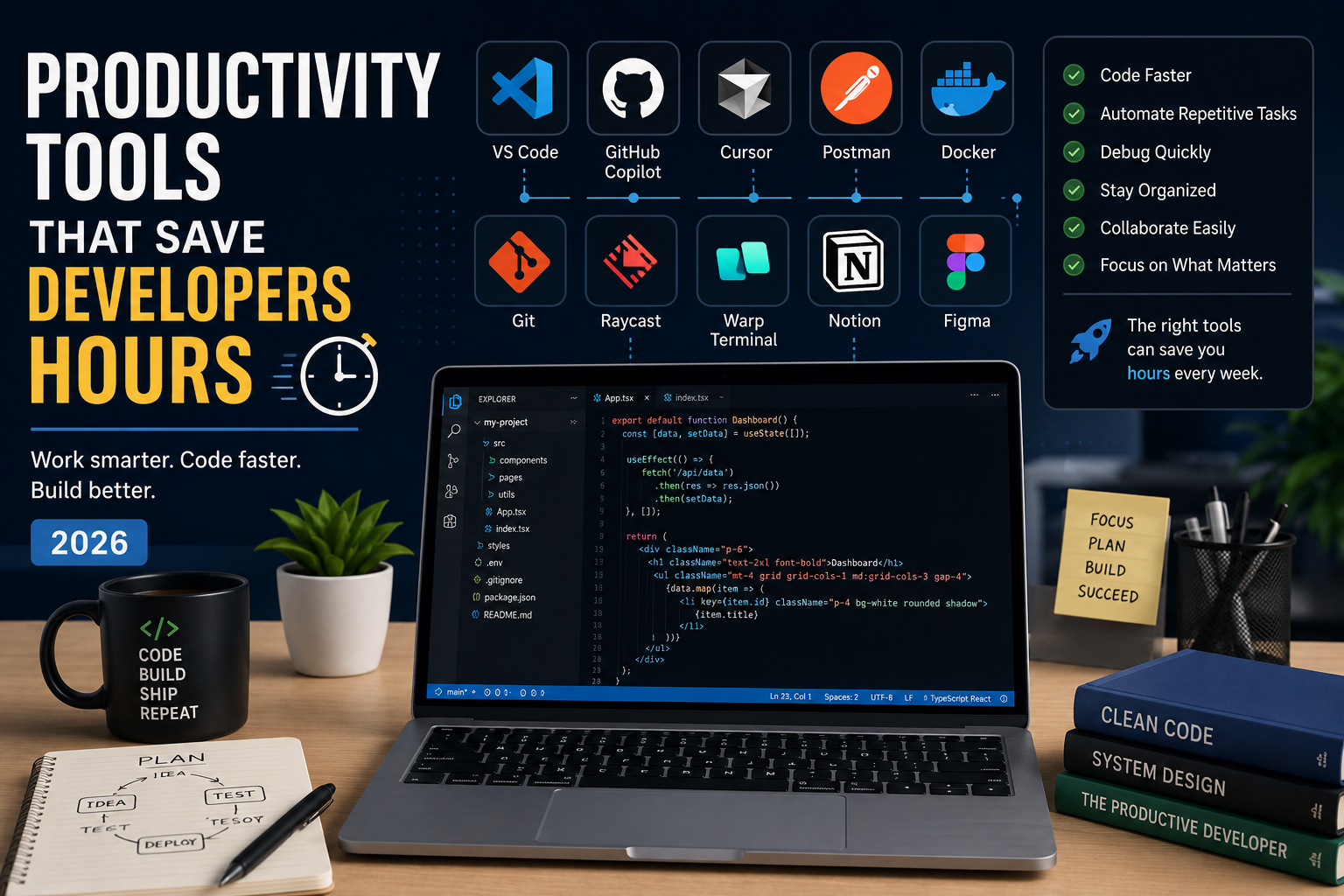
Developer Tools
Productivity Tools That Save Developers Hours in 2026
The best developers aren't just fast—they use the right tools. From AI coding assistants to terminal upgrades and API testing platforms, these productivity tools can save developers hours every week and help them focus on building great software instead of repetitive tasks.
4 min read · 681 views
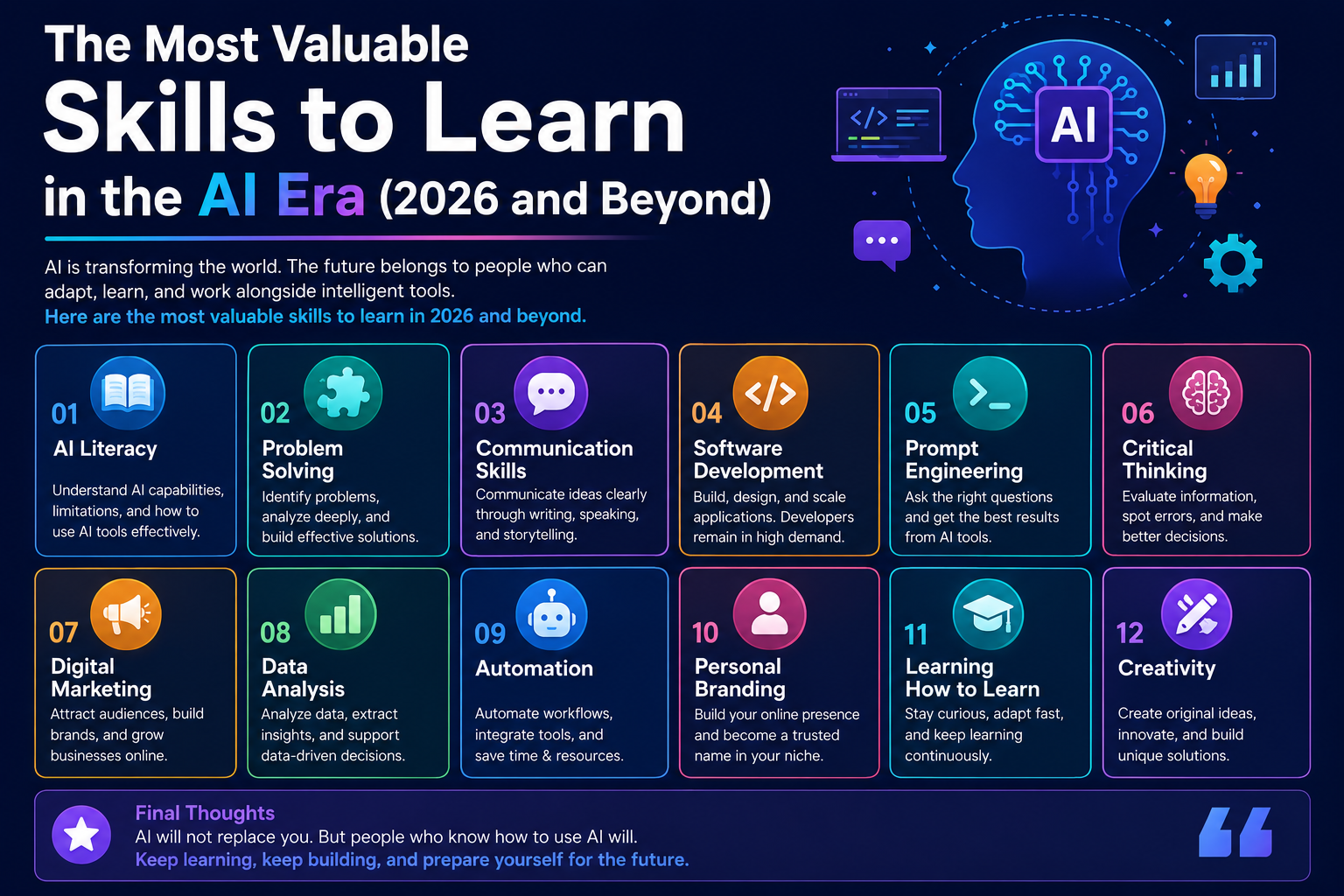
Career & Technology
The Most Valuable Skills to Learn in the AI Era (2026 and Beyond)
Artificial Intelligence is changing how we work, learn, and build products. Some skills are becoming less valuable, while others are becoming more important than ever. If you want to stay relevant and thrive in 2026 and beyond, these are the skills you should focus on developing.
4 min read · 331 views
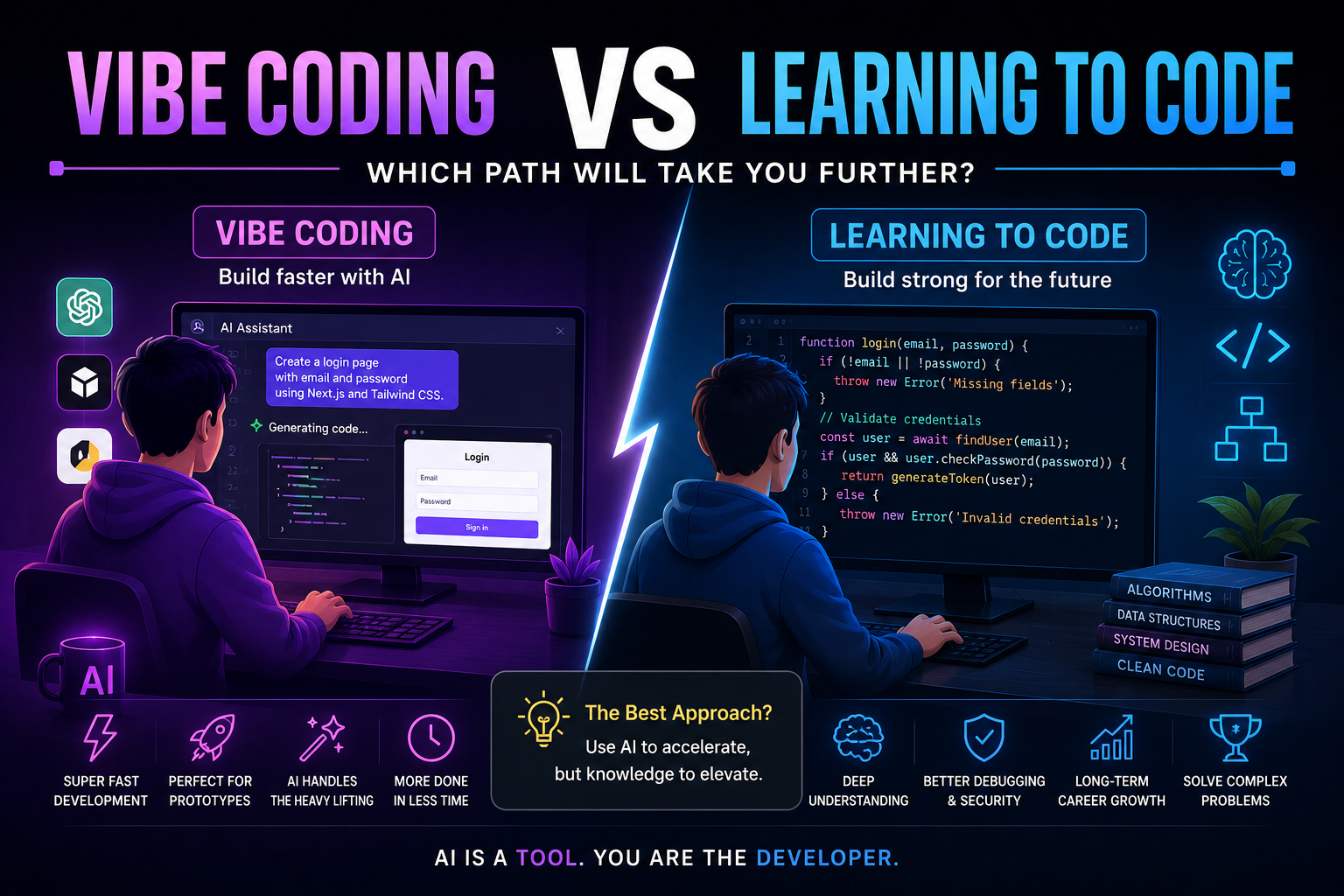
Programming
Vibe Coding vs Learning to Code: Which Path Will Take You Further?
AI can build apps faster than ever, leading to the rise of "vibe coding." But does that mean learning to code is no longer necessary? Let's explore the strengths, weaknesses, and future of both approaches to discover which path offers the greatest long-term value.
4 min read · 277 views
Trending
Popular Posts
Productivity Tools That Save Developers Hours in 2026
681 views
The Most Valuable Skills to Learn in the AI Era (2026 and Beyond)
331 views
Vibe Coding vs Learning to Code: Which Path Will Take You Further?
277 views
Next.js 16 Features Every Developer Should Know in 2026
192 views
The Best Folder Structure for Next.js Projects in 2026
151 views
Comments
No approved comments yet.